This article contains affiliate links. We may earn a commission from qualifying purchases.
Some content on this site is AI-assisted and reviewed by our editorial team.
Start With the Right Mindset
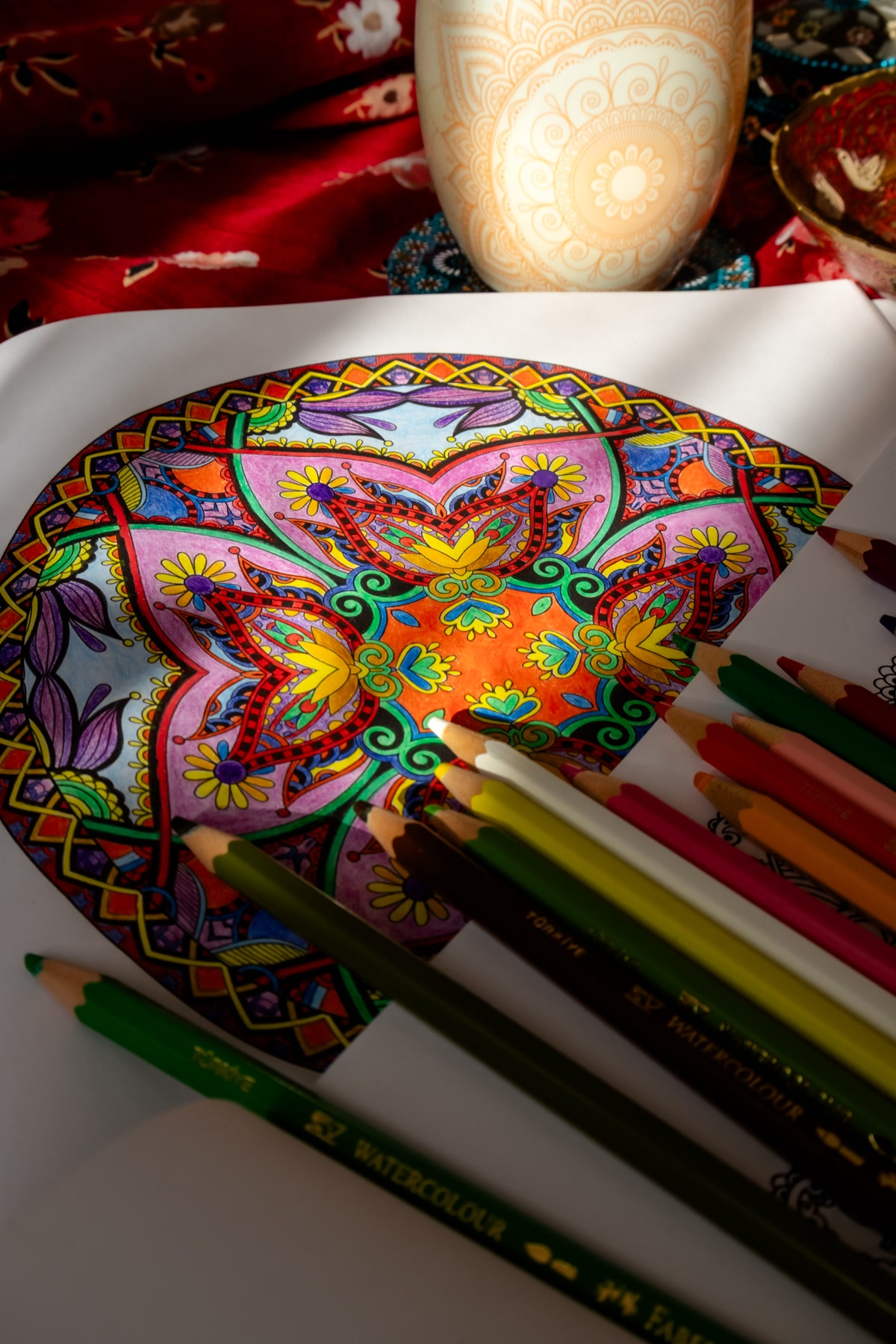
Mandala coloring isn’t about perfection. Think of a mandala as a playground for color, not a test you can fail. The repeating structure makes them forgiving, made a section too dark? The next ring outward is a fresh start. The beauty is in the doing, not in producing a frame-worthy piece every time.
Disclosure: As an Amazon Associate, ColoredCalm earns from qualifying purchases. This post contains affiliate links, which means we may earn a commission if you click through and make a purchase, at no additional cost to you.
For more on the meditative side, see our guide to coloring as a mindfulness practice.
Choose Your Tools Wisely
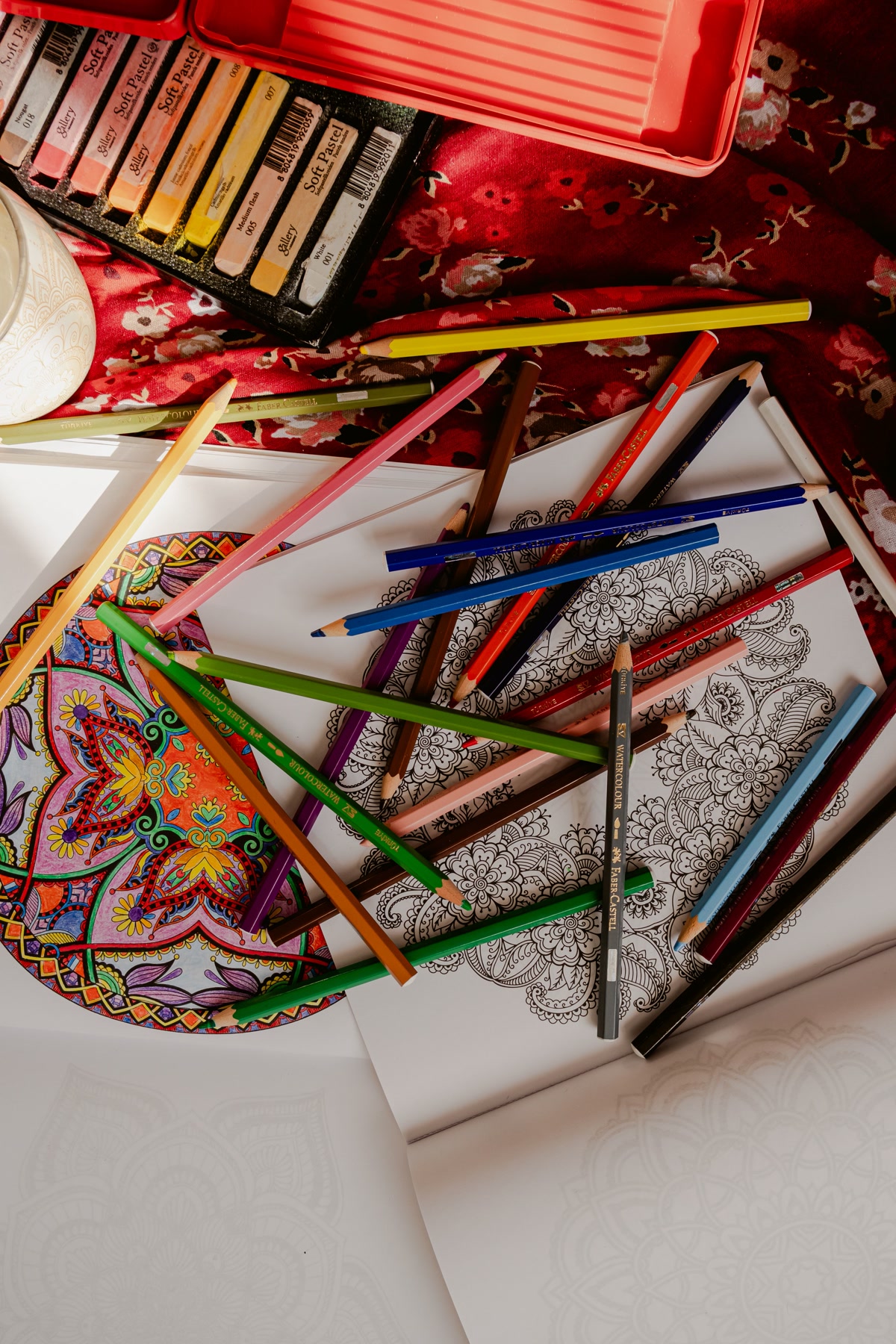
Mandalas have tiny sections that demand precision and larger areas that reward smooth coverage. Colored pencils give you both.
- Prismacolor Premier 72-Color Set, Soft, wax-based cores that blend beautifully. A longtime favorite for adult coloring.
- Faber-Castell Polychromos 60-Color Set, Oil-based pencils with rich pigment that layer without wax bloom.
- Arteza Professional 72-Color Set. A budget-friendly option that still delivers smooth color and good coverage.
- Derwent Chromaflow 72-Color Set, Vibrant, easy to blend, and great for bold mandala color schemes.
- Crayola 50-Count, Don’t sleep on Crayola. They’re affordable, widely available, and surprisingly capable.
Not sure about pencils vs. markers? See our markers vs. colored pencils comparison.
Essentials
- Kum Automatic Long Point Sharpener. A sharp point is non-negotiable for mandala details. This sharpener produces a long, fine tip that lasts.
- Kneaded Eraser, Lifts graphite and lightens colored pencil without damaging your paper. Essential for clean edges.
- Prismacolor Colorless Blender, Smooths out pencil strokes and creates seamless transitions between colors.
- Pencil Extender, Extends the life of short pencils. Because you will wear them down coloring mandalas.
Pick a Mandala That Matches Your Mood
Some mandalas have wide, open sections perfect for beginners. Others pack in micro-details that demand patience. Choose one that matches your energy level, easy designs for tired days, intricate ones for when you’re feeling focused.
- Secret Garden by Johanna Basford. The book that launched the adult coloring craze. A great starting point with a mix of simple and intricate designs.
- World of Flowers by Johanna Basford, Botanical mandalas and patterns with Basford’s signature whimsical style.
- Tropical World by Millie Marotta, Lush, nature-inspired mandalas with flowing organic shapes.
- Mindfulness Coloring Book by Emma Farrarons, Compact and portable, with calming patterns designed for stress relief.
- Creative Haven Creative Cats, For when you want mandalas and cats. A fun twist on the format.
- Enchanted Forest by Johanna Basford, Hidden objects and intricate forest-themed mandalas for when you want a project.
- Worlds of Wonder by Mythographic, Surreal, imaginative mandalas for adventurous colorists.
More tips in our coloring book mood guide.
Develop a Color Strategy (or Don’t)
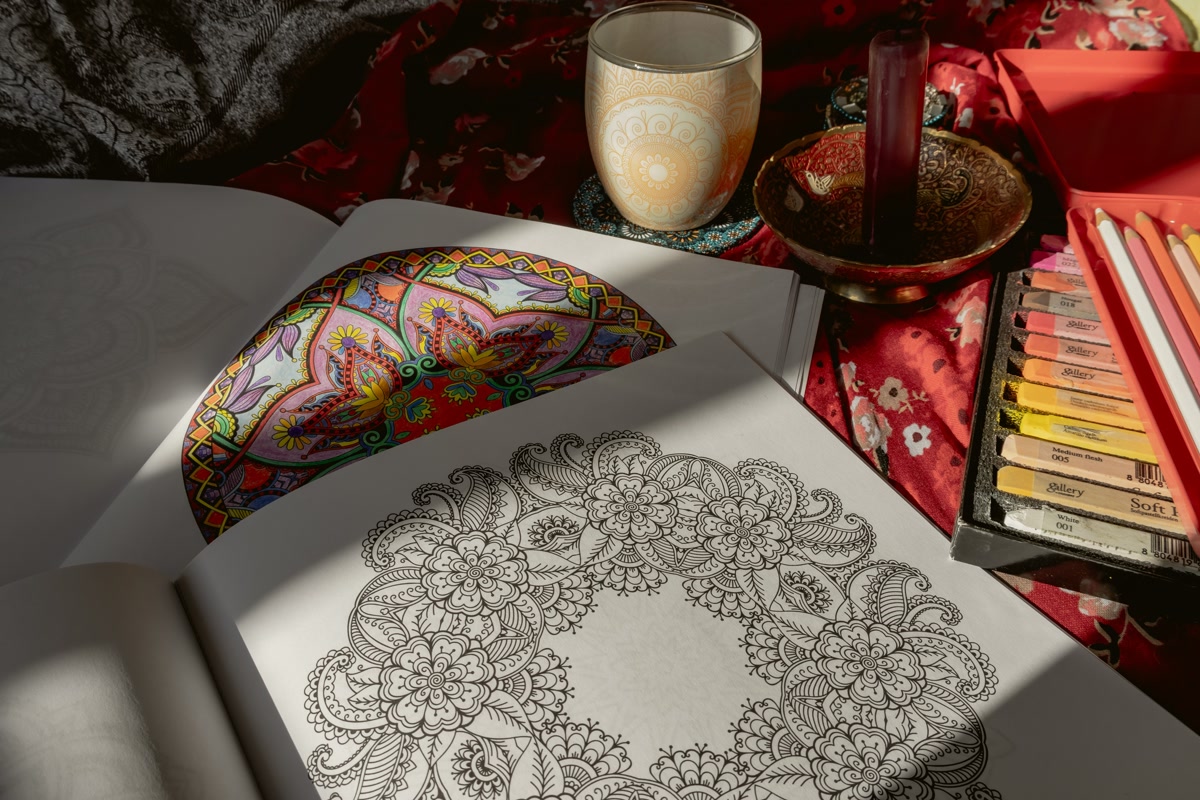
Two valid approaches, no wrong answer:
The Intuitive Approach
Pick whatever color feels right. Start from the center and work outward, letting each section inspire the next. No planning, no second-guessing. The mandala’s symmetry already provides structure, your color choices don’t need to.
The Planned Approach
- Choose a palette, Pick 5-8 colors. Analogous colors create harmony; complementary colors create energy.
- Work symmetrically, Color matching sections in the same shade.
- Plan contrast, Alternate light and dark, or warm and cool.
Work From the Center Outward
Start from the center and spiral outward. The center is usually the simplest section, a quick win. Working outward mirrors the meditative intention behind mandalas and gives you a natural progression from small details to larger areas.
Some prefer to work section by section (one “slice” at a time). Others go ring by ring. Find a rhythm that keeps you in the flow.
Master a Few Key Techniques
A few techniques go a long way. See our full blending and shading guide for depth, but here are the essentials:
Layering
Build color gradually with light, even strokes instead of pressing hard. You can always add more, but you can’t take it away.
Shading for Depth
Add a darker shade along section edges and blend toward the center. This makes flat mandalas look three-dimensional.
Colorless Blender Magic
A colorless blender smooths out pencil strokes and burnishes color into a silky finish, especially satisfying on mandalas’ clean geometric shapes.
Keep Your Pencils Sharp
Mandala sections have tight corners and tiny details. A dull pencil muddies your edges. Sharpen frequently, the Kum Automatic Long Point Sharpener makes this easy.
Deal With Common Frustrations
Hand cramps? Take breaks every 20-30 minutes. Stretch your fingers and wrists.
Muddy colors? You’re overworking it. Use fewer layers and lighter pressure, or stick to a limited palette.
Inconsistent symmetry? Slight variations make a mandala feel handcrafted. Let it go.
Bleed-through? Place a scratch sheet under your page when using markers.
Make It a Ritual
Set the stage for better sessions:
- Set a timer, Even 15 minutes can shift your mental state.
- Create atmosphere, Music, tea, comfortable lighting.
- Pick a regular time, Consistency builds the habit faster than marathon sessions.
- Keep some pieces private, Not everything needs an audience.
Shop This Guide
- Prismacolor Premier 72-Color Set
- Faber-Castell Polychromos 60-Color Set
- Arteza Professional 72-Color Set
- Derwent Chromaflow 72-Color Set
- Crayola 50-Count
- Kum Automatic Long Point Sharpener
- Kneaded Eraser
- Prismacolor Colorless Blender
- Pencil Extender
- Secret Garden
- World of Flowers
- Tropical World
- Mindfulness Coloring Book
- Creative Haven Creative Cats
- Enchanted Forest
- Worlds of Wonder
n
Read unlimited books? With Kindle Unlimited, read as much as you want from 4M+ titles, including thousands of coloring and art books. Try Kindle Unlimited FREE for 2 months
Bottom Line
Mandalas are a natural entry point for mindful coloring. The symmetry removes decision fatigue, and the repetition creates a meditative flow. Start with simpler designs and work outward as your confidence grows.
🎨 Get Your Free Stress Relief Coloring Guide
Join our newsletter and get this free printable plus weekly tips.