This article contains affiliate links. We may earn a commission from qualifying purchases.
Some content on this site is AI-assisted and reviewed by our editorial team.
Why Coloring Works for Mindfulness (The Science)

Before we get into the how, let’s talk about the why, because understanding this makes it way easier to stick with it.
It activates your parasympathetic nervous system. The repetitive motion of coloring triggers the same relaxation response as knitting or walking a labyrinth. Your heart rate slows, your cortisol drops, your breathing deepens.
It’s a single-point focus practice. Like meditation, coloring asks you to hold your attention on one thing. Unlike meditation, you have something to do with your hands, which makes it far more accessible for people who can’t “just sit there.”
It creates a flow state. Research published in Art Therapy found that just 20 minutes of coloring significantly reduced anxiety, not because coloring is magical, but because it reliably produces flow, that state where you lose track of time and self-consciousness.
It’s non-competitive. There’s no score, no deadline, no “right” way to do it. That makes it one of the few mindfulness practices where perfectionism can’t hijack you.
The 7-Day Coloring Practice Starter Kit

You don’t need much. Here’s what I’d recommend to start, all under $25 total.
A coloring book with the right vibe. Not too intricate, not too simple. You want designs that hold your attention without frustrating you.
- Mindfulness Coloring Book by Emma Farrarons, short, approachable designs perfect for 10-minute sessions
- Enchanted Forest by Johanna Basford, if you want something more immersive for longer sessions
Basic colored pencils. You don’t need artist-grade to start.
- Crayola 50-Count Colored Pencils, perfectly fine for beginners, no shame in them
- Arteza Professional 72-Color Set, the upgrade if you want richer pigment and more color range
A pencil sharpener. Dull pencils make muddy coloring. Sharp pencils make clean marks. That’s it.
- Kum Automatic Long Point Sharpener, the best sharpener under $10, period
That’s it. Book, pencils, sharpener. Under $25, delivered, done.
The Framework: How to Actually Build the Habit
Day 1–2: Set Your Anchor
Pick a specific time and pl#ace Not “sometime after work”, specific. “Right when I get home, before I check my phone, I sit at the kitchen table and color for 10 minutes.”
The anchor matters more than the duration. You’re training your brain: this is when we color.
Pro tip: Stack it on an existing habit. Color while your coffee brews. Color right after you shut your laptop. The habit attaches to something already automatic.
Day 3–4: Lower the Bar
Here’s where most people quit: they try to finish a whole page, get tired, feel like they failed, and stop.
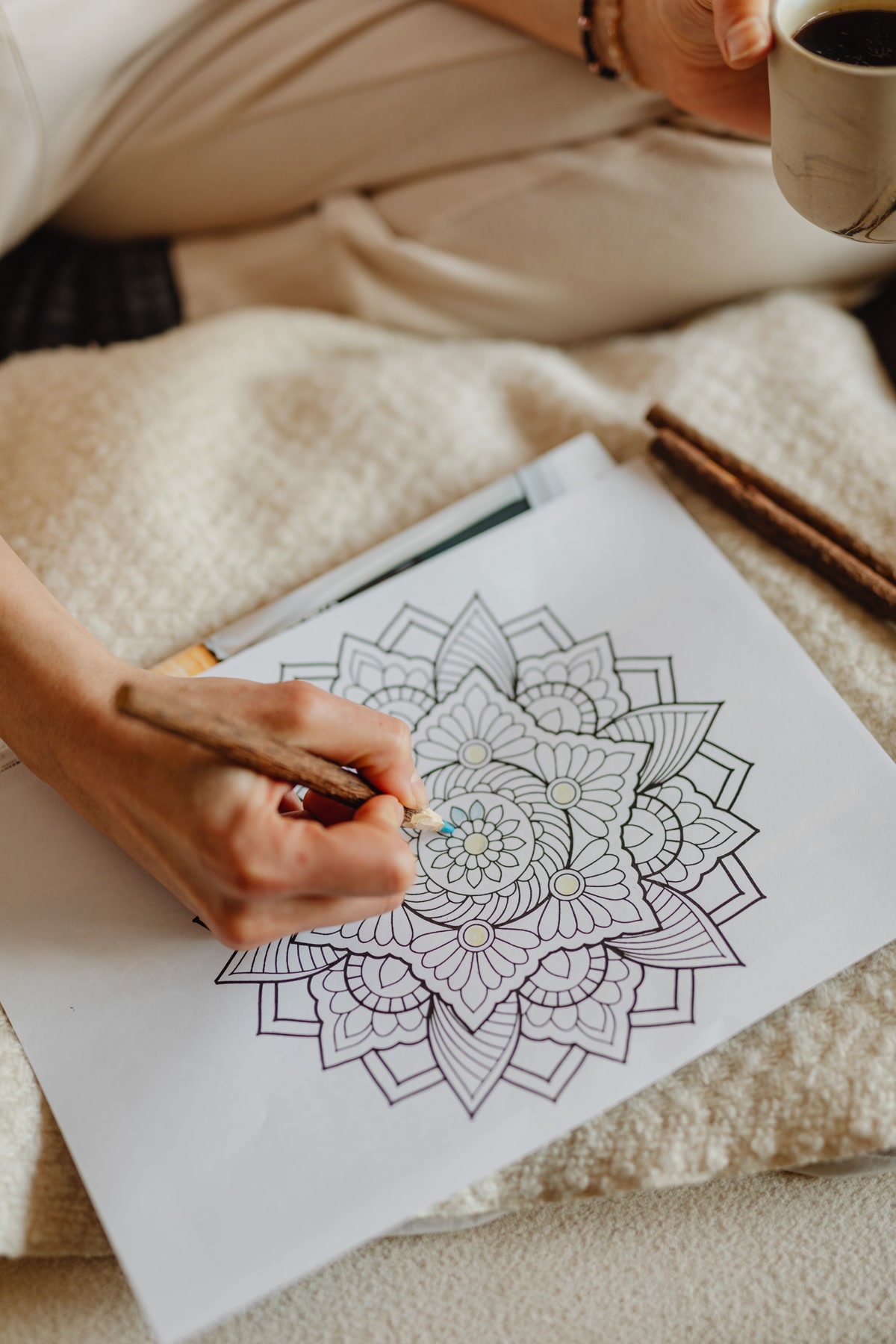
You don’t have to finish a page. Color one flower. Color one section. Color for 5 minutes. The practice is showing up, not completing.
Some days you’ll color for 30 minutes and lose yourself. Other days you’ll fill in three petals and call it. Both count.
Day 5–6: Notice What Changes
By day 5, start paying attention:
- Do you feel calmer during or after coloring?
- Is your mind wandering less by the time you put the pencils down?
- Are you looking forward to this time?
Write down one sentence after each session. “Felt restless at first, settled in after about 3 minutes.” That’s real data about what’s working.
Day 7: Decide
After a week, you have enough experience to decide: is this working for you? If yes, keep going. If not, try a different book, a different time, or a different approach (try markers instead of pencils, or switch to a mandala book).
The point isn’t to force it. The point is to give it a real shot with the right structure.
Making It Stick: 5 Rules That Actually Matter

1. Keep Your Supplies Visible
Out of sight = out of mind. Leave your book open on a table. Keep your pencils in a cup, not a box. The 2 seconds of friction between “I want to color” and “I’m coloring” is where habits go to die.
2. Never Color Something You Don’t Like
If a page doesn’t speak to you, skip it. Turn the page. This isn’t homework. Your brain knows the difference between “I choose this” and “I guess I should do this.” Only color pages you genuinely want to color.
3. Set a Timer, Not a Goal
“I’m going to color for 15 minutes” works. “I’m going to finish this page” creates pressure. Time-based goals keep it relaxed. Page-based goals make it feel like a task.
4. Don’t Share Every Session
Social media turned coloring into performance. “Look at my finished page!” That’s great, but it can also create pressure to produce something shareable. Keep some sessions just for you. No photo, no post, no audience. Just you and the color.
5. Let Go of “Good”
Your coloring does not need to be good. It needs to be yours. If you want to color the sky green and the grass purple, do it. If you want to stay neatly inside the lines, do that. If you want to scribble, scribble. The mindfulness comes from the doing, not the result.
What a Daily Practice Looks Like (Real Examples)

The Morning Anchor (10 minutes):
Wake up, coffee, color. Before phone, before news, before the day starts. Just you, the colors, and the quiet. This is the single most effective pattern I’ve seen, start the day with something analog and intentional.
The Lunch Reset (5–10 minutes):
Keep a small book at your desk. Color during your lunch break instead of scrolling. Even 5 minutes of coloring between tasks can reset your focus better than another cup of co#ffee
The Evening Wind-Down (15–20 minutes):
Replace one screen session with coloring. Not all of them, just one. The hour before bed is ideal. The blue light from screens suppresses melatonin; the tactile engagement of coloring doesn’t.
When It Stops Working (And It Will)
Every practice hits a wall. Here’s what to do:
You’re bored: Switch your medium. If you’ve been using pencils, try markers. If you’ve been using markers, try watercolor pencils. Different tools engage different parts of your brain.
- Prismacolor Colorless Blender, makes your pencil work look painted
- Prismacolor Premier 72-Color Set, if you’re ready for artist-grade pigment
You’re too busy: Go shorter. 5 minutes is enough. One petal, one leaf, one stripe. Consistency beats duration every time.
You feel silly: This is normal. We’ve been taught that anything “unproductive” is a waste of time. Coloring is not unproductive, it’s active recovery. Athletes rest between sets. Your brain needs the same thing.
You finished your book and haven’t started a new one: That’s the danger zone. Always have a backup ready.
- Secret Garden by Johanna Basford, the book that started the adult coloring movement
- Worlds of Wonder by Mythographic, surreal, detailed, perfect for long sessions
The Bottom Line
Mindful coloring isn’t about being good at coloring. It’s about building a small, consistent practice that gives your brain a break from the noise.
Start with 10 minutes. Use whatever supplies you have. Don’t worry about finishing pages or making it pretty. Just show up, pick a color, and start.
The calm comes from the doing, not from doing it perfectly.
This post contains affiliate links, which means ColoredCalm earns a small commission if you purchase through them, at no extra cost to you. We only recommend products we genuinely use and love.
n
Read unlimited books? With Kindle Unlimited, read as much as you want from 4M+ titles, including thousands of coloring and art books. Try Kindle Unlimited FREE for 2 months
Bottom Line
Mindful coloring is about presence, not perfection. Choose designs that match your energy level, focus on the sensation of coloring, and let go of outcomes. A few minutes of intentional coloring can reset your mood more effectively than scrolling your phone.
🎨 Get Your Free Stress Relief Coloring Guide
Join our newsletter and get this free printable plus weekly tips.