This article contains affiliate links. We may earn a commission from qualifying purchases.
Some content on this site is AI-assisted and reviewed by our editorial team.
You Don’t Need Another “Best Of” List
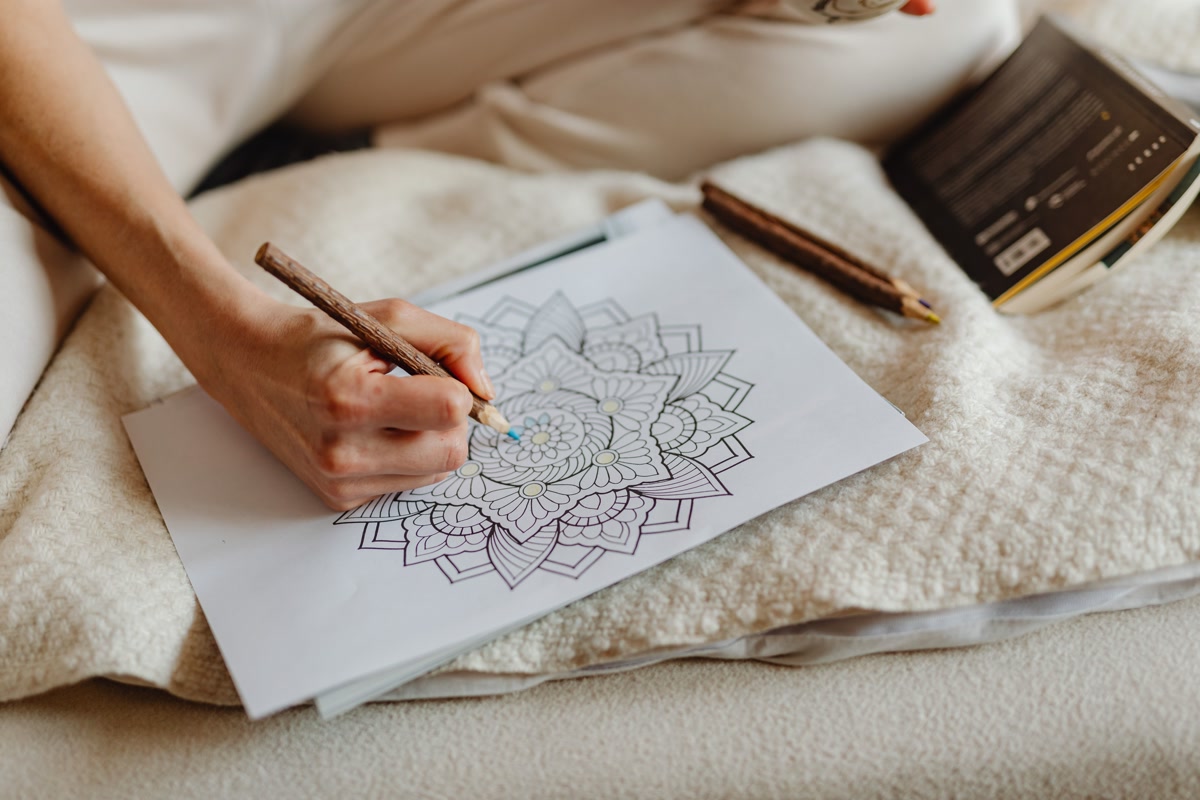
Every coloring book roundup on the internet gives you the same five titles. That’s not helpful if you’re standing in a bookstore (or scrolling Amazon) at 11 PM, mildly stressed, trying to figure out what you actually want to color right now.
Disclosure: As an Amazon Associate, ColoredCalm earns from qualifying purchases. This post contains affiliate links, which means we may earn a commission if you click through and make a purchase, at no additional cost to you.
Because here’s the thing nobody talks about: the “best” coloring book changes depending on how you feel.
The book that’s perfect on a lazy Sunday afternoon will feel wrong on a Tuesday night when your brain won’t shut off. The intricate mandala that’s meditative when you’re calm is agonizing when you’re anxious. The simple design that feels boring on a good day is exactly right when you’re overwhelmed.
This guide matches coloring books to moods. Not skill levels. Not budgets. Moods.
The Core Idea: Match Complexity to Energy

Your coloring book’s complexity should be slightly below your current mental energy. If you’re exhausted, a 12-inch mandala with 200 tiny spaces is going to stress you out more, not less. If you’re restless and need focus, a big open design won’t give your brain enough to do.
Think of it like a volume dial:
– Low energy → Simple, large spaces, forgiving designs
– Medium energy → Moderate detail, patterns with rhythm
– High energy → Intricate, dense, lots of small spaces
Most people pick books that are too complex for their current state. They see a beautiful finished page on Instagram and think “I want to do that”, but they’re comparing their tired Tuesday to someone’s rested weekend.
Match the book to the mood, not the aspiration.
Mood 1: Stressed and Overwhelmed
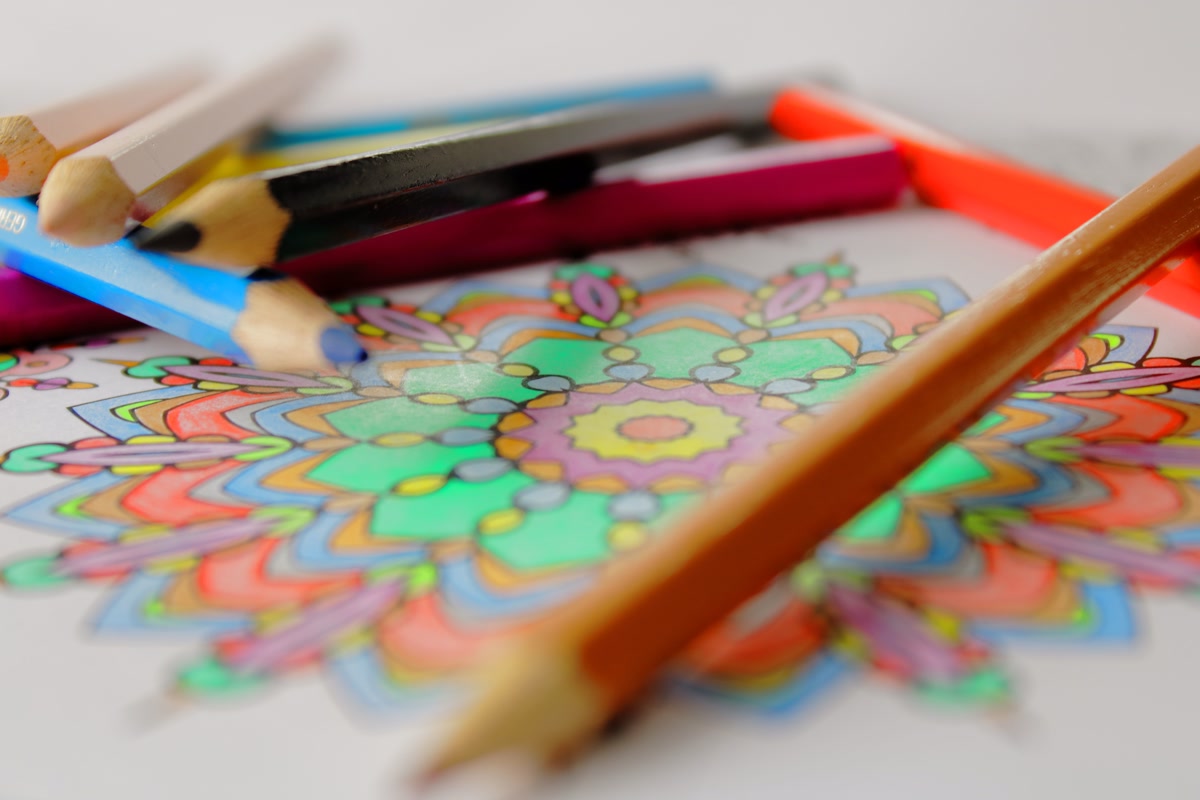
What you need: Simplicity. Repetition. Nothing that requires decisions.
When you’re stressed, decision fatigue is real. A coloring page with 15 tiny different flowers, each requiring a different color choice, is going to make things worse. You want pages where you can pick 3-4 colors and just go.
Best book types:
– Large geometric patterns, mandalas with big sections, repeating tile designs
– Nature scenes with large areas, simple flowers, big leaves, open landscapes
– Abstract wash pages, designs where “coloring outside the lines” is fine
Recommended:
– Tropical World by Marotta, Big, bold, tropical designs with generous spaces. You can color an entire page with 4-5 colors and it looks amazing. Not fussy. Not precious. Just satisfying. (Amazon)
– The Mindfulness Coloring Book by Farrarons, Purpose-built for stress. Small book, simple patterns, thick lines. You can finish a page in 15 minutes when that’s all you have. (Amazon)
Color palette tip: Pick a cool palette (blues, greens, purples) and stick with it. No decisions n#eeded Cool colors are also physiologically calming, your nervous system responds to them even before you notice.
Mood 2: Restless and Fidgety
What you need: Focus. Intricacy. Enough detail to occupy your hands and brain.
When you’re restless, simple designs don’t work, your mind wanders, you get bored, you put the book down and pick up your phone. You need something that demands just enough attention to pull you into a flow state without being so hard it causes frustration.
Best book types:
– Dense pattern pages, repeated small motifs (flowers, leaves, stars)
– Zentangle-style designs, structured but detailed
– Scenes with many small elements, garden scenes, cityscapes, fairy tale illustrations
Recommended:
– Secret Garden by Johanna Basford. The OG of adult coloring. Dense garden scenes with hidden details. Enough intricacy to keep restless hands busy, but the organic shapes are forgiving, there’s no “wrong” color for a flower. (Amazon)
– Worlds of Wonder by Mythographic, Surreal, dense, incredibly detailed. Each page has dozens of small spaces. This is for when you want to get lost. Not for the faint of heart, but perfect for restless minds that need a project. (Amazon)
Color palette tip: Go warm and varied (reds, oranges, yellows, golds). Warm colors stimulate and energize. When you’re restless, channeling that energy into color choices is better than fighting it.
Mood 3: Sad or Low
What you need: Comfort. Nostalgia. Permission to make something beautiful without pressure.
When you’re feeling down, perfectionism is the enemy. You don’t need a masterpiece, you need a gentle activity that produces something pretty with minimal effort. The goal isn’t the result. It’s the small, quiet act of making something.
Best book types:
– Familiar, cozy subjects, cottages, gardens, animals, tea cups
– Pages with built-in charm, illustrations that look good even with simple coloring
– Small pages or small designs, quick wins, visible progress
Recommended:
– Enchanted Forest by Johanna Basford, Forest paths, tiny creatures, hidden treasures. The woodland theme is inherently comforting. The detail is there if you want it, but broad strokes on the trees and backgrounds still look lovely. (Amazon)
– Creative Haven Creative Cats by Marjorie Sarnat, Cats wearing hats, cats in costumes, cats being cats. It’s impossible to be sad while coloring a cat in a top hat. The designs are detailed enough to be engaging but whimsical enough to take seriously. (Amazon)
Color palette tip: Soft, warm pastels. Lavender, rose, butter yellow, sage green. These colors feel gentle and kind, like a visual hug. Avoid harsh primaries or stark contrasts when you’re already feeling fragile.
Mood 4: Calm and Present
What you need: Depth. Challenge. The chance to really sink in.
This is the sweet spot, when you’re relaxed, focused, and actually want to be coloring. This is when you pull out the book with tiny intricate designs and the 72-color pencil set and spend an hour on a single page.
Best book types:
– Highly detailed illustrations, the ones that look intimidating on a bad day
– Realistic or semi-realistic scenes, botanicals, wildlife, architecture
– Books with paper quality that rewards layering, thick paper that takes multiple pencil layers or marker
Recommended:
– World of Flowers by Johanna Basford, Her most detailed botanical work. Each page is a world of tiny petals, leaves, and hidden creatures. When you have the mental bandwidth to appreciate it, it’s stunning. (Amazon)
– Secret Garden by Johanna Basford, Yes, it appears twice. When you’re calm, you see different things in it. The hidden details, the tiny insects, the layered backgrounds, they emerge when you have the patience to find them. (Amazon)
Color palette tip: Full range. This is the mood for experimentation. Try a monochrome page (all blues, all warm tones). Try complementary pairs (orange/blue, red/green). Try matching a real flower or landscape. You have the mental space for creative choices, use it.
Mood 5: Angry or Frustrated
What you need: Release. Boldness. Permission to be aggressive with the page.
Anger and frustration don’t respond well to delicate, precise work. You’ll press too hard, snap pencil tips, and get more frustrated. Instead, channel that energy into something that welcomes intensity.
Best book types:
– Bold, graphic designs, thick lines, large areas, strong shapes
– Abstract patterns, no “right” way to color them
– Pages where going outside the lines doesn’t matter, or even looks cool
Recommended:
– Tropical World by Marotta, Again. The bold, graphic style absorbs aggressive coloring. Press hard? Great. Bold strokes? Even better. The designs are loose enough that “messy” just looks expressive. (Amazon)
– Any abstract/geometric coloring book, Look for books with bold geometric shapes, not fine illustrations. The kind where coloring outside the lines creates interesting effects, not mistakes.
Color palette tip: Go intense. Deep reds, electric blues, black, hot pink. Don’t be subtle. Channel the energy into saturation and contrast. The page should look felt, not designed.
Tool tip: This is one of the few moods where markers might beat pencils. The bold, saturated coverage of alcohol markers matches intense emotional states. Colored pencils are for gentle hands; markers are for expressive ones.
The Mood-Book-Color Matrix
Here’s the whole system at a glance:
| Mood | Book Style | Detail Level | Color Palette | Best Tool |
|---|---|---|---|---|
| Stressed | Simple, repetitive | Low | Cool, limited | Colored pencils |
| Restless | Dense patterns | Medium-High | Warm, varied | Colored pencils |
| Sad/Low | Cozy, whimsical | Medium | Soft pastels | Colored pencils |
| Calm | Highly detailed | High | Full range | Pencils or markers |
| Angry | Bold, graphic | Low-Medium | Intense, saturated | Markers |
Building a Mood-Based Coloring Library
You don’t need 20 books. Three is enough to cover most moods:
- Your calm book. The intricate one you love but need patience for (World of Flowers, Worlds of Wonder)
- Your comfort book. The cozy one that always feels good (Enchanted Forest, Creative Cats)
- Your easy book. The simple one for when you’re running on empty (Tropical World, Mindfulness Coloring Book)
Three books. Three moods. One pencil set. That’s a complete coloring practice.
Add more books when a mood comes up that none of your three cover. Not before. A pile of uncolored books is just guilt with a cover.
Supplies That Work Across All Moods
You don’t need mood-specific supplies. One solid kit handles everything:
- Prismacolor Premier 72-Color Set, Soft enough for gentle moods, vibrant enough for bold ones. The range covers every palette in this guide. (Amazon)
- Kum Automatic Long Point Sharpener, Because dull pencils work for zero moods. (Amazon)
- Kneaded Eraser, For the pages you want to start over on. Which, let’s be honest, is usually the ones you started while in the wrong mood. (Amazon)
- Prismacolor Colorless Blender, For when calm-you wants those buttery smooth gradients. (Amazon)
What If You Pick the Wrong Book?
You will. We all do. You’ll open your calm book on a stressed night and stare at it for 5 minutes before closing it again. That’s not failure, that’s information.
When a book feels wrong, don’t force it. Put it down and pick up the one that calls to you. Sometimes that’s the simplest book in your stack. Sometimes it’s not coloring at all, it’s a walk, or a cup of tea, or just staring at the wall.
The right coloring book is the one you actually want to open. Not the one you think you should want to open.
Not a Prime member yet? Get FREE 2-day shipping on millions of items, plus access to Prime Video, Prime Music, and Prime Reading. Start your 30-day Prime free trial
Bottom Line
Coloring books aren’t just art supplies. They’re mood regulators in paper form. The right book at the right time can shift your entire evening, from scattered to focused, from heavy to light, from tense to breathing.
Don’t buy books because they’re popular. Buy books because they match how you actually feel. Keep a small stack that covers your emotional range. And when in doubt, pick the simpler one.
You can always add more detail tomorrow. Tonight, just color.
n
🎨 Get Your Free Stress Relief Coloring Guide
Join our newsletter and get this free printable plus weekly tips.