This article contains affiliate links. We may earn a commission from qualifying purchases.
Some content on this site is AI-assisted and reviewed by our editorial team.
Coloring for Anxiety Isn’t Just a Trend, But It’s Also Not Magic
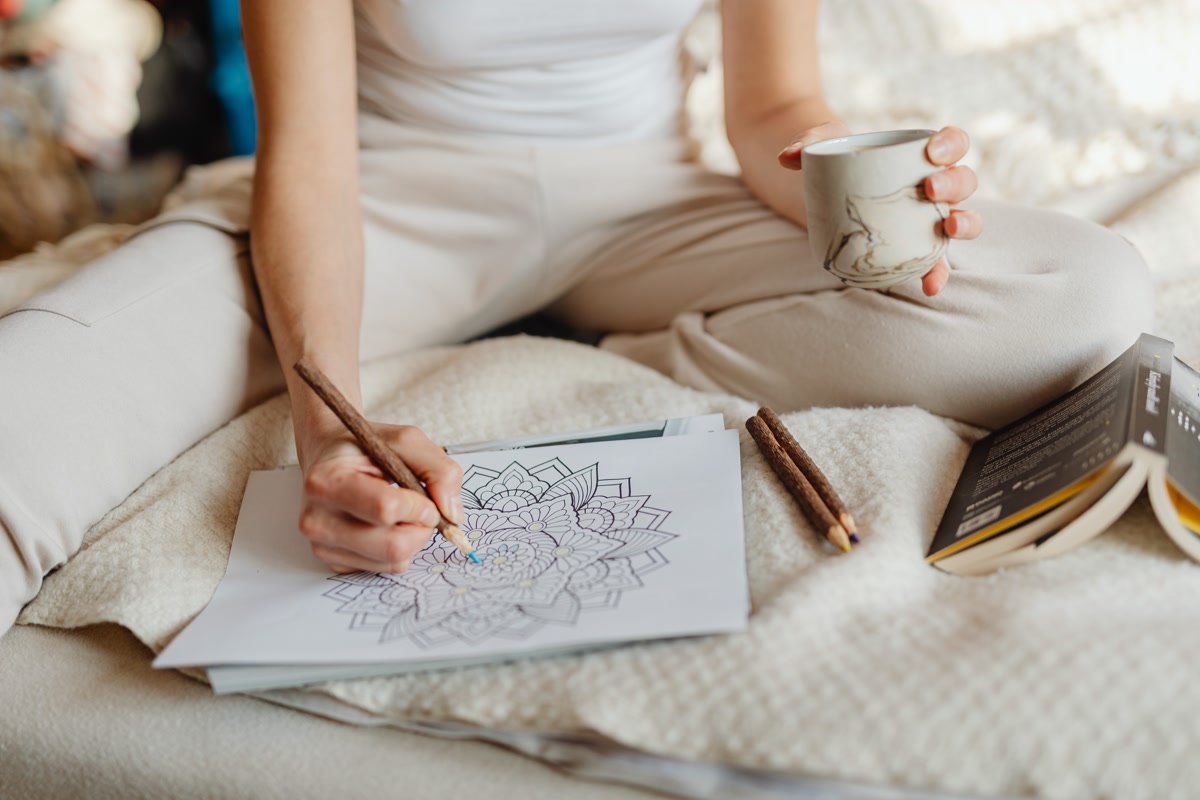
You’ve seen the headlines. “Coloring reduces anxiety by 70%!” “Adult coloring books cure stress!” The reality is more nuanced, and more useful.
Disclosure: As an Amazon Associate, ColoredCalm earns from qualifying purchases. This post contains affiliate links, which means we may earn a commission if you click through and make a purchase, at no additional cost to you.
Yes, coloring can genuinely reduce anxiety. The research backs it up. But not all coloring is created equal, and not all anxiety responds the same way. If you’re coloring frantically while your chest tightens and your mind races, you’re doing it wrong, and it won’t help.
This guide covers what actually works for anxiety relief through coloring, what doesn’t, and how to build a practice that makes a real difference.
What the Research Actually Says
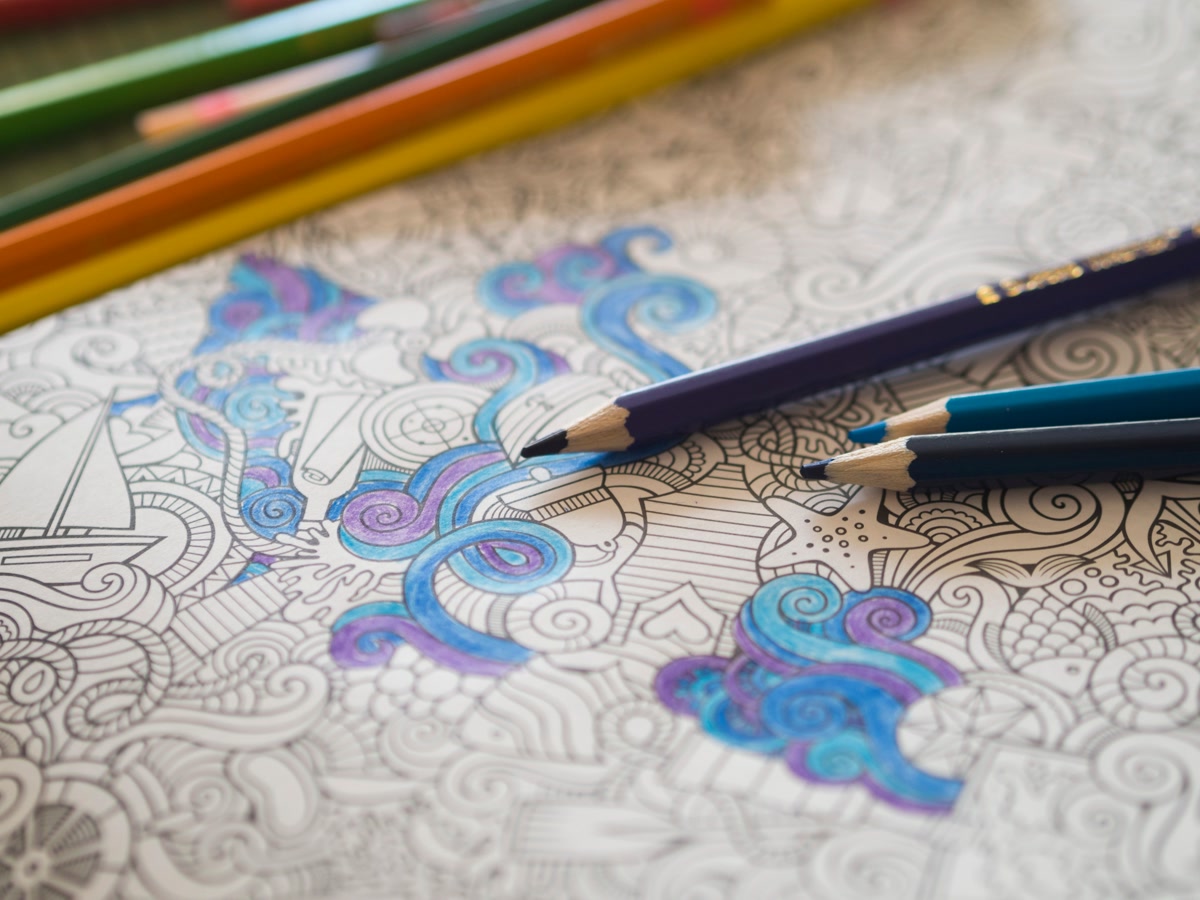
Let’s separate the science from the marketing:
What studies have found:
– A 2017 study in Psychology of Popular Media Culture found that coloring complex geometric patterns (like mandalas) significantly reduced anxiety compared to free-drawing or coloring plain pages
– Research published in Art Therapy showed that 20 minutes of coloring reduced cortisol (a stress hormone) more effectively than 20 minutes of reading
– A 2020 study in the International Journal of Environmental Research and Public Health found that structured coloring (filling in predetermined designs) reduced anxiety more than unstructured art-making in people with high anxiety
What studies haven’t found:
– Coloring is not a replacement for therapy or medication
– The anxiety reduction is real but modest, it helps, it doesn’t cure
– Not everyone responds the same way. About 15-20% of people in studies showed no significant anxiety reduction from coloring
The takeaway: Coloring is a legitimate anxiety management tool. It’s accessible, affordable, and evidence-based. But it works best as one tool in a broader anxiety management toolkit, not as a standalone solution.
What Works: 5 Principles for Anxiety-Reducing Coloring
1. Choose Simple Designs When Anxious
The Mindfulness Coloring Book is perfect for anxious moments, simple designs, small pages, no pressure.
This is the biggest mistake people make. When you’re anxious, your brain is already overloaded. A page with 200 tiny sections demands constant decision-making, “What color goes here? And here? And here?”, which increases cognitive load instead of reducing it.
What to reach for instead:
– Large, open designs with big spaces (like Tropical World by Marotta)
– Simple mandalas with 6-12 sections
– Nature scenes with big leaves, petals, or sky areas
The Mindfulness Coloring Book by Farrarons was designed specifically for this, small, portable, and simple enough that you can finish a page in 10 minutes when anxiety hits.
2. Limit Your Color Choices
Decision fatigue is real, and it makes anxiety worse. When you’re anxious, don’t pick from a 72-color set. Pick 4-6 colors before you start and commit to them.
Anxiety-friendly palettes:
– Cool calm: Blues, greens, and one warm accent (gold or peach)
– Nature walk: Greens, browns, and cream
– Sunset: Deep blue, purple, orange, and pink
– Minimalist: Two complementary colors (blue/orange, green/red)
Our guide to choosing a coloring book based on your mood goes deeper on this, matching your palette to how you actually feel, not how you think you should feel.
3. Set a Timer, Not a Goal
Anxiety thrives on open-ended worry: “I need to finish this page” or “I should be doing something productive.”
Flip the script. Set a timer for 15-20 minutes. Your only goal is to color until the timer goes off. There’s no finish line, no page to complete, no quality standard. When the timer goes off, you can stop or continue, but you’ve already won.
This works because it transforms coloring from a task (which anxious brains interpret as pressure) into a time-bound practice (which anxious brains can tolerate).
4. Focus on Repetition, Not Beauty
The anxiety-reducing power of coloring comes from the repetitive motion, the rhythmic back-and-forth of the pencil, the same stroke pattern over and over. It’s similar to knitting or walking: the repetition activates your parasympathetic nervous system.
When you notice yourself worrying about how the page looks, gently redirect: “I’m not making art. I’m making rhythm.”
This is why mandalas work so well for anxiety, the circular repetition is inherently soothing. Learn more about how to color mandalas for maximum stress relief.
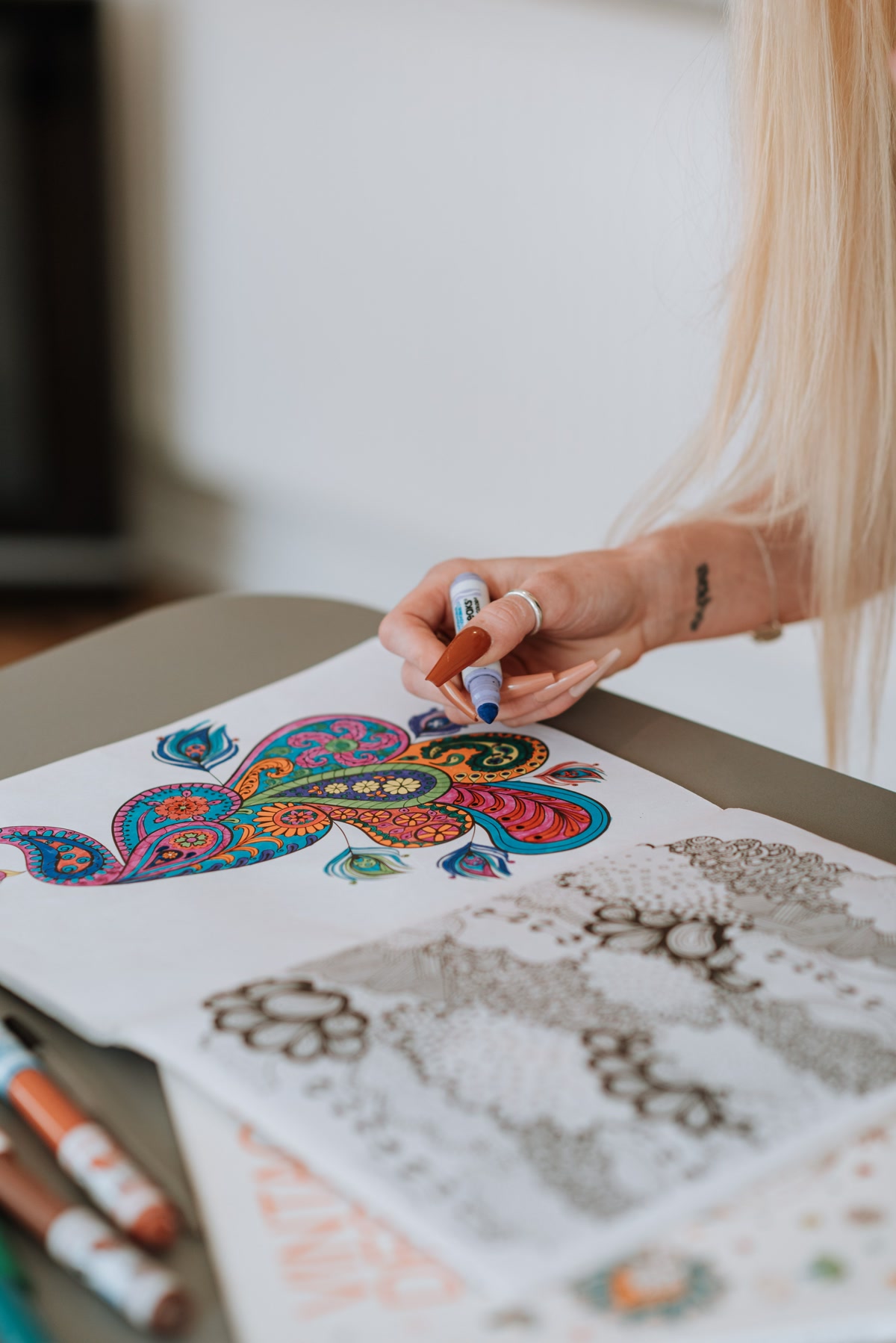
5. Use Colored Pencils, Not Markers
Prismacolor Premier colored pencils are ideal for anxiety coloring, soft, blendable, and forgiving.
This isn’t a hard rule, but for anxiety specifically, colored pencils have an advantage: the physical act of layering requires slow, deliberate strokes. This slow rhythm is more calming than the fast, bold strokes that markers encourage.
If you’re deciding between the two, our comparison guide breaks it down, but for anxiety, pencils generally win because they force you to slow down.
What Doesn’t Work
Coloring pages you hate. Forcing yourself through a design you find ugly or boring doesn’t reduce anxiety, it creates it. Skip pages without guilt. This isn’t a test.
Perfectionism. If you’re redoing sections because the color “isn’t right,” you’ve turned a relaxation tool into a performance metric. Let it be imperfect. Let it be messy. The result doesn’t matter, the process does.
Coloring for too long. After about 30-40 minutes, the anxiety-reducing benefits plateau and can even reverse as your hand cramps and focus wanes. Short sessions (15-20 minutes) are more effective than marathon sessions.
Using coloring as avoidance. If you’re coloring instead of addressing the thing causing your anxiety, it becomes procrastination with a mindfulness wrapper. Color to calm yourself enough to face the problem, not to pretend the problem doesn’t exist.
Building an Anxiety Coloring Practice
You don’t need a ritual. But a loose structure helps when anxiety makes decisions hard.
The 5-Minute Reset:
1. Pick one simple page
2. Choose 4 colors (just grab them, don’t deliberate)
3. Set a timer for 5 minutes
4. Color. Don’t judge. Don’t plan. Just move the pencil.
5. When the timer goes off, notice how you feel. Better? Keep going. The same? That’s okay. Try again later.
The 20-Minute Wind-Down (before bed):
1. Start 30 minutes before your target sleep time
2. Choose a page you’ve already started (no fresh decisions)
3. Use cool colors (blues, greens, purples), these reduce physiological arousal
4. Color slowly and deliberately
5. When your eyelids get heavy, close the book. You’re ready for sleep.
Want more on the sleep connection? Coloring for sleep covers the science and practice in detail.
Want to listen to books on the go? Try Audible Premium Plus FREE for 30 days and get 1 free audiobook on mindfulness, creativity, or anything else. Start your free trial
Bottom Line
Coloring for anxiety works. Not because of some mystical power in the act of filling in shapes, but because it gives your busy brain one thing to focus on instead of everything at once. The repetition calms your nervous system. The structure reduces decision fatigue. The simplicity makes it accessible.
Start small. Five minutes. Four colors. One page. See how you feel.
That’s it. That’s the whole practice.
n
🎨 Get Your Free Stress Relief Coloring Guide
Join our newsletter and get this free printable plus weekly tips.