
This article contains affiliate links. We may earn a commission from qualifying purchases.
Some content on this site is AI-assisted and reviewed by our editorial team.
<a href="https://coloredcalm.com/Coloring-for-anxiety-relief-the-science-and-practice-of-coloring-your-way-to-calm/”>Coloring Books for Dementia and Alzheimer’s: A Gentle Activity That Sparks Joy and Memory
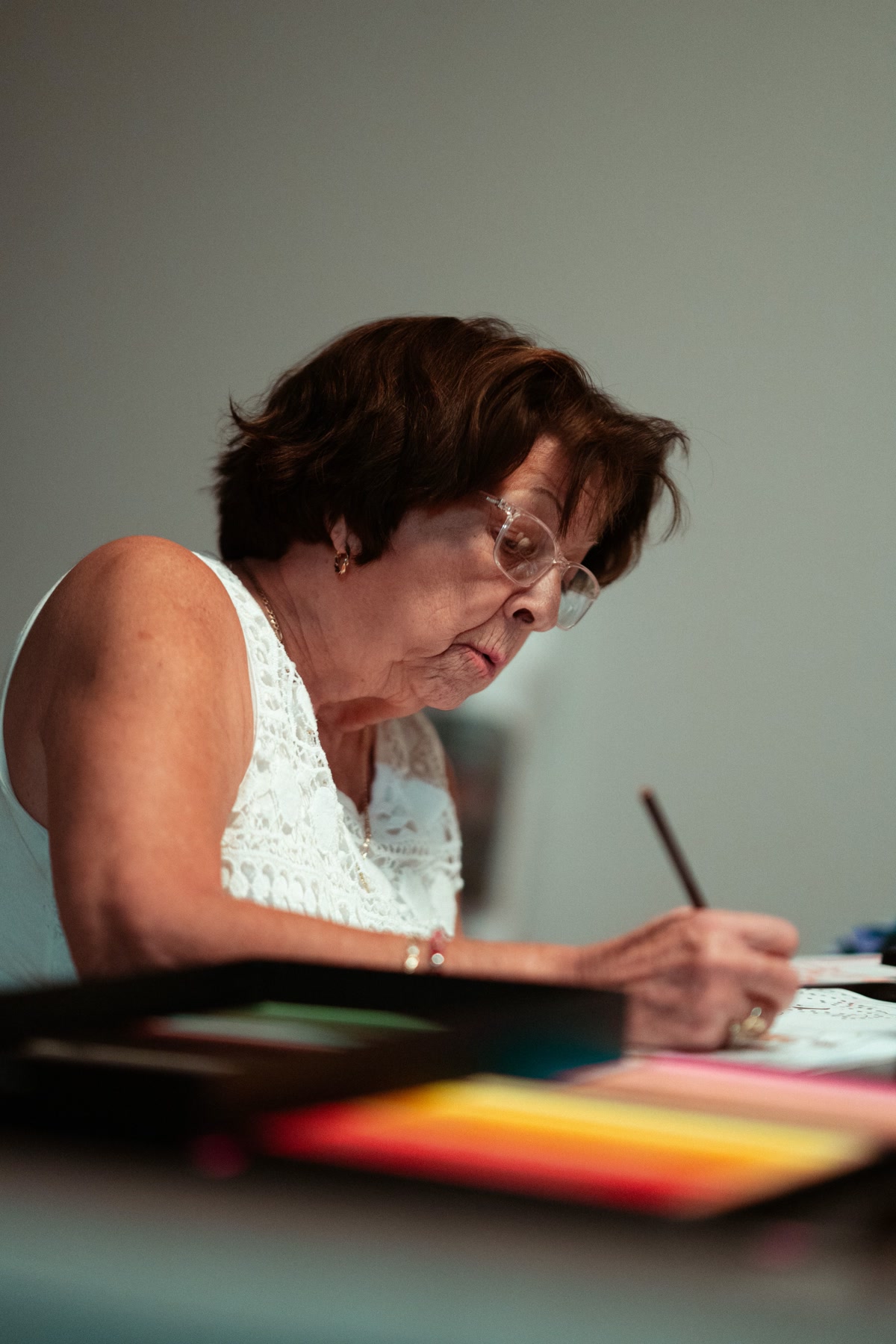
If you are caring for a parent or spouse with dementia or Alzheimer’s, you know how hard it can be to find activities that are engaging without being frustrating. Too complex and it causes agitation. Too simple and it feels patronizing. Coloring books occupy a rare sweet spot, they are creative, familiar, and calming without requiring skills the person may have lost.
Coloring is increasingly recommended by dementia care specialists as a therapeutic activity for people in early to mid-stage cognitive decline. It provides gentle cognitive stimulation, encourages focus, and creates moments of accomplishment that are increasingly rare as memory and attention fade. And perhaps most importantly, it gives caregivers a shared activity that does not require conversation, which can be stressful for someone who struggles with words.
Why Coloring Works for Dementia and Alzheimer’s
It Uses Preserved Abilities
As dementia progresses, many complex skills decline, planning, sequencing, following multi-step instructions. But simple motor skills and the ability to recognize and enjoy color often remain intact much longer. Coloring taps into these preserved abilities. The person does not need to remember how to plan a project or follow complex instructions, they just pick a color and fill in a shape. This makes coloring accessible even when many other activities have become too difficult.
It Provides Sensory Stimulation
The tactile experience of holding a pencil, feeling the paper, and watching color appear under your hand provides valuable sensory input. For people with dementia, who may spend much of their day with limited stimulation, this sensory engagement is genuinely therapeutic. The visual feedback of seeing a shape fill with color provides a sense of accomplishment that does not depend on memory.
It Reduces Anxiety and Agitation
Anxiety and agitation are among the most challenging symptoms of dementia, and they often stem from boredom and lack of purpose. Coloring gives the person something to do that is absorbing without being stressful. The repetitive motion of coloring can be meditative, and the focus required gently redirects the mind from anxious thoughts.
It Creates Connection Without Requiring Conversation
For caregivers, finding ways to spend quality time with a loved one who has dementia can be difficult. Conversation becomes harder as memory and language decline. Coloring together gives you a shared activity that does not require words. You can sit together, color side by side, and enjoy each other’s company without the stress of trying to maintain a conversation that may be confusing or frustrating for both of you.
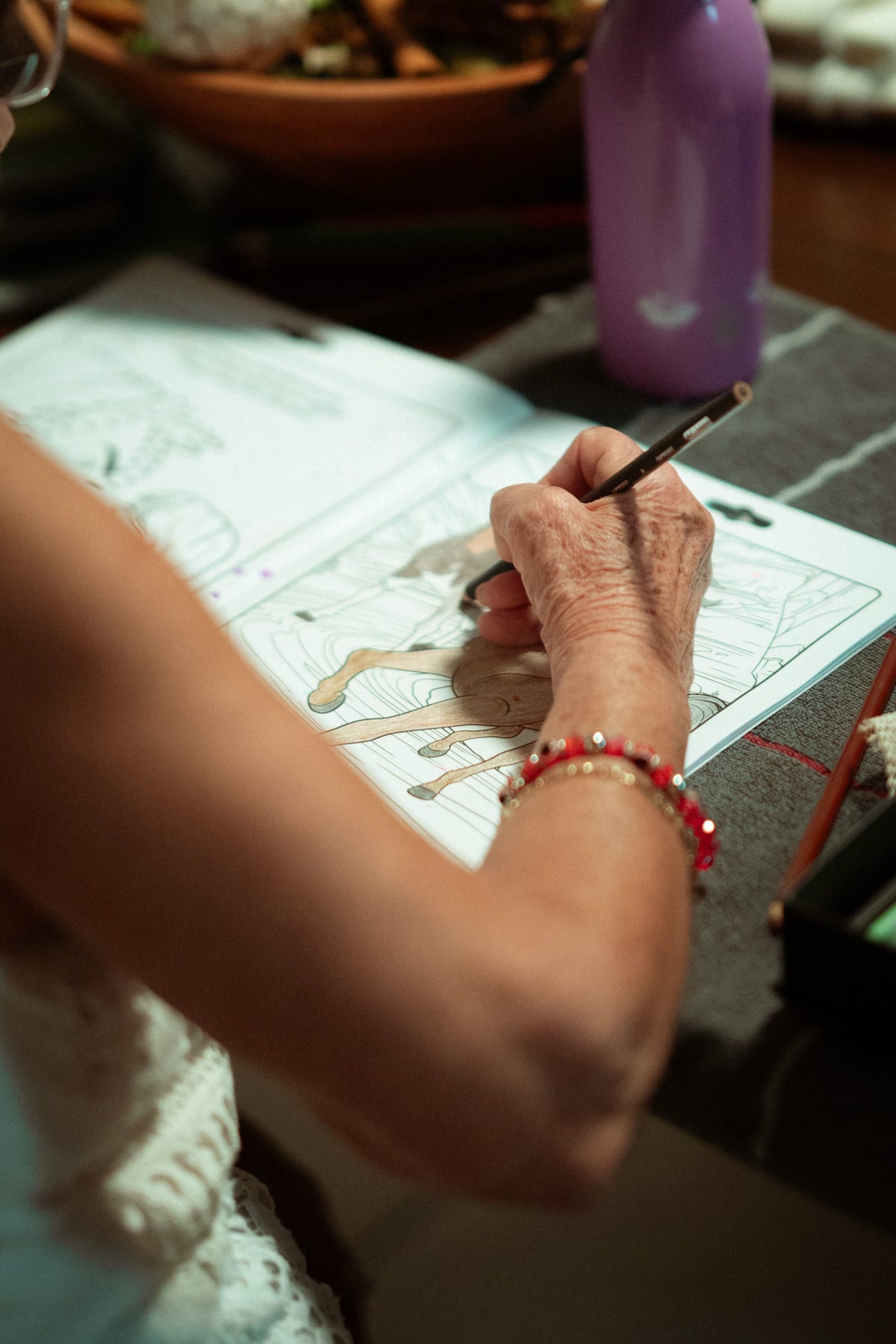
Choosing the Right Coloring Books for Dementia
The coloring books that work for healthy adults are often wrong for people with dementia. Intricate designs with tiny sections, complex patterns, and realistic scenes can cause frustration and agitation. Here is what to look for instead.
Large Print and Bold Designs
The most important feature is simplicity. Look for books with large, bold designs printed on white paper. The shapes should be big enough to color without precision, and the lines should be thick enough to see clearly even with vision changes. The Calming Coloring Book for Seniors is specifically designed for this purpose, with large print, bold lines, and simple patterns that are easy to complete without frustration.
Single-Sided Pages
Bleed-through can be upsetting for someone with dementia, seeing the back of a page ruined feels like a mistake. Always choose books with single-sided printing. This also means you can display finished pages without worrying about what is on the back.
Familiar and Nostalgic Themes
Designs that feature familiar objects, flowers, birds, simple landscapes, household items, can trigger pleasant memories and spark conversation. Abstract geometric patterns are fine for calming, but recognizable subjects provide additional cognitive stimulation. The Easy Coloring Book: Large Print Designs for Adults and Seniors includes a mix of familiar objects and simple patterns.
Avoid “Senior” or “Dementia” Labels
Here is a tip from dementia care specialists: many people with dementia are aware enough to feel patronized by books labeled “for dementia patients” or “for seniors.” Remove the cover or choose books that look like regular adult coloring books. What matters is the simplicity of the designs, not the label on the front. A book like Large Print Coloring Book: Easy Patterns for Adults has simple designs without any age-related labeling.
The Best Supplies for Dementia Coloring
Thick, Easy-to-Grip Pencils
Arthritis, tremors, and reduced grip strength are common in elderly adults. Standard colored pencils are too thin for many seniors to hold comfortably. The Faber-Castell Jumbo Grip pencils have a thick triangular shape that is much easier to hold than standard pencils. The triangular shape also prevents them from rolling off the table, a small but important detail.
Limited Color Palette
Too many color choices can be overwhelming for someone with cognitive decline. Instead of offering a 100-color set, select 8 to 12 pencils in contrasting, easy-to-identify colors. Bright primary and secondary colors, red, blue, green, yellow, orange, purple, pink, brown, are easiest to distinguish. Place them in a simple cup or lay them out in a row so they are easy to see and choose from.
Smooth, Bold Media
Colored pencils require pressure and fine motor control. If grip strength is an issue, try chunky crayons or markers instead. They require less pressure and cover large areas more quickly, which means faster results and less frustration. The goal is the activity itself, not artistic perfection.

How to Introduce Coloring to Someone With Dementia
Start With the Right Setting
Choose a time of day when your loved one is typically calm and alert, for many people with dementia, this is late morning or early afternoon. Find a well-lit, quiet space with a flat surface. Clear away clutter, too many objects on the table can be distracting and confusing.
Set Up Everything in Advance
Do not ask the person to choose a book or find pencils. Have everything ready before you invite them to sit down: book open to a simple page, pencils selected and within reach, a comfortable chair. Decision-making is stressful for someone with dementia, so eliminate every choice except which color to use.
Color Alongside Them
Do not just hand them the book and watch. Sit beside them and color your own page or color in the same book. This provides a model for what to do without having to give instructions, and it makes the activity social rather than solitary. If they seem unsure, gently point to a section and suggest a color. Avoid correcting mistakes, if they color outside the lines or use an unusual color, let it be. The goal is engagement, not accuracy.
Keep Sessions Short
Ten to fifteen minutes is a good starting point. If they lose interest, stop. If they are enjoying themselves, let them continue. Do not push past their attention span. You can always try again the next day.
Display the Finished Work
When a page is finished, show genuine appreciation. Hang it on the wall or the refrigerator. This provides a sense of accomplishment and pride that does not require memory to sustain, the finished page is physical proof of their ability, right there in front of them.
What to Avoid
| Avoid | Choose Instead |
|---|---|
| Intricate, tiny designs | Large, bold shapes |
| 100+ color sets | 8 to 12 easy-to-distinguish colors |
| Thin standard pencils | Thick, easy-grip pencils or chunky crayons |
| Books labeled “for dementia” | Regular adult books with simple designs |
| Long sessions | 10 to 15 minute sessions |
A Dementia Coloring Starter Kit
- Calming Coloring Book for Seniors, bold, large-print designs made for cognitive accessibility
- Large Print Coloring Book: Easy Patterns, simple patterns without age-related labeling
- Faber-Castell Jumbo Grip Pencils, thick triangular shape that is easy for arthritic hands to hold
Under 30 dollars for an activity that provides gentle cognitive stimulation, reduces anxiety, and creates moments of shared peace.
Bottom Line
Coloring will not slow the progression of dementia or restore lost memories. But it can do something almost as important: it gives your loved one an activity they can succeed at, a way to be creative and engaged with the world, and a shared experience that does not require words. In a disease that takes so much, coloring offers a small, gentle way to give something back, moments of focus, calm, and pride That Make a day better.
Start with one simple book, a handful of bright pencils, and ten minutes at the kitchen table. Do not worry about the result. The activity itself is the point.
🎨 Get Your Free Stress Relief Coloring Guide
Join our newsletter and get this free printable plus weekly tips.