This article contains affiliate links. We may earn a commission from qualifying purchases.
Some content on this site is AI-assisted and reviewed by our editorial team.
Most people buy watercolor pencils, draw a careful sketch, then swipe a wet brush across it and watch their drawing turn to mud. That was me, twice, before I understood what these pencils actually are: sticks of concentrated watercolor pigment wrapped in wood. They are not “colored pencils you can add water to” — they are a dry painting medium that you control in two states. The difference between muddy beginner pages and the loose, glowing work you see online is four activation techniques, and none of them are expensive.
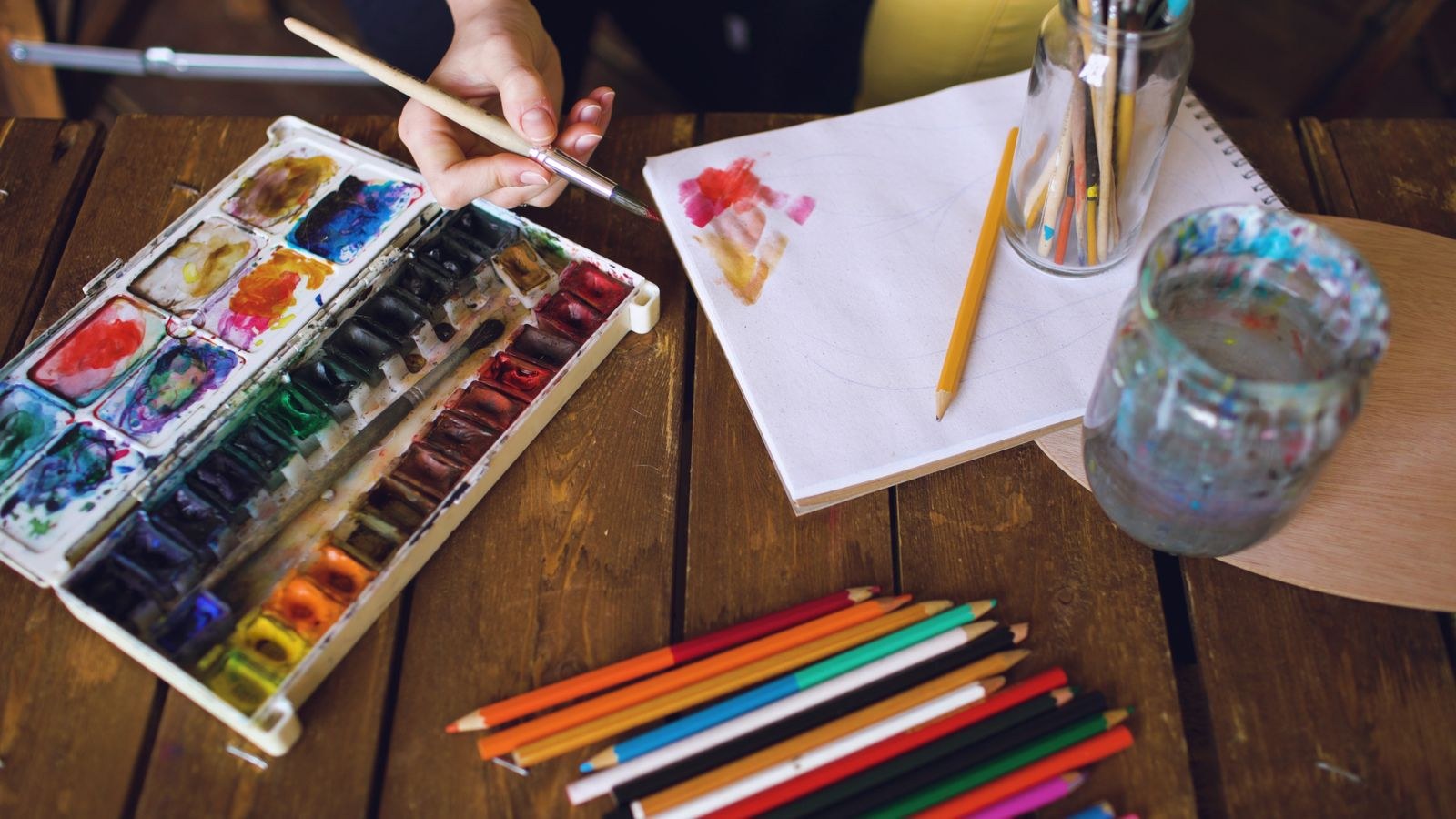
Below are the four activation methods in the order I teach them, plus the three pencil sets at budget, value, and artist grade, and the paper that makes every technique easier.
Technique 1: Dry-Then-Wet (The Controlled Start)
Draw with the pencils dry — light pressure, small circular strokes, and stop one shade darker than you think. Then activate with a damp (not dripping) brush, working small areas at a time with the least water that wets the page. The pencil marks dissolve into paint that you can push around, blend, and feather to edges. This is the technique for most work: full control while drawing, then a painterly finish.
The single most common mistake: too much water on the first pass. A brush you have shaken twice is wetter than you think — blot it on a paper towel until it stops leaving a shine on your test paper.
Technique 2: Wet-Then-Dry (Painting From Puddle)
Pre-wet the paper with clean water, then touch the pencil tip directly into the wet area. Pigment blooms out from the contact point — perfect for petals, distant foliage, and any soft edge you would fight to paint with a brush. Lift pigment by touching a squeezed-dry brush to the puddle. This is the loose, washy look people associate with watercolor, and it is the fastest way to stop overworking a page.
Technique 3: Scraping and Flicking (Texture for Branches and Grass)
Scrape shavings from the pencil tip onto wet paper and let the chips dissolve where they land — instant stippled texture for snow, sand, or flower centers. Or sharpen the pencil over wet paper and flick. This is the technique that makes people ask “how did you do that.”
Technique 4: Dipped-Tip Dark Accents
Dip the sharpened tip in water for two seconds and draw. The line goes on dark, saturated, and ink-like — dry enough for details that need to stay put: the dark center of an eye, twigs, vein lines. Once dry, these lines barely move when later washes pass over them.
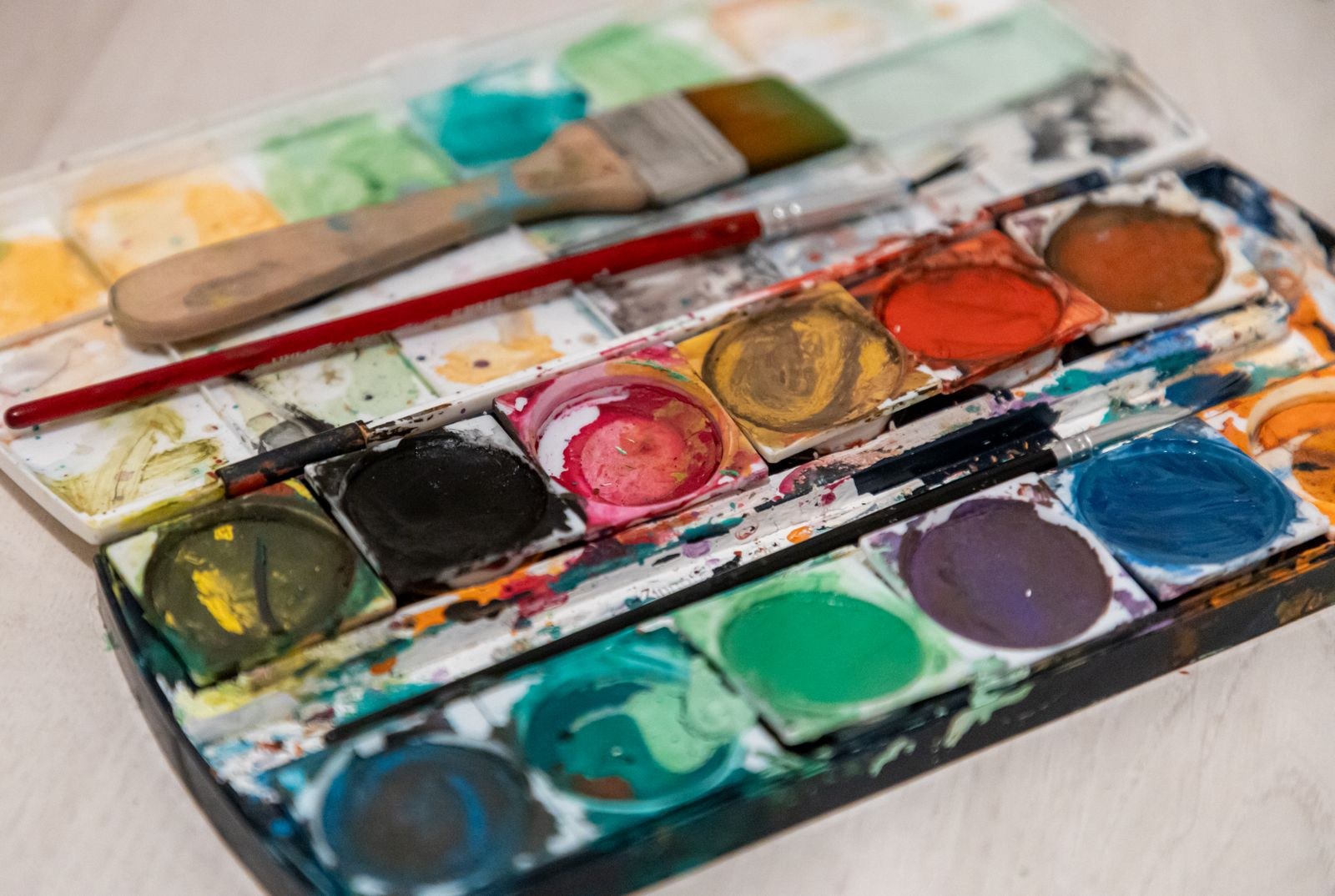
The Sets, At Three Price Points
Crayola Watercolor Pencils 24ct — The Zero-Risk Trial
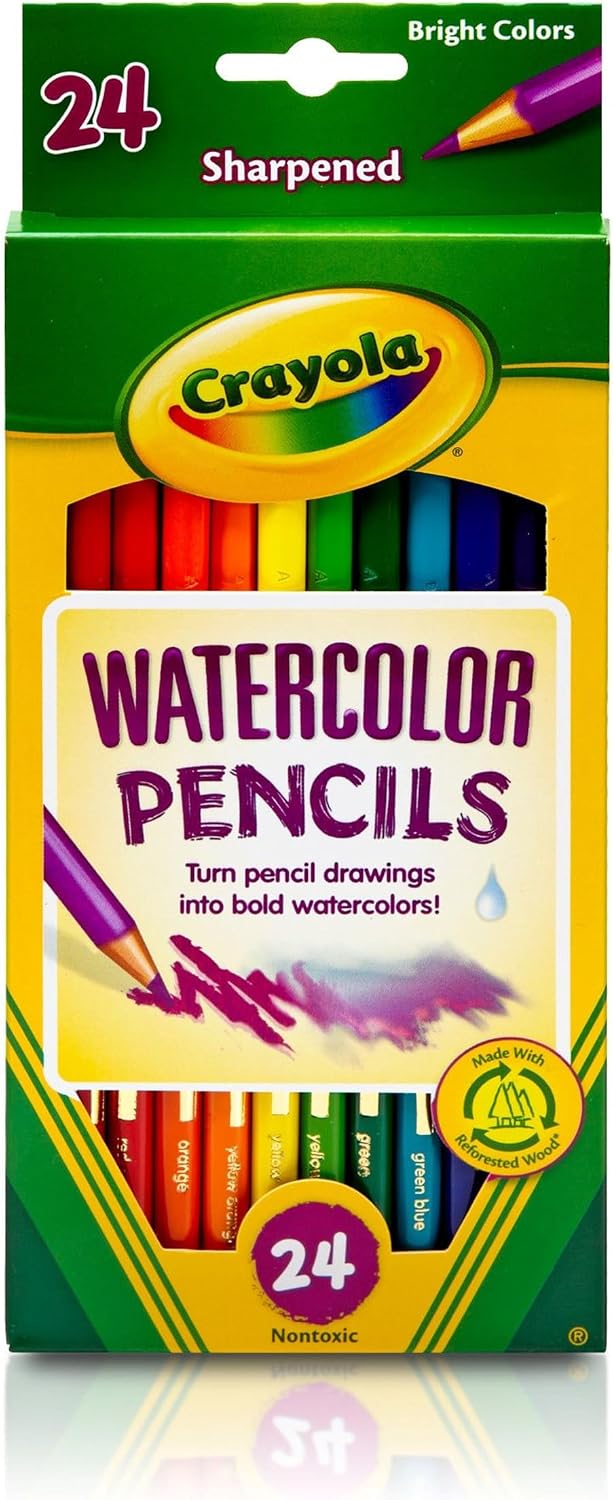
Crayola Watercolor Colored Pencils 24ct (about $9, list $12.99) is the set I tell absolute beginners to buy first, and not as a joke. You will learn every technique above on these for $9.35 — at $0.39 a pencil. The pigment is softer and less concentrated than artist-grade, and lightfastness is weak (fine for practice pages, not heirlooms). But if you are unsure you’ll like the medium, this is the honest $9 answer, not a $112 mistake.
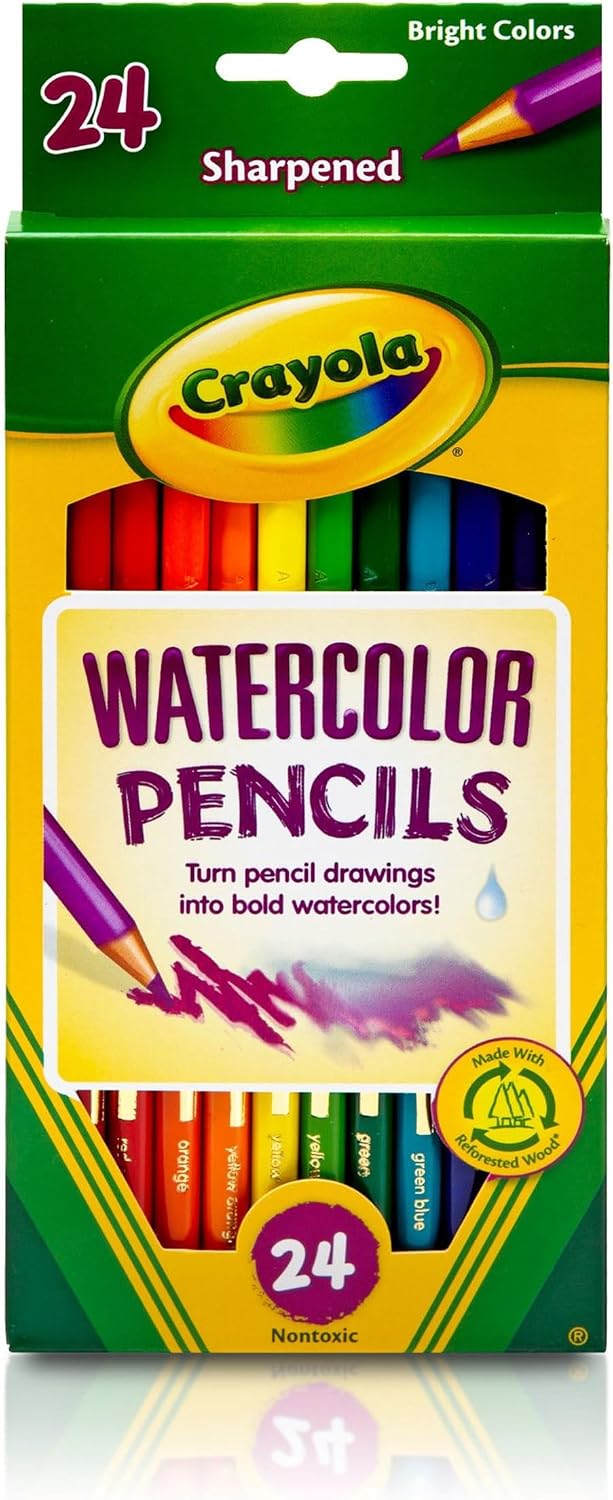
My take: The $9 trial that tells you whether the medium is for you before real money is involved.
ARTEZA Watercolor Pencils 120 — The Value Set
ARTEZA Watercolor Pencils, Set of 120 (about $60) is the set I actually use most. One hundred twenty colors at about $0.50 a pencil, creamy application, and they dissolve fully and evenly — the “did this fully activate?” problem that plagues cheap sets is absent. The tin includes a color chart you should fill in wet, not dry. Cons: lightfastness varies by color family, and the pre-sharpened tips arrived broken on a handful in my tin.
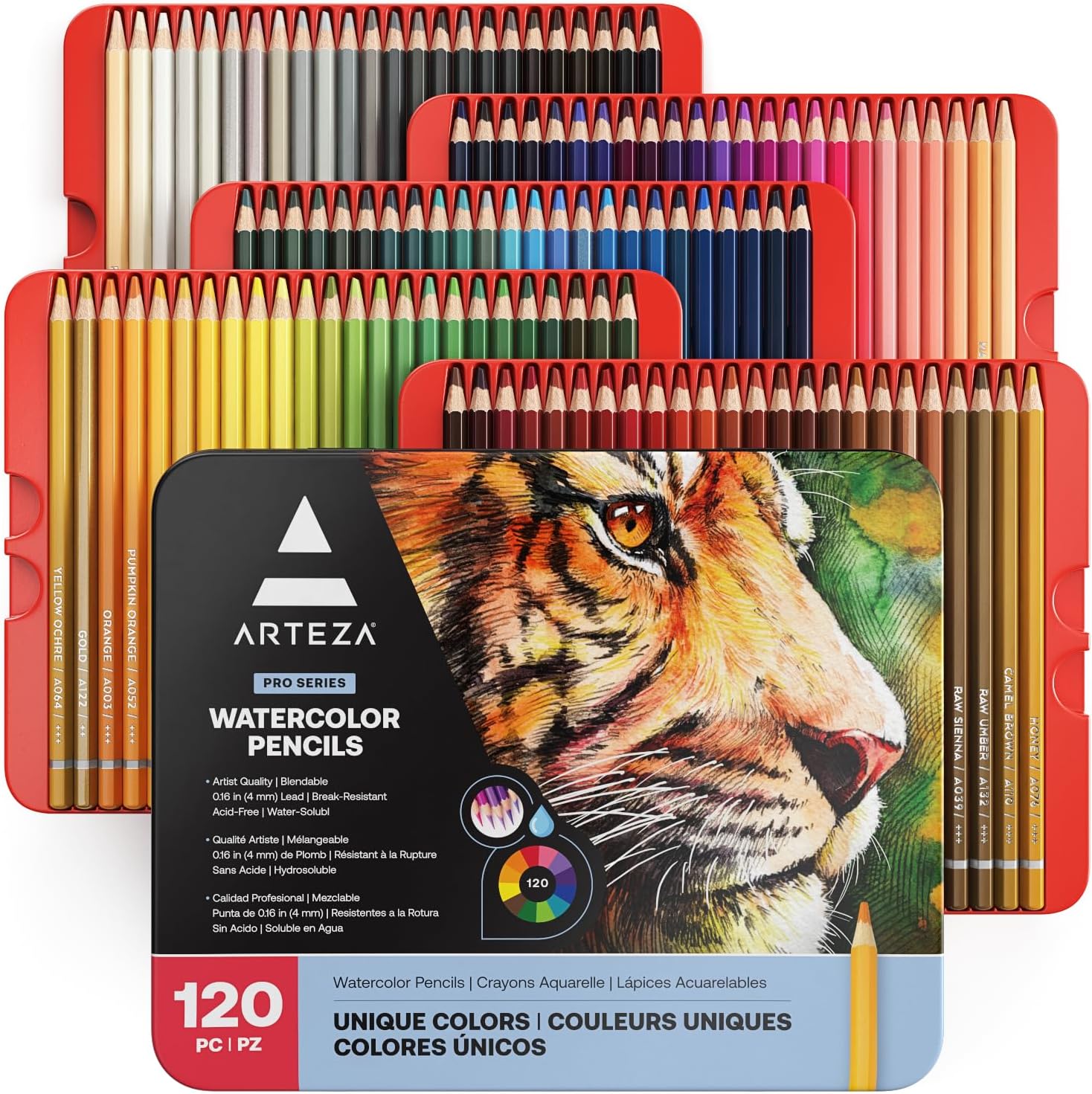
My take: The best cost-per-color in the category and the set I keep at my desk.
Faber-Castell Albrecht Dürer 60 — The Artist Grade
Faber-Castell Albrecht Dürer Watercolour Pencils, Tin of 60 (about $112, roughly $1.87 a pencil) is the artist benchmark: unsurpassed lightfastness, SV-bonded leads that do not break when sharpening, and pigment that dissolves into a full wash with no grit. If you make things you want to keep — or sell — this is the set. Con: the price, full stop; and 120 colors exist if 60 is somehow not enough.
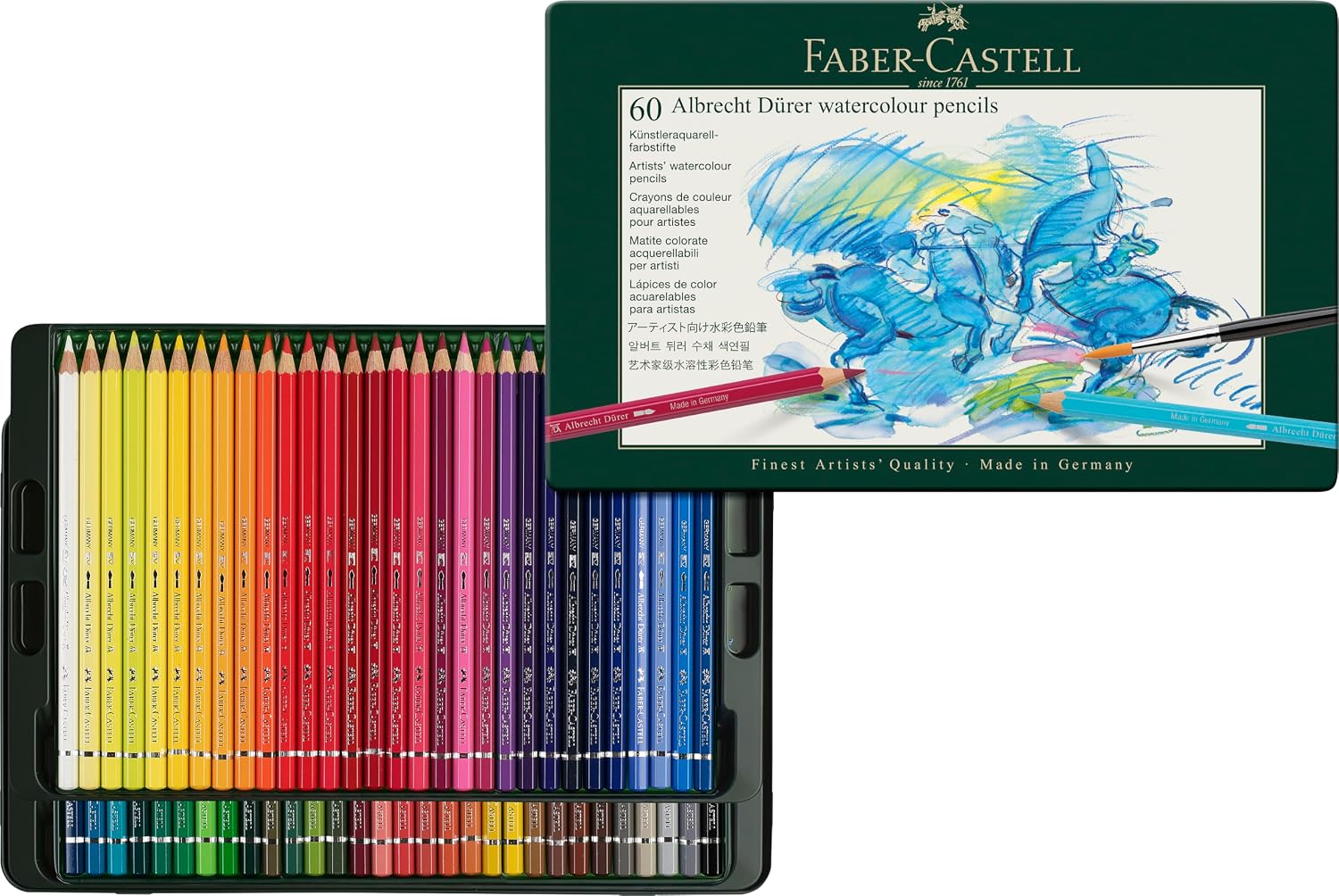
My take: Buy it when a page has earned it — the set for work you intend to keep.
Strathmore 300 Watercolor Pad — The Paper That Makes It Easier
Strathmore 300 Series Watercolor Pad, 9×12, 24 sheets (about $11) — 140 lb / 300 gsm paper is the floor for wet techniques. Technique 2 (wet-then-dry) on anything lighter and the page buckles before the pigment blooms. Cons: this is student-grade, so it pills if you scrub at it — use light strokes and let it dry between layers.
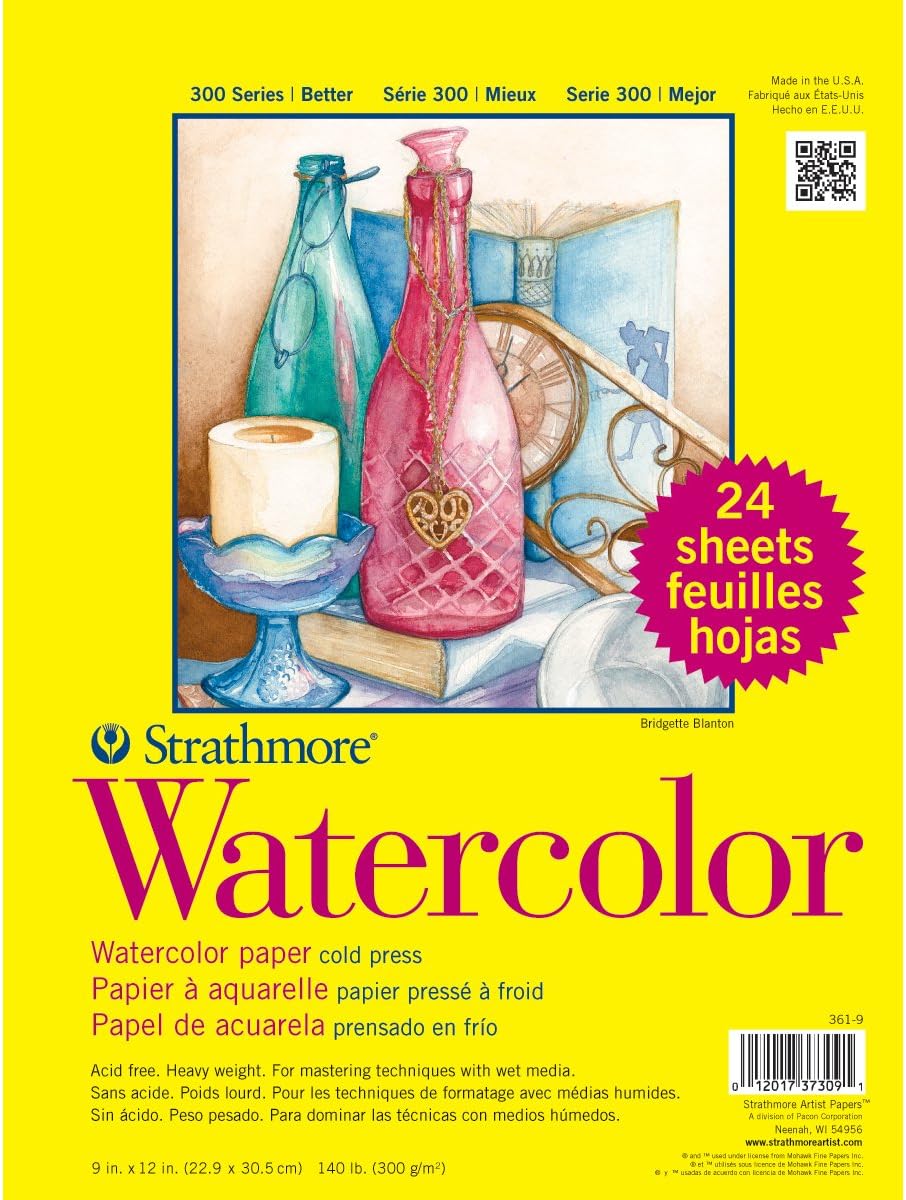
My take: The $11 pad that upgrades every technique above — do not learn wet techniques on printer paper.
Pentel Aquash — The Brush That Removes All Excuses
Pentel Aquash Water Brush, Fine Point (about $5) is a nylon-tipped brush with a water reservoir in the handle. Squeeze to wet the tip; no cup of water, no rinsing. It makes activation a one-handed act — which is why it is the default tool for journal work and why I keep three. Con: the nylon tip frays with rough paper after months; at $5, buy two.
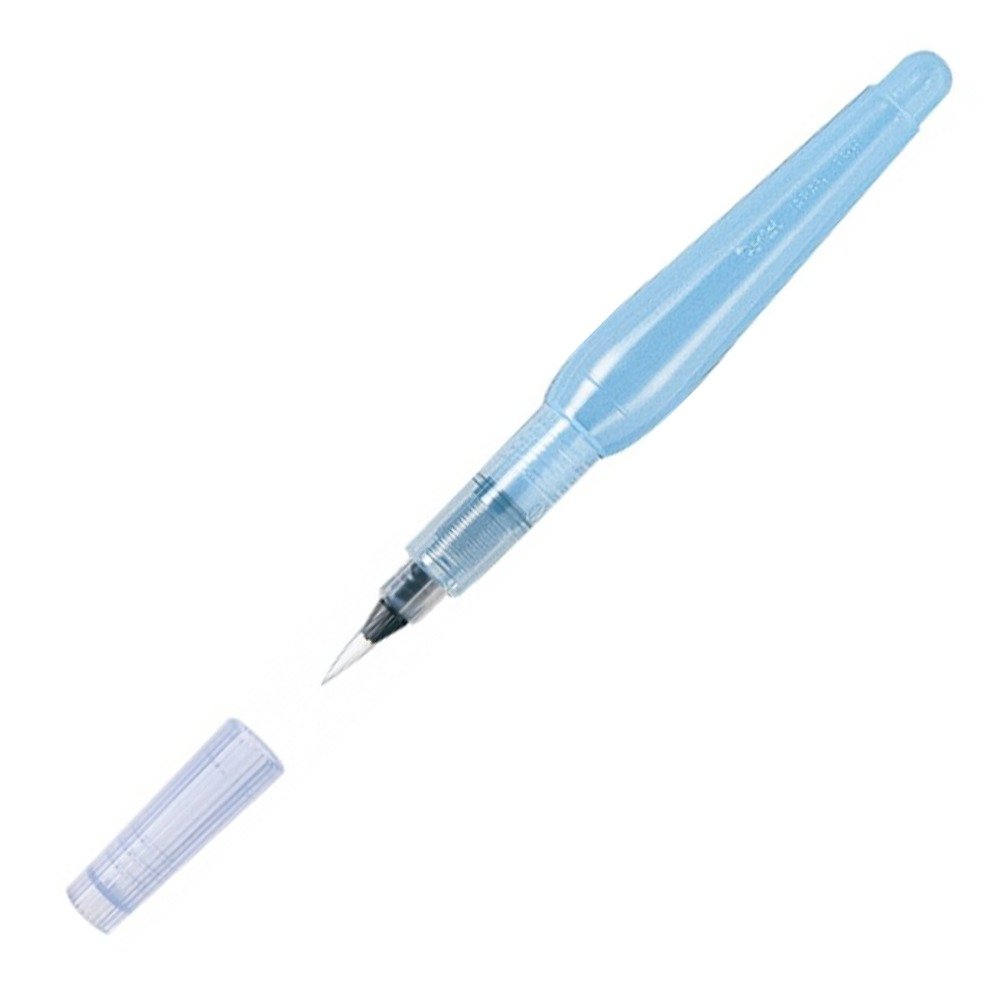
My take: Five dollars that turn activation from a setup into a reflex.
Common Mistakes
Too much water. The number-one mud-maker. Damp, not dripping — blot the brush first.
Activating everything at once. Work section by section; a fully wet page gives you zero control and buckles cheap paper.
Using the wrong paper. Anything under 140 lb buckles. The Strathmore 300 pad above is the floor.
Scrubbing with the brush. Watercolor paper pills under abuse — light circular strokes let the pigment do the work.
Budget note: The cheapest honest setup that does not fight you: Crayola 24ct ($9.35) + Strathmore pad ($10.83) + Aquash ($5.21) = about $25 total. Every technique in this post works on that stack. And deep-focus coloring hits different with an audiobook — Audible’s free trial is here.
Keep reading: the shadow-first method for realistic hair, and the four-zone method for realistic eyes.
ColoredCalm is reader-supported. As an Amazon Associate, I earn from qualifying purchases. That means if you buy through one of the links above, I get a small commission at no extra cost to you. I only recommend supplies I actually color with.
Related guides
- How to Set Up the Perfect Coloring Space: A Beginner's Guide to Your Coloring Corner
- How to Color Mandalas Without Losing Your Mind
- Gemstones and Crystals: The Light-First Method
- Black Paper Coloring with Colored Pencils: A Practical Guide
- Mandala Coloring for Beginners: Why the Oldest Coloring Tradition Is Still the Best Stress Relief
🎨 Get Your Free Stress Relief Coloring Guide
Join our newsletter and get this free printable plus weekly tips.
Frequently Asked Questions
Do watercolor pencils work on regular paper?
Dry drawing works on anything, but the moment you add water, anything lighter than 140 lb / 300 gsm buckles and pills. A Strathmore 300 watercolor pad is about $11 and is the floor for wet techniques.
What is the difference between watercolor pencils and regular colored pencils?
Watercolor pencil cores are water-soluble pigment binders - they dissolve into paint when wet. Wax or oil colored pencils (Prismacolor, Polychromos) stay put no matter how wet the page gets. They are two different mediums that happen to look similar in the tin.
Can you use watercolor pencils dry without water?
Absolutely - they are fully functional colored pencils dry. The dry-drawn pigment simply waits for water. Many artists use them dry for detail work over painted washes.
Which is better, watercolor pencils or watercolor paints?
Pencils win on control and portability - no setup, no palette, sketch anywhere. Paints win on speed for large areas and granulating washes. They are not competitors; pencils are the gateway that teaches you how watercolor behaves.
How do I stop my watercolor pencil work from turning muddy?
Three rules: less water (damp, not dripping), activate section by section instead of the whole page at once, and do not go back into a wash while it is drying. Muddy pages are almost always overworked pages.
Liked this guide? Get the next one in your inbox — the coloring starter checklist is free too.
✓ You're in — check your inbox.
No spam. Unsubscribe anytime. We never share your email.
Prices move fast. Start your Amazon trip from our Shop & Support page and your purchases support ColoredCalm at no extra cost to you.
Price Check
Prices verified via our product tracker. Updated Oct 5.
| Crayola Watercolor Colored Pencils 24ct, Watercolor Paint | $9.35 | 4.7★ (3,073) |
| ARTEZA Watercolor Pencils, Set of 120, Water-Soluble Penci | $59.98 | 4.7★ (2,281) |
| Faber-Castell Art & Graphic Albrecht Dürer Watercolour Pen | $112.29 | 4.8★ (321) |
| Strathmore 300 Series Watercolor Paper Pad, 9x12 inches, 2 | $10.83 | 4.7★ (2,859) |
| Pentel Aquash Water Brush, Fine Point : Arts, Crafts & Sew | $5.21 | 4.7★ (955) |
As an Amazon Associate we earn from qualifying purchases.