This article contains affiliate links. We may earn a commission from qualifying purchases.
Some content on this site is AI-assisted and reviewed by our editorial team.
Every colorist hits the same wall around the same time. You’ve been working with wax-based pencils — Prismacolor Premier, Crayola, Arteza — and you’ve started noticing the signs. Wax bloom, that cloudy film that appears two days after you finish a page. Cores that snap when you sharpen past a certain point. Colors that layer beautifully for three passes and then turn to mud on the fourth. Someone in a coloring group mentions oil-based pencils, and the name that always comes up first is Faber-Castell Polychromos. Then you see the price: about $65 for a tin of 36. The question stops being “are oil pencils better?” and becomes “do I need Polychromos yet, or will something cheaper get me 90% of the way there?”

I tested three oil-based pencil sets at three price points — $65, $30, and $25 — plus a budget wildcard, to find out where the money actually buys you something and where you’re paying for the name on the tin.
Faber-Castell Polychromos Tin of 36 — the Oil-Core Reference
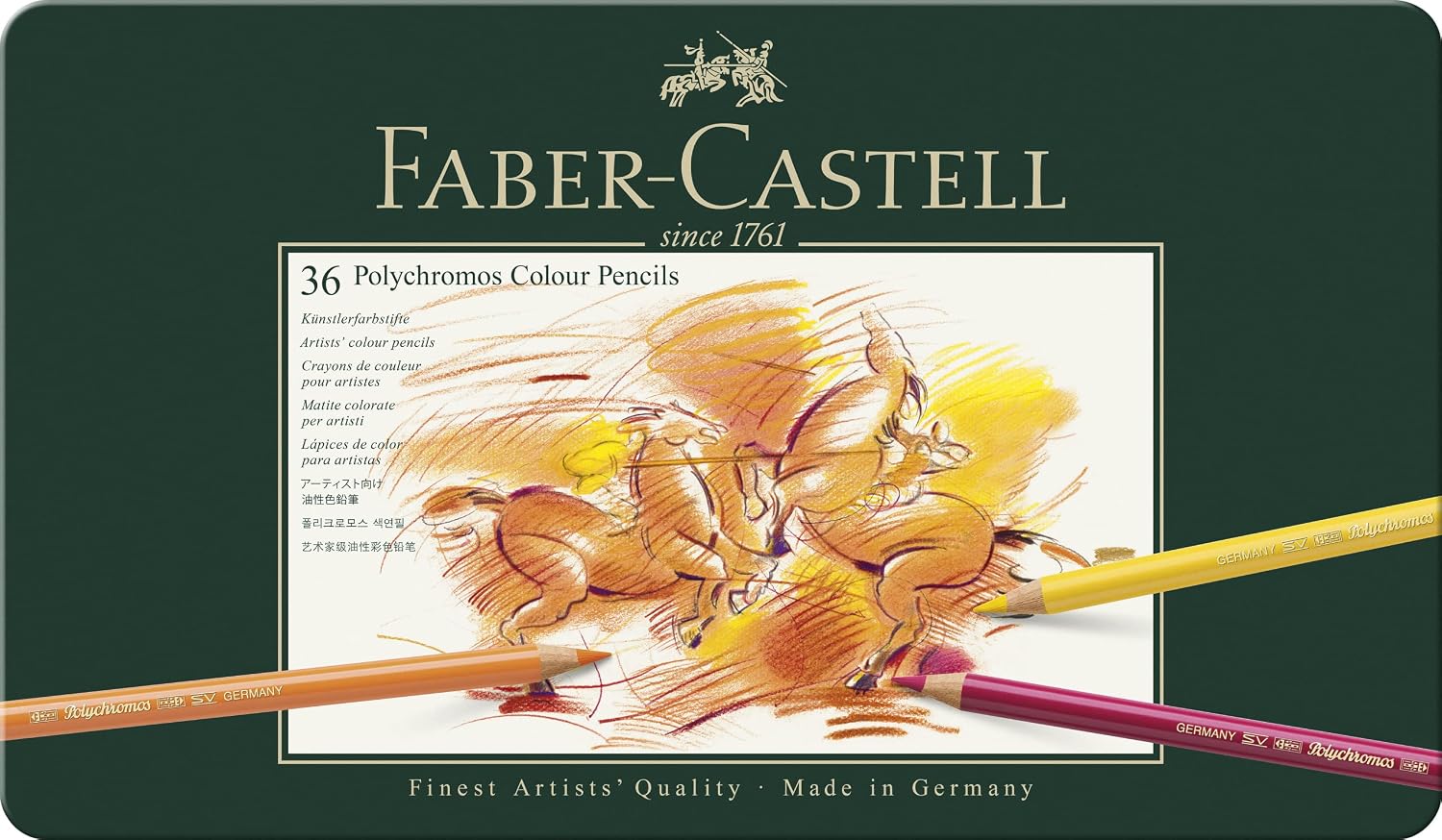
The Faber-Castell Polychromos Tin of 36 is the pencil every oil-pencil comparison is measured against. The cores are oil-based (not wax), which means two things in practice: zero wax bloom, ever, and the pencils hold a point through detail work that would snap a Prismacolor. You can sharpen to a needle tip and it stays. The laydown is dense and smooth — less effort per pass, which matters when you’re building up five or six layers for skin tones or gradients.
The palette of 36 covers most coloring book needs, though it leans toward muted, naturalistic tones. If you color a lot of fantasy or florals, you may find yourself wishing for a brighter pink or a more electric teal. The lightfastness ratings are printed on each pencil, which no budget brand does.
The honest cost: about $65 for 36, which works out to roughly $1.80 per pencil. That stings when a 120-color wax set costs the same. But these pencils don’t break, don’t bloom, and last years. The tin itself is the packaging — there’s no case, and the pencils roll freely. Budget for a roll or a case.
My take: The professional standard. If you color weekly and you’re tired of wax bloom and snapped cores, this is the upgrade that fixes both. If you color occasionally, keep reading.
Koh-I-Noor Polycolor Set of 36 — the Mid-Price Sleeper
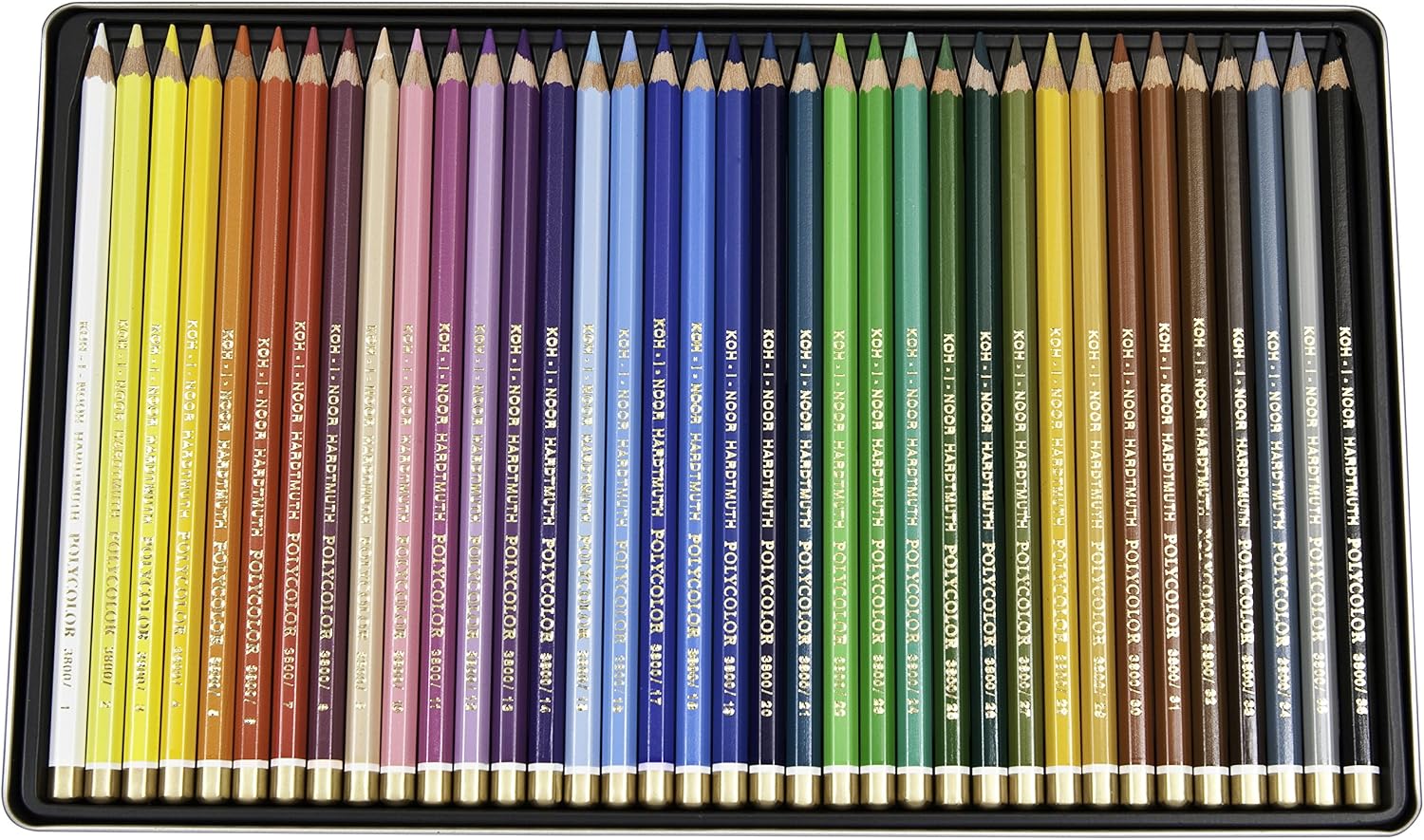
The Koh-I-Noor Polycolor Set of 36 costs about $30 — less than half the Polychromos price — and the cores are genuinely oil-based. The laydown is dense and creamy, close to the Polychromos in feel, with good layering through four or five passes before the tooth fills. The color range leans muted and earthy, similar to the Polychromos palette, which makes it a natural pairing for nature coloring books.
Where it falls short: the tin rattles. The pencils sit loosely in a plastic tray with no individual slots, so cores can crack in transit — check each pencil when it arrives and warm any cracked cores in your hand before sharpening. The point retention is good but not Polychromos-level; you’ll sharpen more often during a long coloring session.
At half the price, you get about 80% of the Polychromos experience. For most colorists, that’s the right trade.
My take: The sleeper pick. If $65 for pencils feels excessive, this is the set that delivers oil-core performance without the premium tax. Just buy a case to replace the tin.
Brutfuner Oily Colored Pencils (180-Color Round Set) — the Budget Extreme
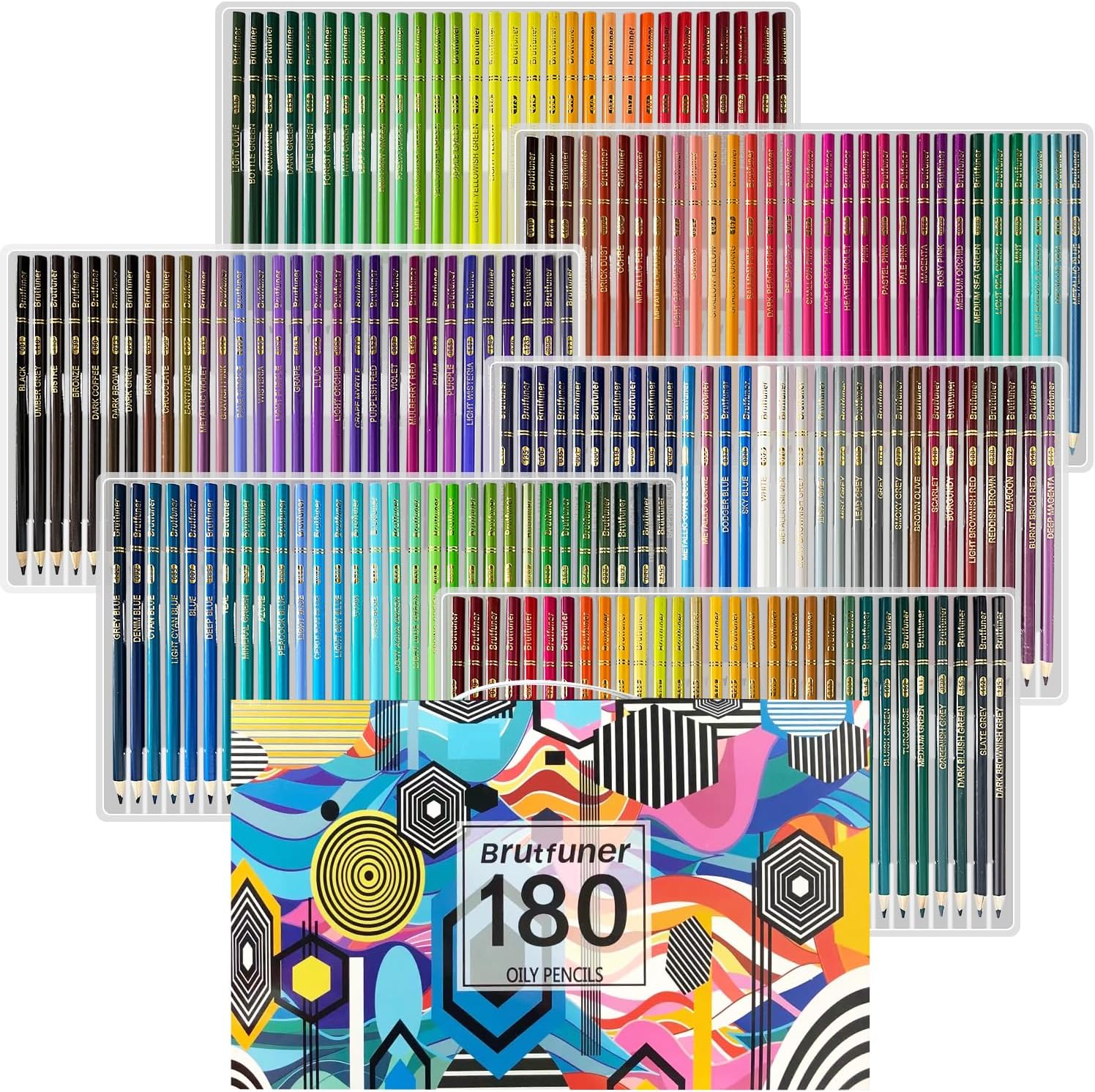
The Brutfuner Oily Colored Pencils 180-Color Set is the most pencil you can buy for about $25. That’s 180 oil-leaning cores for the price of one Polychromos tin. The colors are vivid and the range is enormous — you’ll find every shade a coloring book page could ask for, including brights the Polychromos 36-tin lacks.
But “oil-leaning” is the honest phrase. These cores have more wax content than true oil pencils, which means light wax bloom can appear on heavy layering (nothing like Prismacolor, but it’s there). Lightfastness is untested and unstated — these are craft-grade pencils, not archival ones. Frame your work behind glass if it matters to you, or enjoy the coloring process without worrying about century-long fade ratings.
The soft cores lay down color fast, which is great for large areas and less ideal for tiny detail work. They also sharpen cleanly in a two-step sharpener (the kind that hones then points).
My take: The budget extreme that wins on volume. Perfect for colorists who want every color and don’t need archival lightfastness. Frame your favorites, don’t sell them.
Arrtx Oil-Based Colored Pencils (120-Color) — the Soft Budget Core
The Arrtx Oil-Based 120-Color set comes in under $35 with a zip case — the only set here that includes storage. The cores are soft and blendable, with a buttery laydown that’s pleasant for large areas and backgrounds. The 120-color range covers most needs, with good brights and a respectable set of skin-tone shades.
The trade-off: buyer reports mention pre-cracked cores, meaning some pencils arrive with internal breaks that cause the tip to fall out when you sharpen past the crack. The zip case is functional but not rigid — it won’t protect the pencils in a packed bag. No Amazon link for this one because the exact set rotates; search “Arrtx oil colored pencils 120” and check recent reviews for core quality.
My take: A solid budget pick if you get a good batch. The zip case is a real advantage at this price point, but the core-cracking lottery is real.
Common Mistakes With Oil-Based Pencils
Expecting zero bloom from “oil-leaning” cores: True oil pencils (Polychromos, Polycolor) don’t bloom. Oil-leaning budget pencils (Brutfuner, Arrtx) can show light bloom on heavy layering. Know which one you bought.
Using a single-blade sharpener: Oil cores are softer than wax. A two-step sharpener (hone, then point) reduces breakage dramatically. A cheap hand-crank sharpener will eat these pencils.
Assuming more colors means better pencils: 180 Brutfuners for $25 and 36 Polychromos for $65 serve different purposes. The 180 set gives you range; the 36 set gives you quality per pencil. Most colorists need one, not both.
Storing them loose in the tin: Oil cores crack from impact. A roll or a slotted case prevents the transit breakage that ruins pencils before you ever use them.
The Budget Verdict
If you’re coloring for stress relief and fun — which is most of us — the Koh-I-Noor Polycolor 36 at $30 is the sweet spot. You get real oil cores, good layering, and enough colors for any book. If you want maximum range and don’t care about lightfastness, the Brutfuner 180 at $25 is the volume play. Save the Polychromos $65 for when you start framing finished pages or gifting original work.
Deep-focus coloring hits different with an audiobook — Audible’s free trial is here if you want to try it.
Keep reading:
Polychromos vs Prismacolor head-to-head and
how to prevent and fix wax bloom.
ColoredCalm is reader-supported. As an Amazon Associate, I earn from qualifying purchases. That means if you buy through one of the links above, I get a small commission at no extra cost to you. I only recommend supplies I actually color with.
🎨 Get Your Free Stress Relief Coloring Guide
Join our newsletter and get this free printable plus weekly tips.
Frequently Asked Questions
Are oil-based colored pencils better than wax?
Not better — different. Oil-based pencils (Polychromos, Polycolor) don’t produce wax bloom, hold a point longer, and layer more cleanly. Wax-based pencils (Prismacolor Premier) are softer, blend more easily by hand, and cost less. Most serious colorists own both and use them for different effects.
Which oil pencils are best for beginners?
The Koh-I-Noor Polycolor 36 at about $30 is the best beginner oil pencil set. You get real oil cores at half the Polychromos price, with good layering and dense laydown. Start there — if you love the feel, upgrade to Polychromos later. Skip the 180-color budget sets until you know you’ll use the range.
Do Polychromos pencils avoid wax bloom?
Yes — completely. Polychromos cores are oil-based, not wax-based, so the cloudy film that appears on wax pencil work (especially Prismacolor) never occurs. This is the single biggest practical difference for colorists who frame or display finished pages.
Liked this guide? Get the next one in your inbox — the coloring starter checklist is free too.
✓ You're in — check your inbox.
No spam. Unsubscribe anytime. We never share your email.