
This article contains affiliate links. We may earn a commission from qualifying purchases.
Some content on this site is AI-assisted and reviewed by our editorial team.
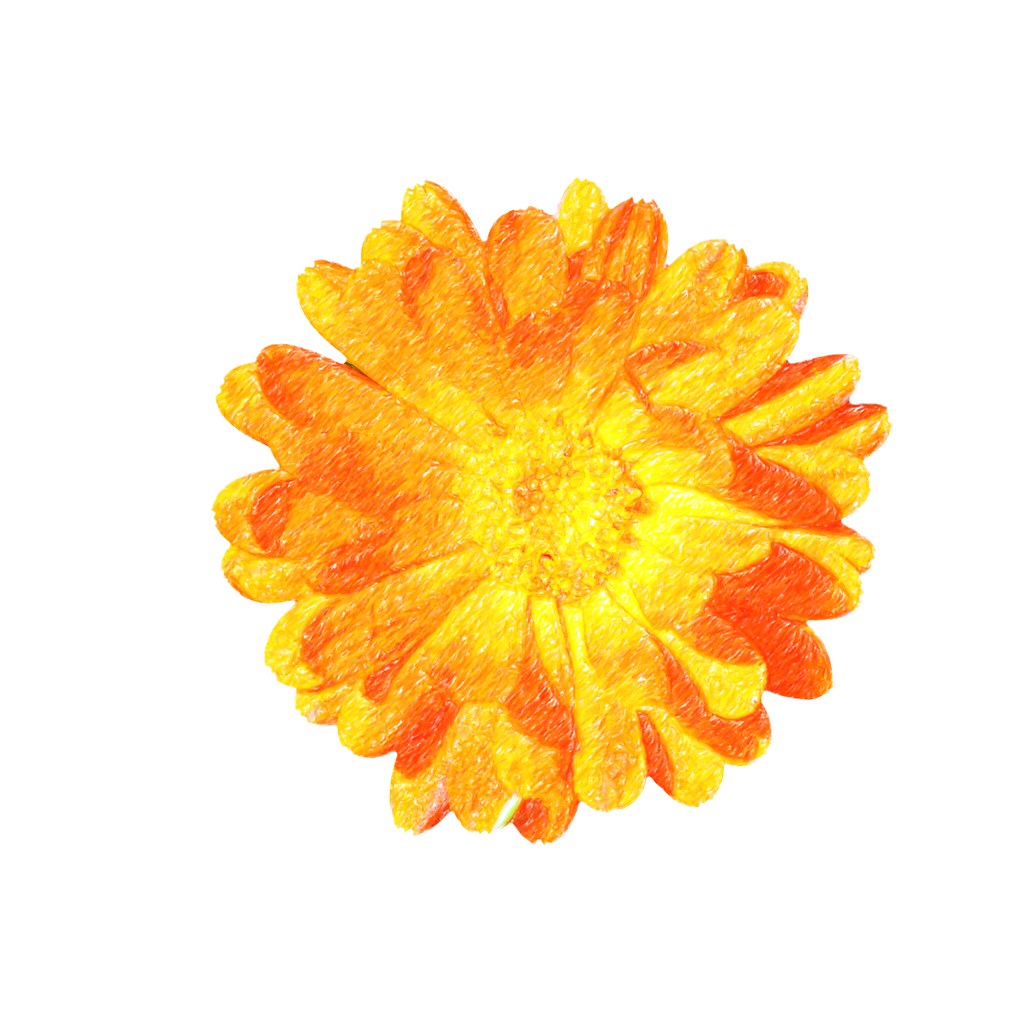
Six hours into a page. The petals are shaded, the background is blended, and then your hand drags a rust-orange line straight across the white margin. Every colorist knows the stomach drop that follows. The panic move — scrubbing at it with whatever hard eraser is nearest — is usually what actually ruins the page, because aggressive erasing tears the paper’s tooth and leaves a shiny, flattened patch that no amount of recoloring hides. Here is the calmer, step-by-step way to fix colored pencil mistakes, from “oops” to “wait, which line?”
The single most useful idea: not all mistakes are the same mistake. Fresh pigment sitting on the surface lifts off easily. Pigment that has been burnished or layered heavily is in the paper for good. And a mistake that has torn or flattened the paper is not a pigment problem at all. Diagnose first, then reach for the right tool.
Step 1: Diagnose With a Gentle Press Test
Lightly press a fingertip on the stray mark. If a little color transfers to your skin, it is fresh, unburnished pigment — great news, it will lift. If nothing transfers and the mark feels glossy or waxy, the layer is burnished in and you will be disguising rather than removing. If the paper surface is already scuffed or torn from a previous erase attempt, stop erasing entirely: more friction only makes it worse. Thirty seconds of diagnosis saves pages.
Step 2: Lift Fresh Pigment With a Kneaded Eraser
Faber-Castell Extra Large Kneaded Eraser is the first tool out of the drawer, and at about 2 to 4 dollars it is the cheapest fix in coloring. Knead it into a point, then press it straight down onto the mistake and pull straight up — dab and lift, like blotting. Never scrub side to side. Each press pulls a little pigment into the eraser instead of grinding it into the paper. Work from the outside of the mistake inward so the stain does not spread, and re-knead to a clean spot often. The honest con: a dirty kneaded eraser turns into a smearing machine, and once you have cleaned it on itself ten times it stops grabbing well — replace it rather than fighting it.
Step 3: Get Surgical With a Pen-Style Eraser
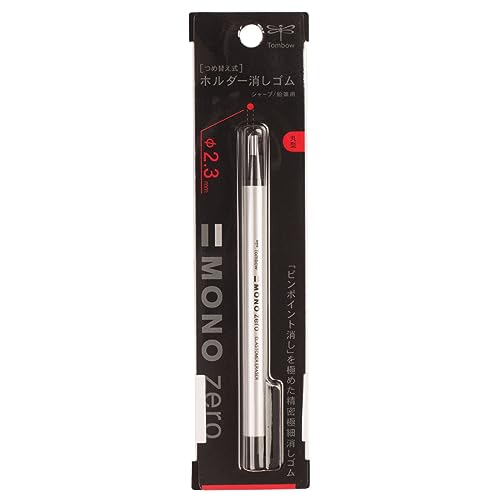
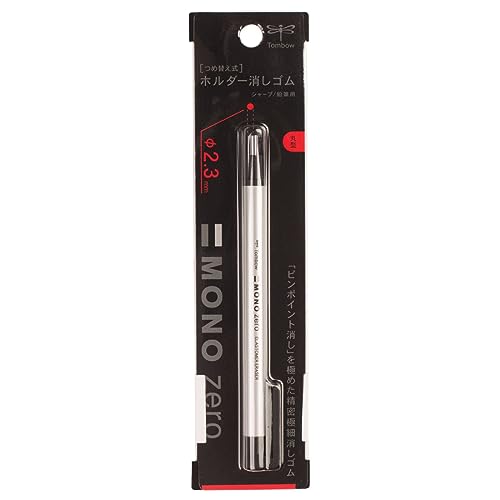
For thin lines, tiny slips between tightly drawn petals, or the space between hatching, a big eraser block is the wrong shape. Tombow MONO Zero Round Eraser is a pen-shaped precision eraser with a 2.3 millimeter round tip, about 7 to 10 dollars with refills. You can erase a stray whisker inside a detailed area without touching the shading around it. The honest cons: the refill strips are tiny, easy to lose, and easy to forget to restock, and the tip wears flat quickly if you lean on it. Use it for detail work only — erasing a whole background with one would take all evening and eat refills.
Step 4: The Last Resort — a Sand Eraser
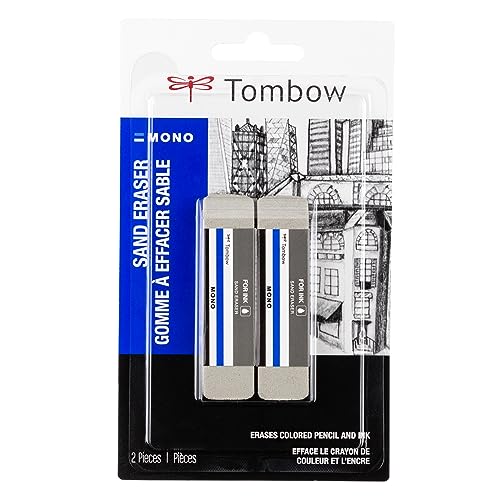
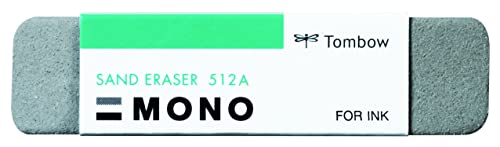
Tombow MONO Sand Eraser (about 5 to 7 dollars for a single, or the two-pack for around 8 to 10) is the tool that made “ruined” a mostly obsolete word. One half erases like a normal eraser; the other half is a silica-sand core that literally sands away the top layer of paper — taking colored pencil AND ballpoint ink with it, which no regular eraser can touch. It is the only reliable fix for a pen line that wandered into a colored pencil page. The honest cons: it removes paper fiber, so it leaves a slightly thinner, smoother ghost spot that can look shiny under light, and it is genuinely too harsh for thin coloring-book pages — it can wear through to the next sheet. Use it on sturdy paper, with a light touch, only where lifting failed.
Step 5: Recolor Over the Fixed Area
Once the mistake is lifted or sanded, the patch is a blank spot in the middle of your shading, and the fix has to disappear into it. Match your original layering order: base color first, very light pressure, same stroke direction as the surrounding area. Build two or three light layers rather than pressing one heavy layer to catch up. Feather the edges of the patch an eighth of an inch into the surrounding color so there is no visible boundary. If the area around it was burnished, burnish the patch too — an unburnished square in a burnished field glows like a repair patch on a car. If the paper feels sealed where you sanded, one very light layer of a Prismacolor colorless blender (about 5 dollars for two) will fuse the patch into the page.
Finished pages have accidents too, and the same toolkit rescues them — a sand eraser on a stray gel pen dot after varnishing is a heart attack followed by a two-minute fix.
Artwork: “Music Undertones” by Betsy LeBleu Curry, The Art League (public domain).
When Hiding Beats Erasing
Sometimes the smartest fix is not removal at all. Three tricks that save pages:
- Lighten, do not lift. If a shadow went too dark, layer the page’s own background color over it in two light passes. It will not erase the shadow, but it pulls it back toward the surrounding tone — often enough.
- Make it intentional. A slipped line in a background can become a blade of grass, a fold, a shadow edge. Look for the save before you reach for the sandpaper core.
- Go opaque for small highlights. A white gel pen (about 3 dollars) or a white paint pen covers small mistakes completely — a slipped dot, a broken edge — where erasing would leave a hole in the color. Test it on a corner first; cheap gel pens can skip.
Common Mistakes (And How to Avoid Making a Second One)
Scrubbing with a hard vinyl eraser. Block erasers are for graphite on tough paper. On colored pencil they burnish the pigment deeper while sanding the tooth flat — the exact combination you cannot recover from.
Erasing mid-layer. If you catch a mistake while the area is still light, lift it now. Wait until after five layers and burnishing, and the kneaded eraser will barely touch it. Fix early, fix cheap.
Trying to erase burnished wax. Burnished pigment is mechanically locked into the tooth. No eraser lifts it — sand it or disguise it. Knowing this saves twenty minutes of futile dabbing.
Ignoring the paper. Repeated wet or abrasive fixes in one spot thin the paper and it will pill or tear. If a spot needs a third intervention, stop and switch to disguising it.
The Budget Setup
You do not need a wall of erasers. One kneaded eraser (about 3 dollars) lifts 80 percent of fresh mistakes, and one sand eraser (about 6 dollars) handles the rest, pen included. Add a pen-style eraser only if you color detailed books with tight spaces. Total: about 9 dollars for a complete mistake-recovery kit — less than one replacement coloring book.
If the mistake you are fixing was a muddy shadow or a mannequin-flat face, our five-layer method for skin tones prevents most of those before they happen — and if erasing has been nicking your pencil tips, our guide to sharpeners that will not break your cores will keep the rest of your supplies in one piece.
ColoredCalm is reader-supported. As an Amazon Associate, I earn from qualifying purchases. That means if you buy through one of the links above, I get a small commission at no extra cost to you. I only recommend supplies I actually color with.
🎨 Get Your Free Stress Relief Coloring Guide
Join our newsletter and get this free printable plus weekly tips.
Frequently Asked Questions
How do you fix colored pencil mistakes?
Three tools, in order of gentleness: a kneaded eraser for light pigment, an electric eraser for hard lines, and opaque cream or white pencil to lift and repaint small areas.
Can you erase colored pencil completely?
Only light layers. Wax-based pigment burnishes into the paper tooth after 3+ layers, so erase early. Past the burnished stage, cover instead of removing.
How do I prevent mistakes in the first place?
Test every color on scrap paper from the same sheet, work light-to-dark, and keep a paper towel under your hand. Most 'mistakes' are really premature dark layers.
Price Check
Prices verified via our product tracker. Updated Sep 27.
| Amazon.com: Faber-Castell Kneaded Erasers x-large grey eac | $4.35 | 4.6★ (131) |
| Amazon.com : Tombow Mono Zero Eraser, Round 2.3mm : Pen St | $5.80 | 4.8★ (4,352) |
| Amazon.com: Tombow MONO Sand Eraser , Grey, 1 Pack | $6.55 | 4.4★ (1,735) |
| Amazon.com : Tombow 67304 Mono Sand Eraser, 2-Pack. Silica | $6.49 | 4.5★ (3,515) |
As an Amazon Associate we earn from qualifying purchases.