This article contains affiliate links. We may earn a commission from qualifying purchases.
Some content on this site is AI-assisted and reviewed by our editorial team.
You are ten minutes into a holiday page, the big fields are done, and now you hit the details: the tiny ornaments on a Christmas tree, the lettering on a shop sign, the individual petals on a poinsettia the size of your thumbnail. You reach for your soft-core pencils — the ones that lay down that gorgeous, buttery color — and the lead snaps. You sharpen. It snaps again. By the fourth break, the tip is gone and so is your patience. This is not a sharpening problem. It is a materials problem, and it has a specific fix: hard-core pencils for the tiny spaces, soft-core for the big fields, and an electric eraser to clean up the line where they meet.
Here is why soft cores break on details, which hard-core pencils actually hold a point, and how to split the workload so neither set fights you.
Prismacolor Premier Verithin, 36-Count — The Hard-Core Specialist
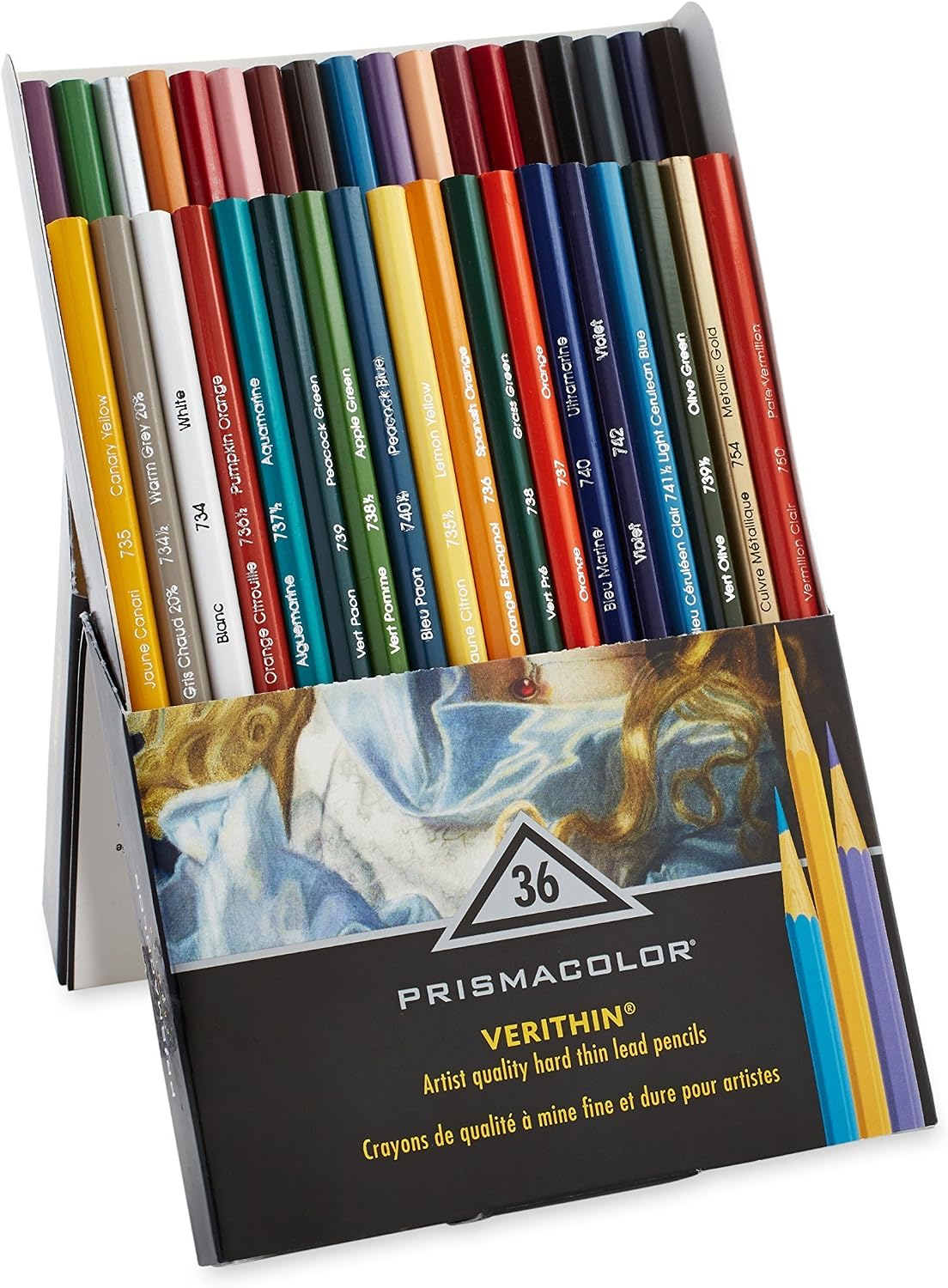
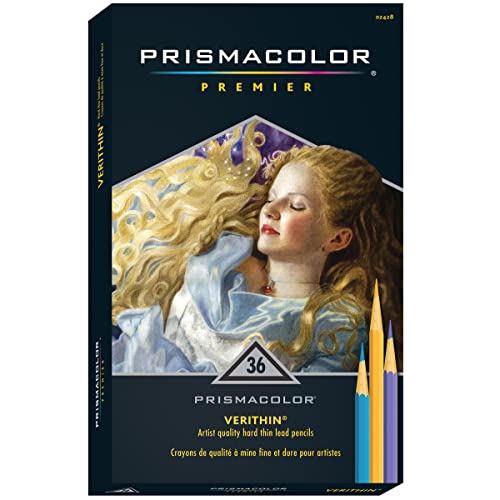
The Prismacolor Verithin set is about $25 to $30 for 36 colors, and the name tells the story: these are hardened-core pencils built specifically for edges, lettering, and fine detail work. The core is harder and more brittle than a standard colored pencil, which sounds bad until you realize that hardness is what holds a needle point through dozens of strokes without crumbling. You can lay a line as thin as a pen stroke and repeat it without resharpening every thirty seconds. The trade-off is pigment load: Verithin cores carry less wax and less pigment than soft cores, so the color goes down lighter. This is not your saturation set. This is your precision set.
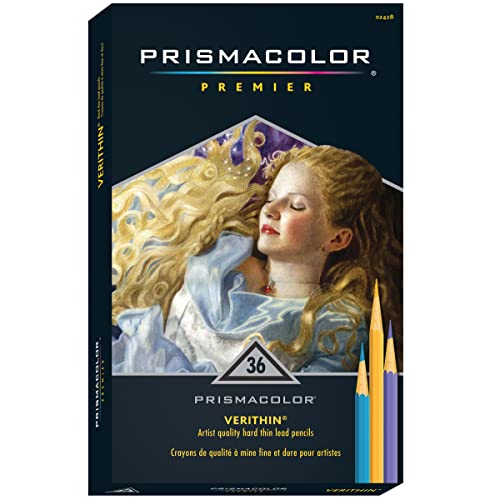
My take: The single most useful addition to a soft-core collection — it does the one thing your Prismacolor Premiers cannot do, and it costs less than a new coloring book.
Caran d’Ache Pablo Pencils — The Oil-Based Upgrade
The Caran d’Ache Pablo line runs about $60 to $70 for a 24-tin and represents the Swiss precision upgrade to the hard-core concept. These are oil-based cores rather than wax-based, which means they hold a point even longer than Verithin while delivering more pigment per stroke. The layering is smoother — you can build detail color on top of a soft-core base without the waxy drag that sometimes pulls pigment off the page. The honest question is whether hobby coloring demands this level of pencil. For most colorists working in adult coloring books, the Verithin does 95 percent of what the Pablo does at half the price. The Pablo earns its cost when you are doing fine art work on good paper, not when you are filling in a mandala.
My take: The upgrade for serious artists — if you are coloring for relaxation and the Verithin set covers your detail work, the Pablo is a want, not a need.
Prismacolor Premier Soft Core, 36-Count — The Contrast Case
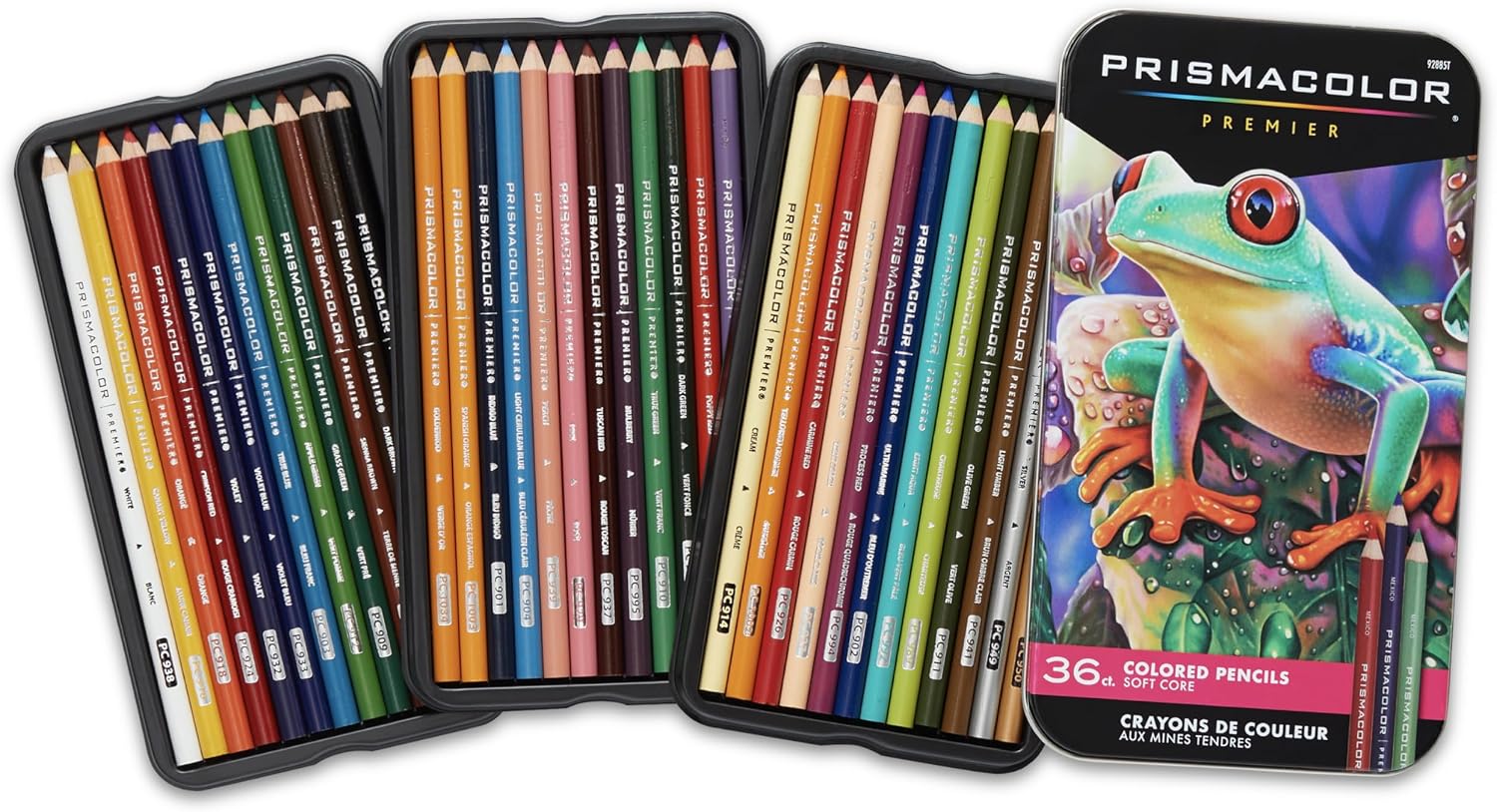
The Prismacolor Premier Soft Core set is about $25 and is included here to demonstrate the problem. These are the pencils most colorists already own, and they are genuinely excellent for large fields, smooth blending, and rich saturation. They are also the pencils that snap when you try to hold a point in a space smaller than a centimeter. The soft wax core lays down color like butter — and crumbles like butter under the pressure a tight detail demands. This is not a flaw. It is the design. Soft cores are built for coverage, not precision. The answer is not to force them to do precision work. It is to hand the detail to a pencil built for it.
My take: Keep them for the big fields and the blending — they are the best soft-core value on the market. Just stop asking them to do detail work they were never designed for.
Sakura SumoGrip Electric Eraser — The Edge-Cleanup Tool
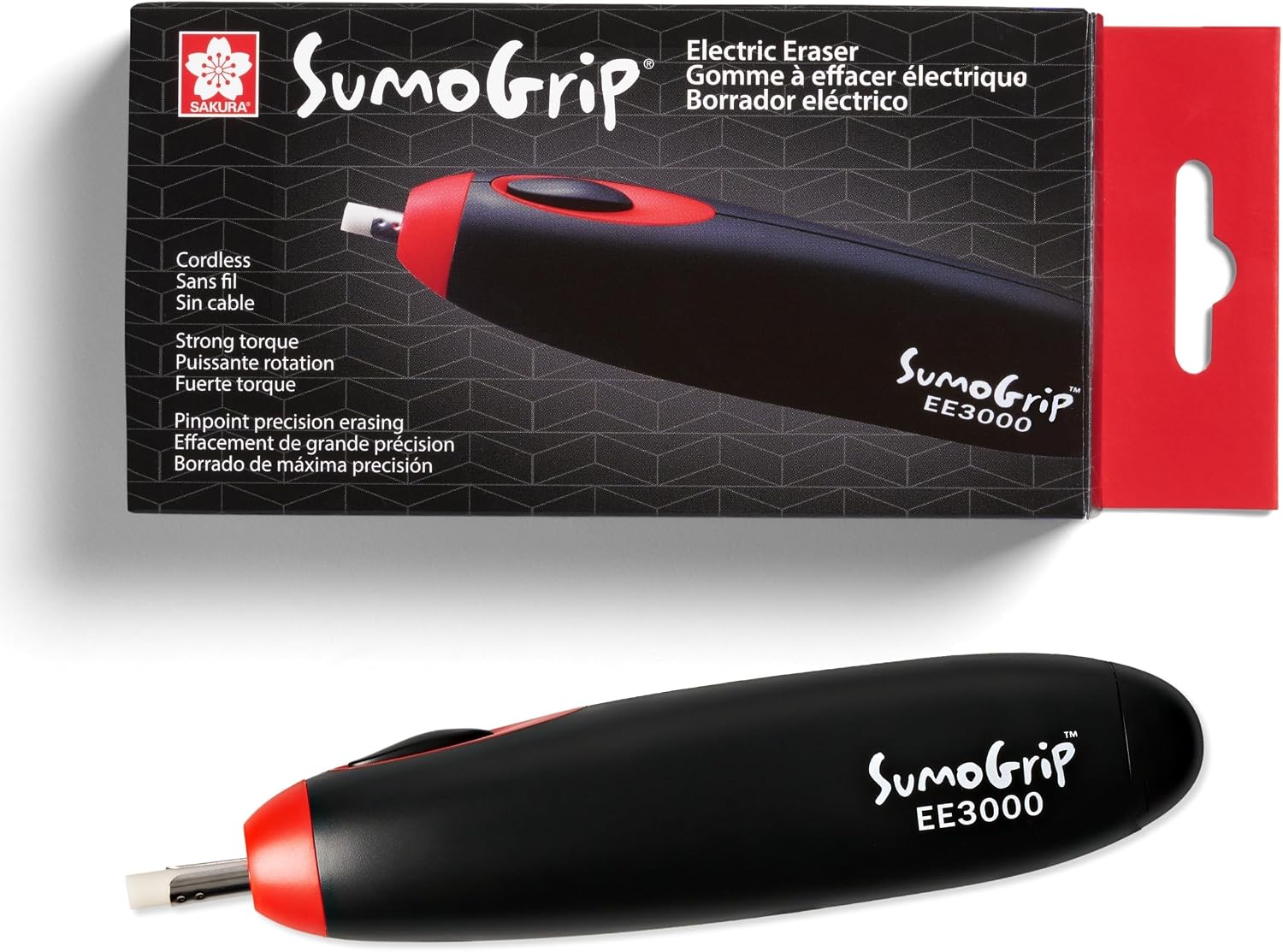
The Sakura SumoGrip Electric Eraser is about $30 to $35 and is the tool that turns a soft-core overrun into a clean edge. When you are coloring a tiny space and your soft-core pencil bleeds past the line — and it will — a handheld eraser smears the pigment. An electric eraser lifts it cleanly, right up to the printed line, without abrading the paper. It runs on AAA batteries and uses proprietary refills that cost about $8 for a pack. The refills go faster than you expect because once you start using it, you will use it on every page. Some listings ship without batteries, so check before you order.
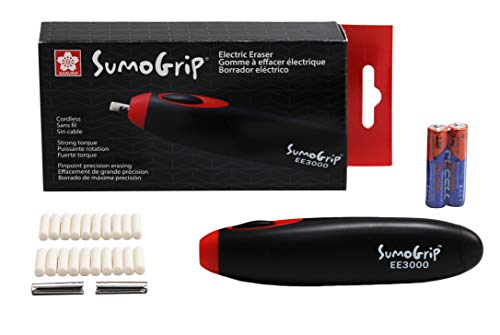
My take: The secret weapon of detail work — not a pencil, but the thing that makes your pencil mistakes disappear. Worth the $30 the first time it saves a nearly-finished page.
Free shipping on art supplies: The Verithin, Soft Core, and electric eraser all ship Prime. If you are not a member, grab a free 30-day Prime trial and get your detail kit before your next coloring session.
Common Mistakes (And How to Fix Them)
Using one set for everything: The number-one mistake is trying to make a soft-core set do detail work. You will snap leads, lose points, and fight the pencil. The fix is a two-set system: soft-core for fields, hard-core for details. The Verithin set costs $25 and solves this permanently.
Sharpening soft cores too aggressively: A handheld sharpener with a fresh blade is fine for soft cores. A electric sharpener or a dull blade will twist the core and cause internal breaks that show up as snapped tips five strokes later. Sharpen gently, and never drop a colored pencil — the impact cracks the core internally even if the wood looks fine.
Pressing too hard on details: Hard-core pencils are designed to work with light, controlled pressure. If you are pressing hard enough to bend the wood, you are using the wrong pencil for that space or the wrong technique for that paper.
Skipping the eraser pass: The electric eraser is not optional for serious detail work. It is the difference between a clean edge and a smudged one. Budget $30 for it and you will use it on every page.
Budget Note
The cheapest setup that still works: a Verithin 36-count ($25) for details, your existing soft-core set for fields, and a kneaded eraser ($2) instead of the electric for cleanup. The kneaded eraser will not lift heavy pigment as cleanly, but it handles light overruns for pocket change. Add the electric eraser when the budget allows — it is the single biggest quality jump per dollar in this kit.
Keep reading: The swatch-first method that stops bad surprises · Coloring the Northern Lights without green pencil soup · Christmas ornaments without the flat look
Deep-focus coloring hits different with an audiobook — Audible’s free trial is here if you want to try it. (That’s an affiliate link — I get a small commission if you sign up.)
ColoredCalm is reader-supported. As an Amazon Associate, I earn from qualifying purchases. That means if you buy through one of the links above, I get a small commission at no extra cost to you. I only recommend supplies I actually color with.
Related guides
- 7 Beginner Mistakes That Ruin Your Coloring Pages
- How to Color Rain and Wet Streets With Colored Pencils
- How to Frame and Display Finished Coloring Pages
- Fantasy Coloring Books for Adults: How to Bring Dragons, Fairies, and Mythical Worlds to Life
- How to Color the Northern Lights Without Green Pencil Soup
🎨 Get Your Free Stress Relief Coloring Guide
Join our newsletter and get this free printable plus weekly tips.
Frequently Asked Questions
Why do my colored pencils keep breaking?
Soft wax cores break under the pressure that tight detail work demands. The core is designed for smooth coverage on large fields, not for holding a needle point in a tiny space. The fix is a two-set system: soft-core pencils for big areas and hard-core pencils (like Prismacolor Verithin) for details. Also avoid dropping pencils -- impact cracks the core internally even when the wood looks fine.
What are the best pencils for small details?
Hard-core pencils hold a sharp point through dozens of strokes without crumbling. Prismacolor Verithin (about $25 for 36) is the best value option. Caran d Ache Pablo (about $60-70) is the oil-based upgrade with more pigment per stroke. Both are designed specifically for edges, lettering, and fine detail work that soft cores cannot handle.
Can you sharpen soft colored pencils to a fine point?
You can sharpen them, but the point will not last. Soft wax cores crumble under the pressure of detailed strokes, so even a perfectly sharpened tip will snap within a few strokes in a tiny space. The solution is not better sharpening -- it is using the right pencil for the job. Save soft cores for coverage and switch to hard-core pencils for detail work.
Liked this guide? Get the next one in your inbox — the coloring starter checklist is free too.
✓ You're in — check your inbox.
No spam. Unsubscribe anytime. We never share your email.
Prices move fast. Start your Amazon trip from our Shop & Support page and your purchases support ColoredCalm at no extra cost to you.
Price Check
Prices verified via our product tracker. Updated Oct 31.
| Prismacolor Premier Verithin Colored Pencils, Adult Colori | $25.16 | 4.6★ (6,582) |
| Prismacolor Premier Colored Pencils, Soft Core, Assorted C | $36.00 | 4.8★ (51,601) |
| Sakura EE-3000 SumoGrip Electric Eraser Kit, Cordless, Bla | $35.87 | 4.5★ (415) |
As an Amazon Associate we earn from qualifying purchases.