This article contains affiliate links. We may earn a commission from qualifying purchases.
Some content on this site is AI-assisted and reviewed by our editorial team.
Colored pencil colorists hit a ceiling with fur and skin: wax cores fight the tooth and blends turn to plastic. You layer and layer and the surface gets slick, the colors get muddy, and the white highlights you saved just disappear into the wax. Pastel pencils solve this with powdery pigment that a finger or stump melts in seconds, and toned paper does half the shading before you even start. The result is a velvety finish that wax pencils cannot match — but the technique has rules, and breaking them turns pastel dust into mud.
Here is the working order that keeps dust from turning to mud, paired with the sets and paper worth buying.
The Supplies: What to Buy First
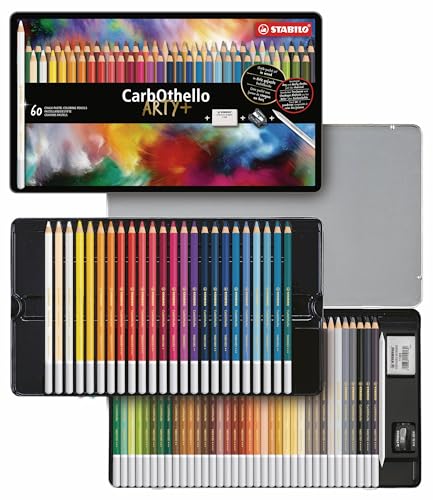
Stabilo CarbOthello Pastel Pencils, 60-Tin — Chalk-Pastel Workhorse Set
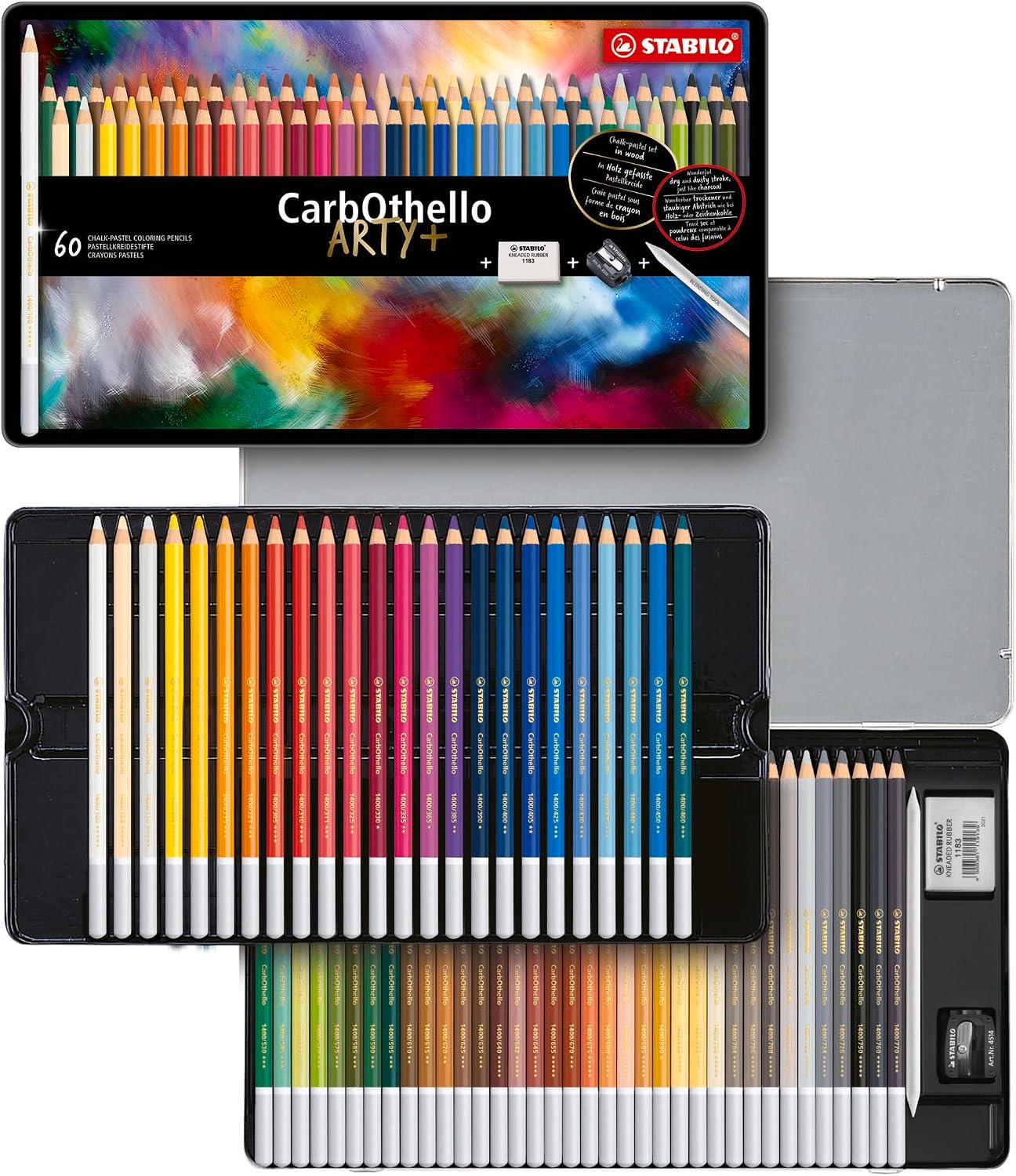
The Stabilo CarbOthello 60-tin is the set I reach for first. Sixty shades with a white that actually pops on gray paper — and that white is the secret weapon on toned paper, because the highlights do the heavy lifting. The chalk-based pigment blends with a finger, a stump, or a kneaded eraser, and the pencils sharpen to a fine point for detail work that soft pastel sticks cannot manage. At about $60 for 60 pencils, the per-pencil cost is fair.
The honest catch: chalk dust. CarbOthellos shed pigment as you work, and that dust smears into adjacent areas if you do not work top-to-bottom and tap it away. You need a fixative spray before framing, or the pigment rubs off inside the glass.
My take: The best starting set for toned-paper work — the white alone is worth the tin, and 60 shades covers most subjects without mixing.
Derwent Pastel Pencils, 36-Count Tin — Blendable Premium Set
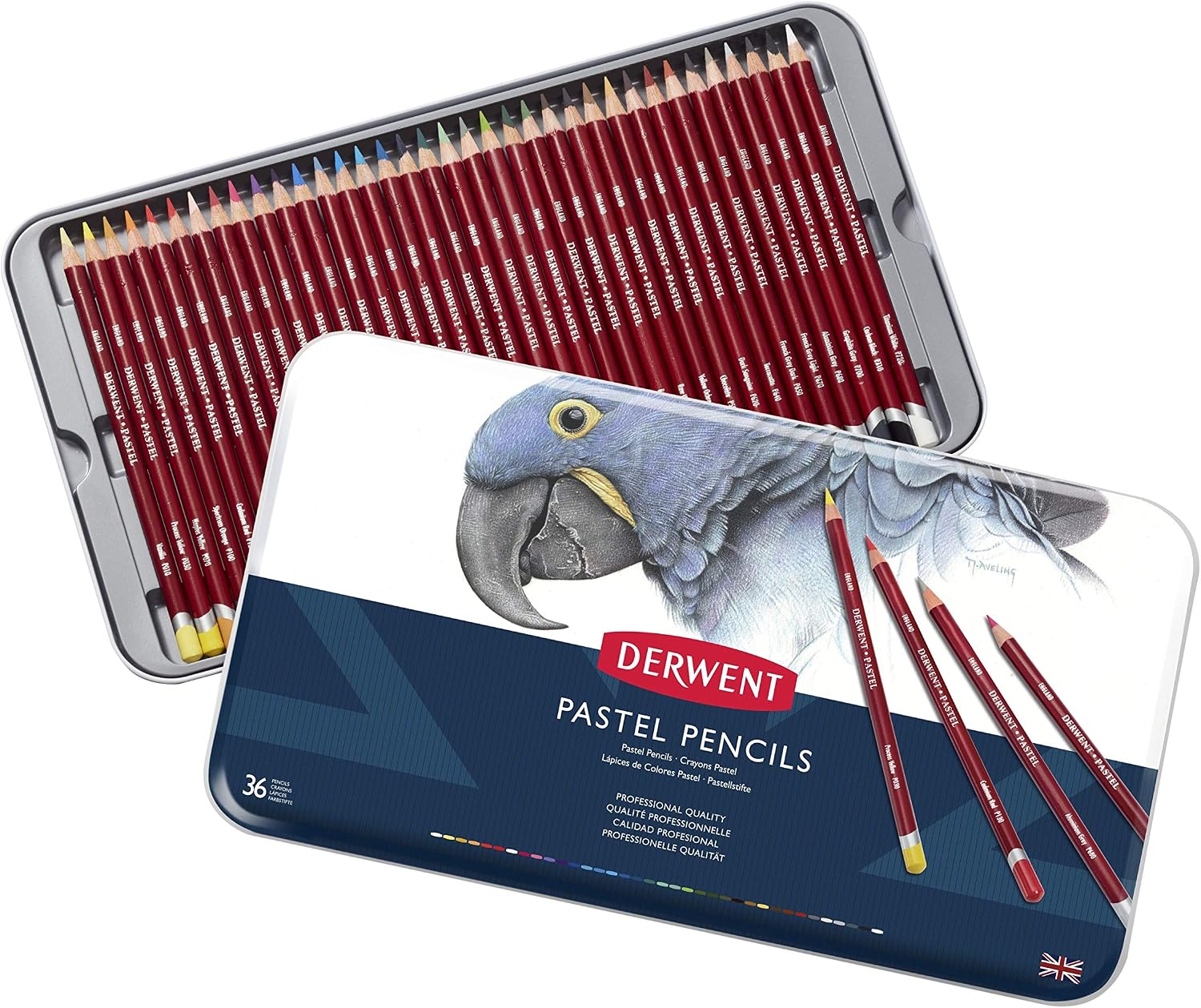
The Derwent Pastel Pencils 36-count are the butter set. The cores are softer and more powdery than the CarbOthellos, which means they layer and smudge with less pressure — ideal for skin tones and fur where you want the pigment to melt, not sit on top. At about $80 for 36 pencils, they cost more per pencil than the Stabilo, and the soft cores burn down fast at portrait sizes.
The honest catch: the soft cores break if you drop them or sharpen with a cheap sharpener. Use a quality hand sharpener or a sandpaper block, and store them flat. The color range is smaller than the CarbOthello’s 60, so you will mix more.
My take: The upgrade set for portrait and fur work where blendability matters more than color count — pair it with the CarbOthello white for highlights.
Canson Mi-Teintes Toned Pad, 9×12 — The Toned Paper Anchor
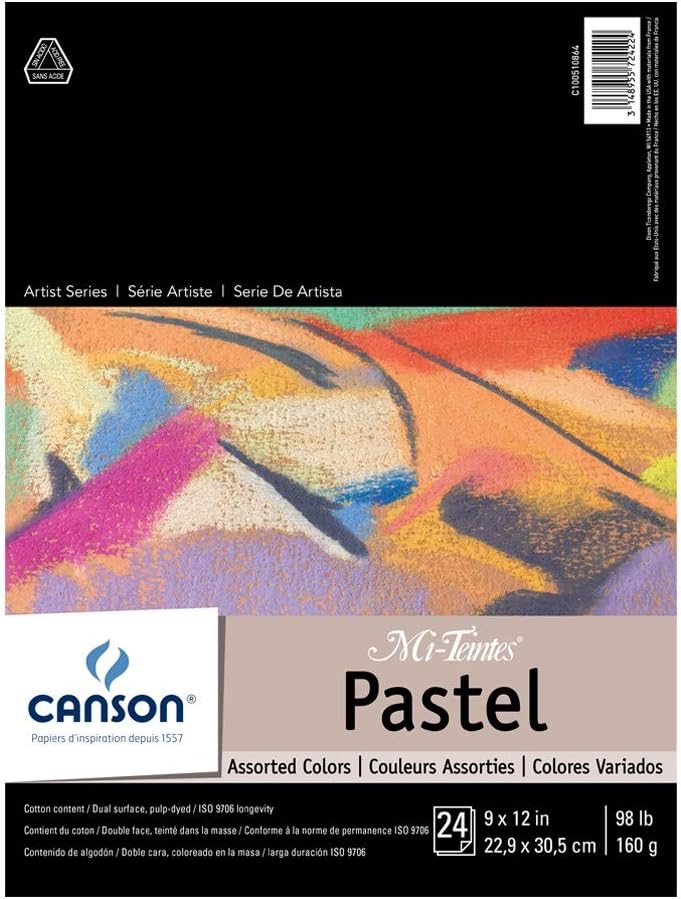
The Canson Mi-Teintes pad is the toned paper that makes this whole technique work. It comes in honey and steel gray tints that provide the mid-tones for you — meaning the paper itself is the shadow color, and you only add highlights and darks. At about $15 for a 24-sheet pad, it is affordable enough to practice on. The paper is double-sided: one face has a pronounced tooth that grabs pastel pigment in 2 to 3 layers, and the other is smoother for finer detail.
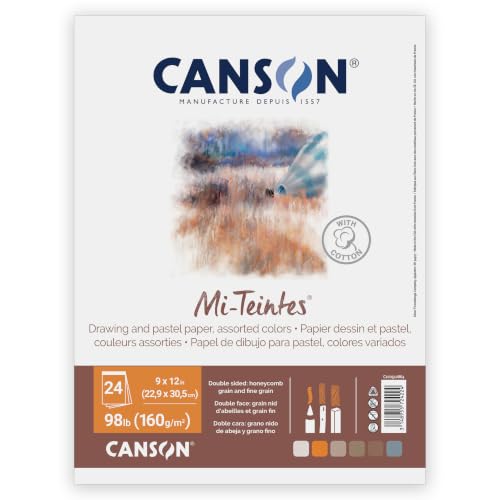
The honest catch: the tooth fills up. After 4 to 5 layers, the paper cannot hold more pigment and the surface goes slick. Plan your layers before you start, and use fixative between layers if you need to build depth.
My take: Non-negotiable for toned-paper work — the Mi-Teintes tooth is the gold standard, and at $15 per pad there is no reason to substitute.
Faber-Castell Pitt Pastel Pencils, 12-Set — Small Starter Set
The Faber-Castell Pitt Pastel 12-set is the cheapest way to test whether pastel pencils are for you. Rich, oil-free pigment with decent blendability at about $20 for 12 colors. The catch is obvious: twelve colors means mixing nearly everything yourself, which is a skill-building exercise or a frustration depending on your patience. Start here if you are unsure, then graduate to the 60-tin CarbOthello once you know the medium clicks.
My take: The gateway set — buy it to test the technique, upgrade when you are hooked.
The Layer Order: How to Work on Toned Paper
Step 1 — Sketch light: Draw your subject with a pastel pencil that matches the paper tone, not a graphite pencil. Graphite smears into pastel and grays everything. A light gray or honey-brown CarbOthello disappears into the Mi-Teintes and leaves no ghost lines.
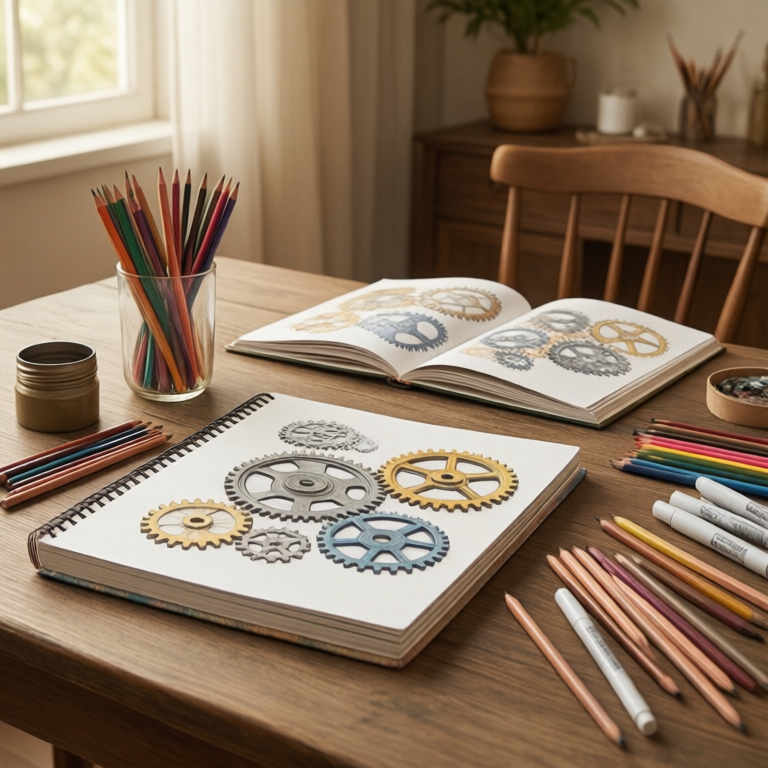
Step 2 — Darks first: Lay in the deepest shadows with a dark brown or charcoal pencil. On toned paper, the mid-tones are already handled by the paper color — your job is adding the darks that define form. Use light pressure; you can always add more.
Step 3 — Blend the darks: Use a paper stump or your finger to push the dark pigment into the tooth. This is where pastel beats wax: the pigment melts into the paper instead of sitting on top. Blend in one direction to avoid muddy circles.
Step 4 — Mid-tones: Add color with 2 to 3 layers, blending between each. This is where most colorists overwork the paper. If the tooth fills and the pigment stops grabbing, stop. Two light layers beat one heavy one every time.
Step 5 — Highlights last: The white CarbOthello is your last step, not your first. Add highlights with sharp, confident strokes on top of the blended mid-tones. The contrast between the velvety darks and the crisp white is the whole point of toned-paper pastel.
Step 6 — Fix and frame: Two light coats of workable fixative, then frame behind glass with a mat. Pastel pigment sits on the surface, and without fixative it will mark up the glass within months.
Common Mistakes
Working light to dark: On toned paper, this is backwards. Dark first, then mid-tones, then white highlights. Starting with light colors fills the tooth before the darks can grab.
Too many layers: Pastel paper has a finite tooth. After 5 layers, you are pushing pigment off the page, not onto it. Plan your layers and stop early.
Using graphite for the sketch: Graphite smears into pastel and creates gray mud. Always sketch with a pastel pencil in the paper’s tone.
Skipping fixative: Pastel without fixative is temporary art. Two light coats between layers keep the dust down; a final coat before framing prevents pigment transfer.
Budget Note
The cheapest setup that still works: the Faber-Castell 12-set at $20 plus a Canson Mi-Teintes pad at $15. That is $35 to test the entire technique, and if it clicks, the CarbOthello 60-tin at $60 is the upgrade that covers every subject.
Deep-focus coloring hits different with an audiobook — Audible’s free trial is here if you want to try it (I get a commission if you sign up, at no extra cost to you).
Keep reading: Our toned-paper coloring guide covers the same mid-tone concept with wax pencils, and the blending tools guide ranks the stumps and solvents that work with both media.
ColoredCalm is reader-supported. As an Amazon Associate, I earn from qualifying purchases. That means if you buy through one of the links above, I get a small commission at no extra cost to you. I only recommend supplies I actually color with.
Related Guides
- The Detail-Pencil Method: Tiny Spaces Without Snapped Leads
- How to Color the Northern Lights Without Green Pencil Soup
- Christmas Ornaments in Colored Pencils: Shiny Spheres Without the Flat Look
🎨 Get Your Free Stress Relief Coloring Guide
Join our newsletter and get this free printable plus weekly tips.
Frequently Asked Questions
Do pastel pencils need fixative?
Yes, always. Pastel pigment sits on the surface and smudges at a touch. Two light coats of workable fixative between layers keep the dust down, and a final coat before framing prevents fading. Skip the fixative and your finished piece will mark up the glass.
Can you mix pastel and colored pencils?
You can, but the order matters. Pastel goes down first because it needs tooth to grab. Colored pencil on top adds sharp details and highlights. Reversing the order leaves the pastel with nothing to grip and it slides off the waxy base.
Which paper tooth is best for pastel pencils?
A medium tooth like Canson Mi-Teintes is the sweet spot. The rough side grabs pastel pigment in 2 to 3 layers; the smooth side needs 5 to 6 layers for the same coverage. Too smooth and the pastel dusts off; too rough and the pencil tips break on the peaks.
Liked this guide? Get the next one in your inbox — the coloring starter checklist is free too.
✓ You're in — check your inbox.
No spam. Unsubscribe anytime. We never share your email.
Prices move fast. Start your Amazon trip from our Shop & Support page and your purchases support ColoredCalm at no extra cost to you.
Price Check
Prices verified via our product tracker. Updated Oct 31.
| STABILO chalkpastel pencil CarbOthello | ARTY+, 60er metal | $100.75 | 4.8★ (3,466) |
| Derwent Pastel Pencils, 4mm Core, Metal Tin, 36 Count (070 | $97.83 | 4.6★ |
| Mi-Teintes Pastel Pad 9X12 Assorted Colors | Assorted Colo | $12.66 | 4.7★ (4,589) |
As an Amazon Associate we earn from qualifying purchases.