This article contains affiliate links. We may earn a commission from qualifying purchases.
Some content on this site is AI-assisted and reviewed by our editorial team.
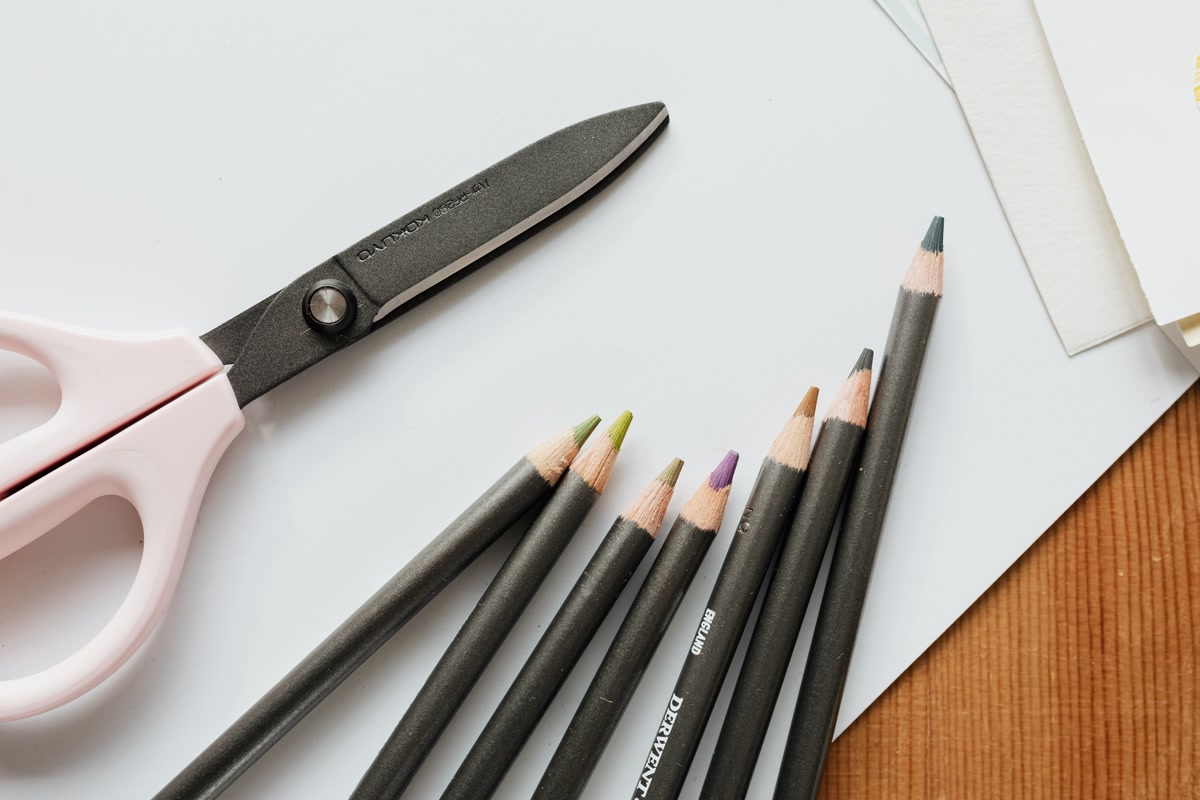
I spent three weeks coloring with four different pencil sets, all priced under 50 dollars, to figure out which ones are actually worth buying. The short answer: Prismacolor still dominates, but a couple of the cheaper options surprised me, and one well-known brand left me frustrated enough to write a paragraph about sharpening.
Disclosure: As an Amazon Associate, ColoredCalm earns from qualifying purchases. This post contains affiliate links, which means we may earn a commission if you click through and make a purchase, at no additional cost to you.
Quick Comparison
| Pencil Set | Colors | Price Range | Best For | Verdict |
|---|---|---|---|---|
| Prismacolor Premier 72-Color | 72 | ~45 | Blending and layering | Best Overall |
| Faber-Castell Polychromos 60-Color | 60 | ~48 | Precision and durability | Premium feel, great pigment |
| Arteza Professional 72-Color | 72 | ~35 | Value and variety | Best Budget |
| Derwent Chromaflow 72-Color | 72 | ~30 | Beginners and bold color | Smooth laydown, easy to use |
What to Look for in Budget Colored Pencils
Before getting into the picks, here is what actually matters when you are shopping for colored pencils on a budget:
- Pigment quality. Cheap pencils often look washed out on paper. You want rich, saturated color that shows up in one or two passes.
- Blendability. If you cannot layer and blend, you are limited to flat coloring. Soft-core pencils blend far better than hard ones.
- Color count. More colors means less mixing, but only if the colors are actually distinct and not five nearly identical blues.
- Durability. Some soft pencils crumble or break constantly. That is frustrating and wasteful.
- Comfort. Thick barrels reduce hand fatigue during long coloring sessions.
For a deeper dive into blending and shading technique specifically, check out our guide on how to blend and shade colored pencils.
1. Prismacolor Premier 72-Color Set
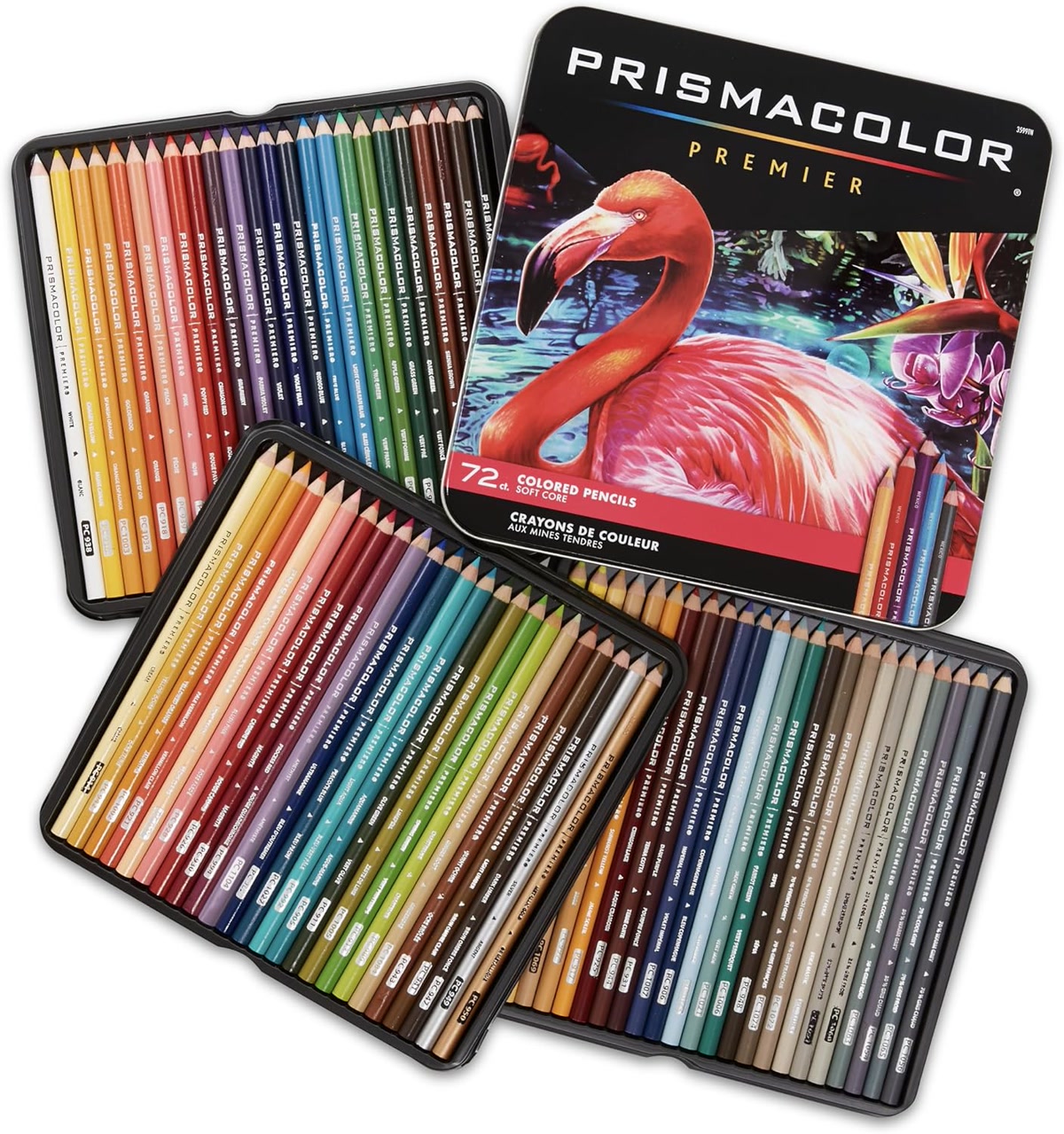
Prismacolor Premier is the pencil most adult colorists eventually land on, and the 72-count size comes in just under the 50-dollar mark. The cores are soft and thick, which means the color goes down with almost no pressure and blends effortlessly. I colored an entire mandala using only three shades of blue, and the gradients came out smoother than I expected on the first try.
The downside to that softness is breakage. I snapped two tips within the first hour just by pressing a little too hard on dark areas. The wood casing is also inconsistent. Out of 72 pencils, about five had slightly off-center cores, which made sharpening annoying. A Kum long-point sharpener (more on that below) fixed most of the issue, but it is something to be aware of.
What really sets Prismacolor apart is the pigment. Even on cheaper paper with a bit of tooth, the colors stay vibrant. I compared a swatch of their crimson against the Arteza equivalent side by side, and the Prismacolor was noticeably richer in a single pass.
If you have read our best colored pencils for adult coloring roundup, you already know this set consistently tops the list. The 72-count hits the sweet spot between variety and affordability.
2. Faber-Castell Polychromos 60-Color Set
Faber-Castell’s Polychromos line sits at the opposite end of the spectrum from Prismacolor. These are oil-based pencils with harder cores, built for precision rather than dreamy blending. The 60-color set comes in just under 50 dollars, and the first thing you notice when you pick one up is how solid it feels. No wobble, no soft wood, just a tight, well-manufactured pencil.
The point retention is remarkable. I worked on a detailed florals page for about 40 minutes without needing to resharpen once. Try that with a Prismacolor and you will be at the sharpener every 10 minutes. The trade-off is that blending takes patience. To get a smooth transition from orange to yellow, I needed about five light layers, whereas the Prismacolor managed it in two. If you prefer fine detail and clean lines over soft gradients, this is your set.
One thing I did not expect: the color naming system is actually useful. Each pencil has a number and a name printed clearly on the barrel, and the colors are consistent across batches. That sounds minor, but when you are trying to replicate a technique from a tutorial, it matters.
They also pair beautifully with Prismacolor if you want to mix wax and oil-based pencils (more on that in our markers vs. colored pencils comparison).
3. Arteza Professional 72-Color Set
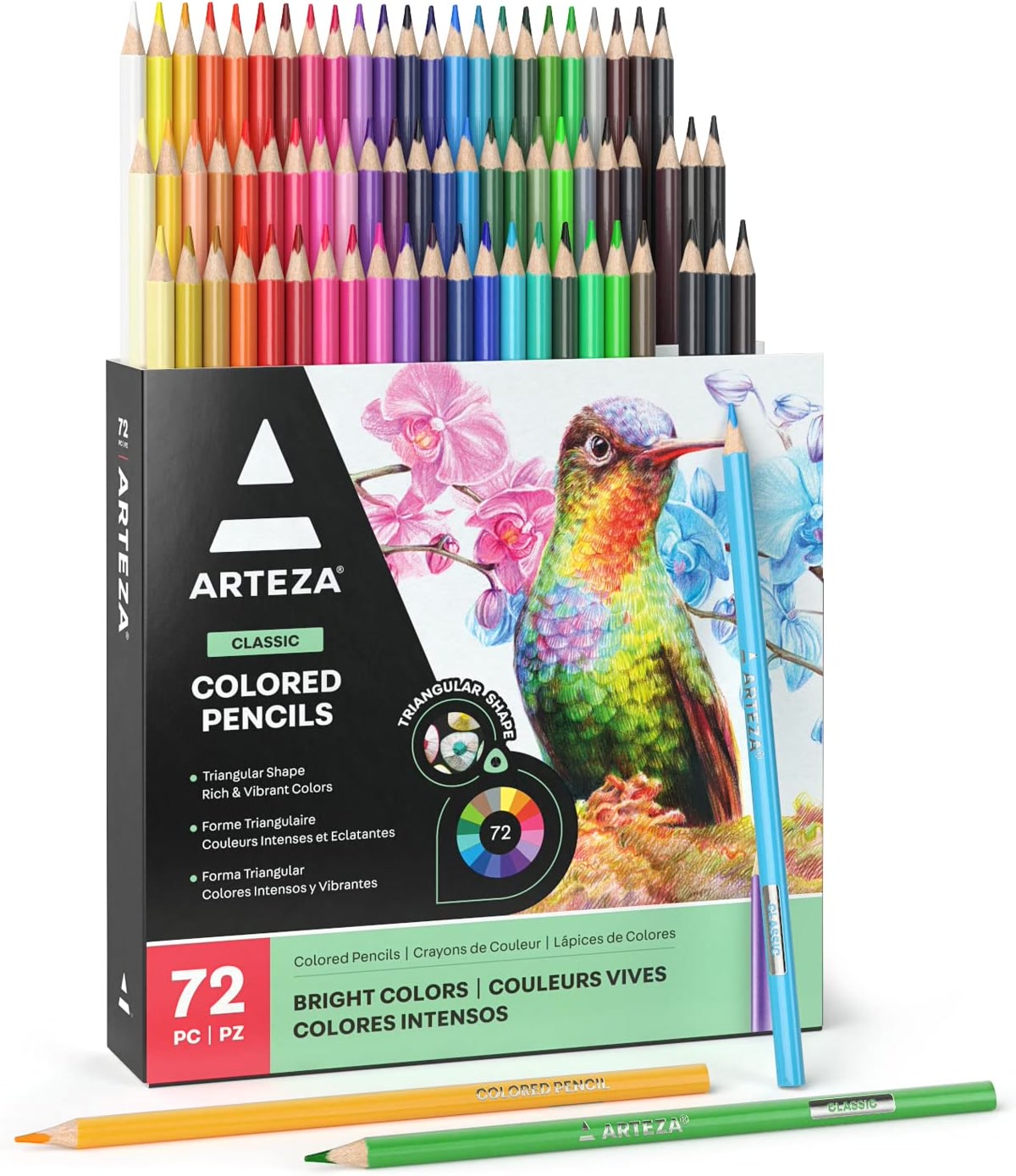
At around 35 dollars for 72 colors, Arteza is the value pick on this list, and honestly, I went in with low expectations. The cores are soft and the color variety is solid, with very few duplicate shades. The tin packaging is sturdy enough to use as long-term storage, which is a nice touch at this price.
The pigment, however, is where you see the cost savings. Colors go down a touch muted compared to Prismacolor or Polychromos. It is not a dramatic difference, and for casual coloring chances are you will not notice. But if you are trying to achieve deep, saturated darks, you will need an extra layer or two. I also found myself sharpening more often than I would have liked. The cores are a bit too soft, which means the tips wear down fast and occasionally crumble mid-stroke.
Still, for someone just getting into adult coloring who does not want to commit 45 dollars before knowing if they will stick with it, Arteza is the smart buy. It is also a great companion to our best coloring supplies under 25 dollars guide. Pair these pencils with a good sharpener and eraser and you are set for under 50 total.
4. Derwent Chromaflow 72-Color Set
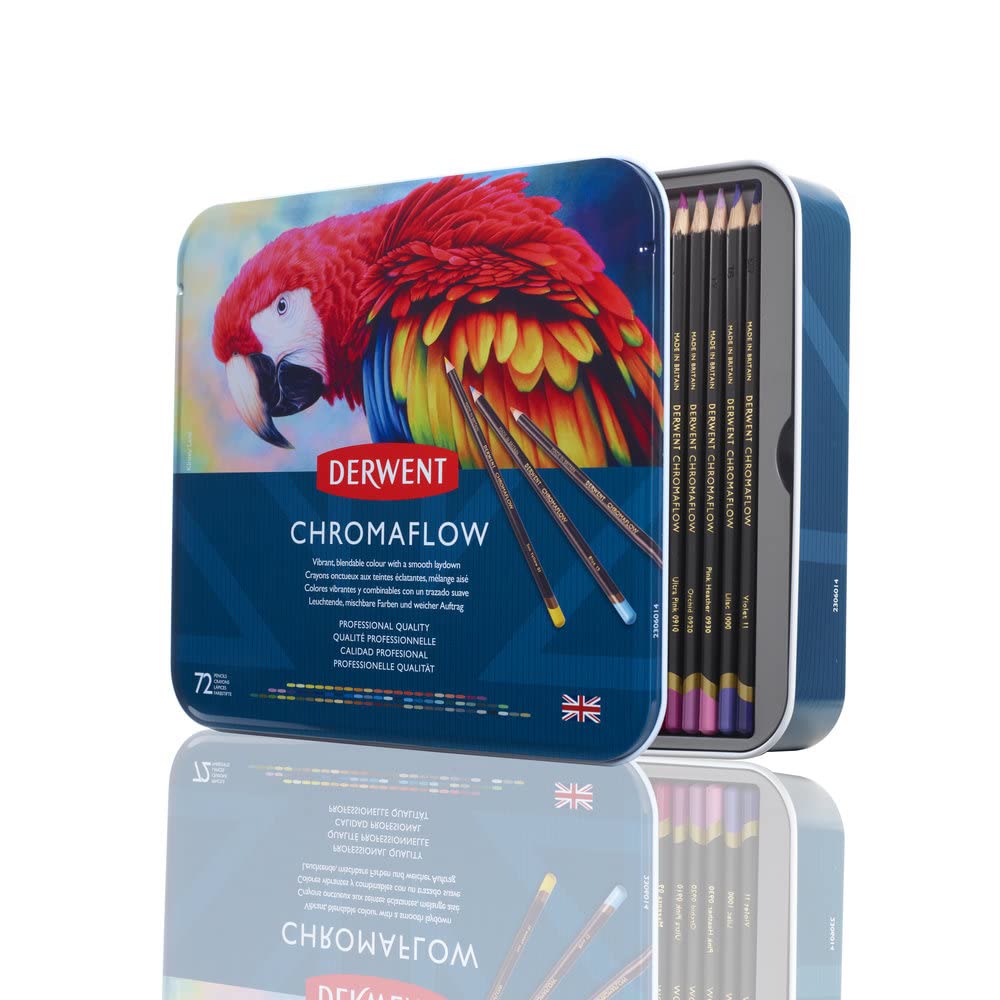
Derwent’s Chromaflow line is their answer to Prismacolor’s soft-core dominance, and at around 30 dollars for 72 colors, it is aggressively priced. The name “Chromaflow” sounds like marketing nonsense, but I have to admit the pencils do glide across the paper with very little pressure. Filling in large background areas felt faster with these than with any other set on this list.
The pigment is surprisingly strong for the price. Where the Arteza felt slightly muted, the Chromaflow held its own against Prismacolor in a side-by-side swatch test, at least on white paper. On darker or textured paper, the gap widened a bit.
Where things fell apart for me was the color naming. The pencils have numbers but no names, and the numbering system does not follow any obvious logic. I spent way too long hunting for a specific shade of teal because it was buried between two browns in the tin. If Derwent fixed this one thing, the set would punch well above its weight.
Blending is decent but not great. The soft core lays down color quickly, but the wax tends to build up and cause bloom if you layer heavily. For the price, though, these are a strong choice if you want Prismacolor-like softness without paying Prismacolor prices. Our colored pencils for adult coloring guide breaks down the differences in more detail.
Accessories Worth Adding (All Under 15 Dollars)
Even the best pencils need a few sidekicks. Here are four accessories that make a real difference without breaking the bank:
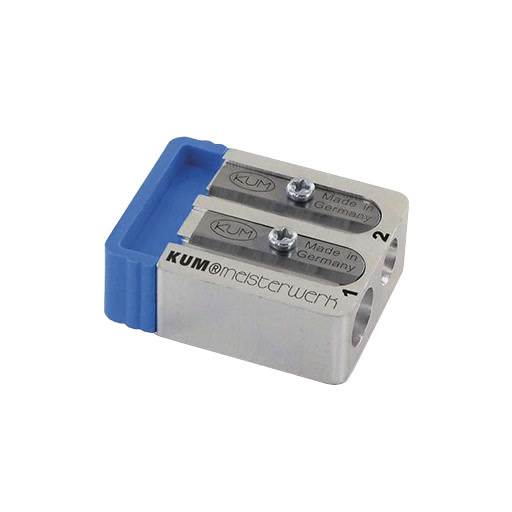
Kum Automatic Long Point Sharpener. A good sharpener is non-negotiable with soft-core pencils. The Kum creates a long, fine point that reduces tip breakage and gives you better control. It is the one sharpener that actually works well with Prismacolor and Arteza pencils. I tried a standard classroom sharpener first and it chewed through soft cores like a blender.
Kneaded Eraser. For lifting color, softening edges, and cleaning up stray marks without damaging paper. A kneaded eraser is gentle enough for colored pencil work and costs less than a coffee.
Prismacolor Colorless Blender. If you pick up the Prismacolor set (or any wax-based pencils), this blender pencil smooths out strokes and intensifies colors through burnishing. It is a small investment that makes a big visible difference.
Pencil Extender. When your pencils wear down to stubs (and they will), an extender lets you keep using every last bit instead of throwing away usable pencil. Saves money over time.
The Final Verdict
Best Overall: Prismacolor Premier 72-Color Set
Prismacolor wins on color quality, blendability, and variety. It is what most adult colorists should start with and what many stick with long-term. At under 50 dollars, it is the set to beat.
Get Prismacolor Premier on Amazon
Best Budget: Arteza Professional 72-Color Set
If 45 dollars still feels like a lot, or you want maximum colors per dollar, the Arteza 72-set is the clear winner. You get the same color count as Prismacolor for significantly less money, with quality that is genuinely good, just not quite at the premium level. For beginners and budget-conscious colorists, it is the smart pick.
Get Arteza Professional on Amazon
Want to listen to books on the go? Try Audible Premium Plus FREE for 30 days and get 1 free audiobook on mindfulness, creativity, or anything else. Start your free trial
Bottom Line
After three weeks of coloring with these sets, the Prismacolor Premier 72 is the one I kept reaching for. The blending is just on another level. But the Arteza surprised me the most for the money, and the Polychromos earned my respect for detail work even if I had to work harder for my blends. The Chromaflow is a solid budget option if you can deal with the confusing color layout.
Pick the set that matches how you like to color. Soft-core fans should lean Prismacolor or Derwent. Precision lovers should grab Polychromos. Budget-conscious beginners cannot go wrong with Arteza. The important thing is to pick up your pencils and actually use them. Your next moment of calm is just a page away.
Happy coloring. The best pencils are the ones that make you want to pick them up again tomorrow.
🎨 Get Your Free Stress Relief Coloring Guide
Join our newsletter and get this free printable plus weekly tips.
Price Check
Prices verified via our product tracker. Updated Sep 27.
| Amazon.com : Prismacolor Premier Colored Pencils, Soft Cor | $74.99 | 4.8★ (29,632) |
| Amazon.com: Polychromous Colored Pencil Set In Metal Tin 6 | $79.56 | 4.8★ (4,529) |
| Amazon.com: ARTEZA Colored Pencils, 48 Wax-Based Color Pen | $0.79 | 4.7★ (6,573) |
| Amazon.com : Derwent Chromaflow Pencils, Set of 150 in Tin | $149.99 | 4.5★ (3,059) |
| Amazon.com: Kum AS2, Two Hole Automatic Long Point Pencil | $8.10 | 4.5★ (1,942) |
| Amazon.com: Faber-Castell Kneadable Eraser for Artists in | $35.00 | 4.7★ (21,212) |
| Amazon.com: Derwent Pencil Extender Set, Silver and Black, | $14.48 | 4.4★ (3,542) |
As an Amazon Associate we earn from qualifying purchases.