This article contains affiliate links. We may earn a commission from qualifying purchases.
Some content on this site is AI-assisted and reviewed by our editorial team.
One-Color <a href="https://coloredcalm.com/Coloring-for-better-sleep-how-a-pre-bed-coloring-routine-helps-you-fall-asleep-faster-2/”>Coloring: Why Monochrome Coloring Books Are the Ultimate Minimalist Stress Relief
What if the secret to relaxing coloring was not choosing from 100 different colored pencils, but using just one? That is the premise behind one-color coloring, a growing trend that strips coloring down to its most meditative form. One pen. One color. No decisions. No palette anxiety. Just you, a black pen, and a page full of beautiful designs.
If you have ever stared at a coloring page and felt paralyzed by the question “what color should this be?”, one-color coloring eliminates that question entirely. The result is a coloring experience that is closer to meditation than art, and for many people, that is exactly the point.
What Is One-Color Coloring?
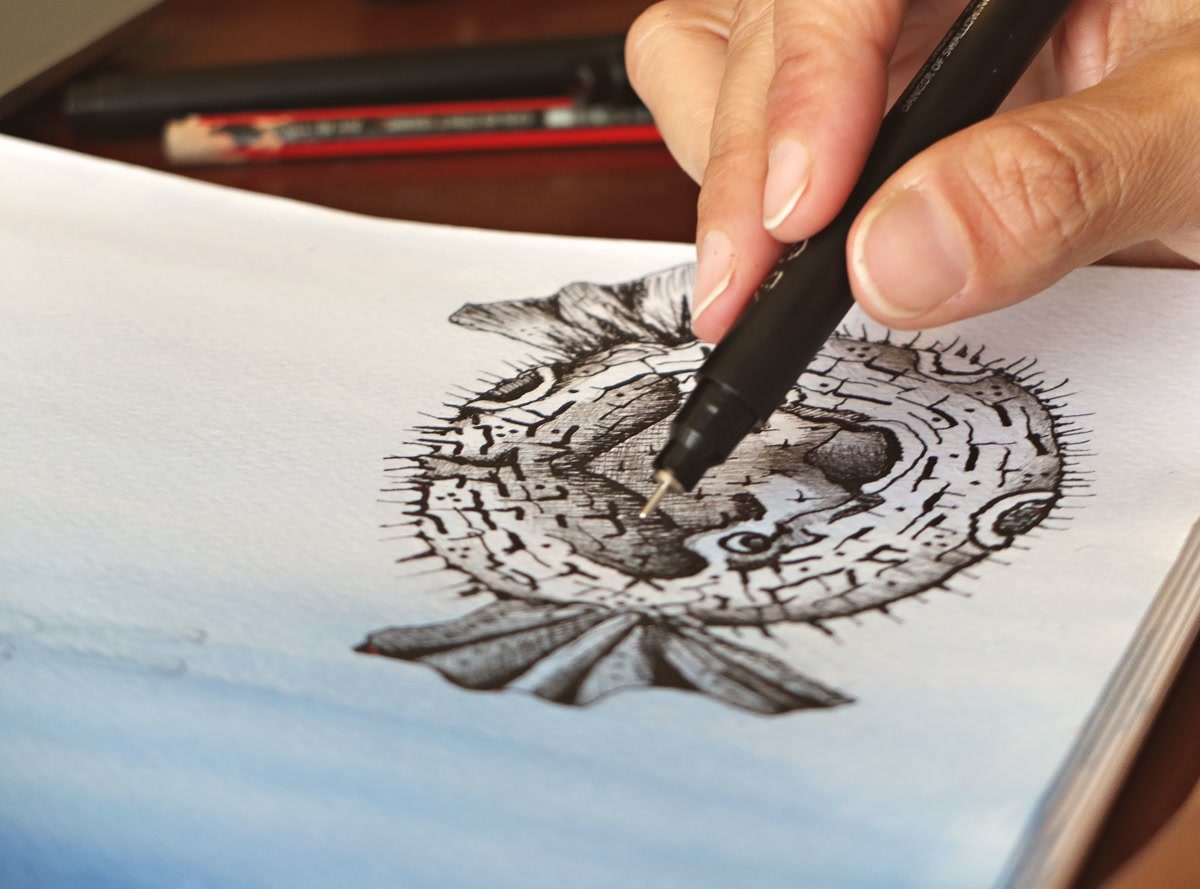
One-color coloring books, also called monochrome coloring books, are designed to be colored with a single pen or marker, usually black. The pages feature bold, beautiful line art with varying densities of detail. When you color over them with black ink, the different densities of the design create natural contrast: dense areas look darker, sparse areas look lighter. The result is a striking, high-contrast finished page that looks like an ink print.
It sounds limiting, but it is actually liberating. With only one color to work with, you never have to decide which color goes where. You never have to worry about whether your color choices look good together. You just color, and that simplicity is where the stress relief happens.
Why One Color Works Better Than You Think
Zero Decision Fatigue
Every decision you make during the day drains a small amount of mental energy. By the evening, your decision-making capacity is depleted, which is why the question “what do you want for dinner?” feels impossible. Now imagine adding “and which of these 72 colors should I use for each of these 40 sections?” to that depleted state.
One-color coloring removes every color decision from the equation. There is no wrong choice because there is no choice. Your only task is to fill in the spaces, and your brain can fully relax into that single repetitive action without constantly evaluating options.
Natural Contrast From Design Density
The magic of one-color coloring is that the designs are engineered to create shading through density, not color. Areas with closely packed patterns become dark when filled in. Areas with sparse, open patterns stay light. The result is a finished page with natural-looking depth and contrast, all from a single black pen.
Accessibility
One-color coloring is the most accessible form of coloring there is. You need exactly two things: a book and a pen. No 72-color pencil set. No marker collection. No blender pencils or gel pens or sharpeners. If you are on a budget, traveling, or just starting out, one-color coloring gives you the full stress-relief benefits of coloring with minimal investment and minimal supplies.
It is also the most portable form of coloring. A monochrome coloring book and a single pen fit in any bag. You can color on a plane, in a waiting room, or on your lunch break without hauling a case of art supplies.
Choosing a One-Color Coloring Book
The quality of the designs matters enormously in monochrome coloring because the design is doing all the work that color normally does. Here is what to look for.
Varied Density Designs
The best one-color books feature designs with varying density, dense patterns in some areas and sparse, open patterns in others. This is what creates the contrast when you color with a single shade. Books with uniform density throughout will look flat when colored.
The Monochrome Adult Coloring Book: 50 Relaxing Landscape Silhouettes is designed specifically for single-color use, with landscape scenes that use varying pattern density to create depth. The silhouette format is particularly effective because the contrast between dark foreground and lighter background is built into the design.
Design Complexity
One-color books range from very simple (bold, large shapes) to highly detailed (tiny, intricate patterns). Simple designs are faster to complete and good for short sessions. Detailed designs take longer but create more dramatic contrast when finished.
For beginners, the Monochrome Animals Coloring Book offers a good middle ground, animal illustrations with moderate detail that are satisfying to complete without being overwhelming.
Single-Sided Pages
Because you will likely be using markers or pens that can bleed through, look for books with single-sided pages or thick paper. Nothing ruins a coloring book faster than ink bleeding through to the next design.
The Best Pen for One-Color Coloring
Your pen is your only tool, so it matters. You want something that lays down smooth, dark ink without bleeding through the page. Fineliner pens are ideal because they come in multiple tip sizes for different detail levels.
The Sakura Pigma Micron Black Ink Multi-tip Set (10-pack) is the gold standard. These archival-quality fineliners come in multiple tip sizes (from ultra-fine 003 to broad 08), so you can use the fine tips for tiny detail areas and the broader tips for filling in larger spaces. The ink is waterproof, fade-resistant, and smooth-flowing. One set will last you through an entire coloring book.
If you prefer markers over pens, look for alcohol-based markers with a broad tip on one end and a fine tip on the other. What really matters is consistent ink flow and minimal bleed-through.
Techniques for Better One-Color Coloring
Vary Your Pressure
Even with one color, you can create subtle variation by changing your pressure. Light pressure in sparse areas lets more of the paper show through, creating a lighter tone. Heavy pressure in dense areas packs in more ink for darker tones. This is your only tool for adding nuance to a monochrome page, so use it deliberately.
Use Different Tip Sizes
If you have a multi-tip pen set, switch between tips based on the area you are coloring. Use the finest tip (003 or 01) for tiny, intricate sections. Use the medium tips (03 or 05) for general coloring. Use the broad tip (08) for large, open areas. This is the monochrome equivalent of switching between different pencil colors.
Leave Some Areas White
Not every section needs to be filled in. In monochrome coloring, the white space is as important as the black space, it is what creates contrast. If a section is already surrounded by dense dark patterns, leaving it white makes it pop. This is called negative space, and it is one of the most powerful tools in one-color coloring.
Color in Different Directions
If you are using a pen, the direction of your strokes affects the texture. Uniform horizontal strokes create a smooth, flat look. Cross-hatching (horizontal strokes in one direction, then vertical strokes on top) creates a darker, denser appearance. Experiment with stroke direction to add textural variety to your page.
One-Color vs Full-Color Coloring: Which Is Right for You?
| Aspect | One-Color Coloring | Full-Color Coloring |
|---|---|---|
| Supplies needed | One book + one pen | Book + multiple pencil/marker sets |
| Cost | Under 20 dollars to start | 40-100+ dollars for good supplies |
| Portability | Excellent, book and pen fit in any bag | Limited, requires carrying supply case |
| Decision-making | Zero, no color choices needed | Constant, every section needs a color |
| Best for | Meditation, minimalists, travel, evenings | Creative expression, practice, color theory |
| Visual result | Striking, high-contrast ink art | Colorful, vibrant illustrations |
One-Color Coloring for Specific Situations
For Evening Wind-Down
One-color coloring is ideal for evening sessions because it requires zero creative decision-making. After a long day of making choices, the relief of having no decisions to make is deeply soothing. Keep a monochrome book and pen on your nightstand and color for 15 minutes before sleep.
For Travel
A monochrome coloring book and a single pen take up less space than a paperback novel. No pencil case, no sharpener, no risk of markers leaking in your bag. It is the most travel-friendly coloring format available.
For Work Breaks
A monochrome book and pen are discreet enough to keep in a desk drawer. Color for 5 minutes between meetings or during a stress spike. Unlike full-color coloring, there is no visual mess to clean up, close the book and your desk looks professional again.
A One-Color Starter Kit
The beauty of one-color coloring is how little you need:
- Monochrome Adult Coloring Book: 50 Landscape Silhouettes, designed for single-color use
- Sakura Pigma Micron Black Multi-tip Set (10 pens), all the tip sizes you will ever need
That is it. Under 25 dollars for a complete coloring practice that will last you weeks and takes up less space than a journal.
Bottom Line
One-color coloring is not a lesser form of coloring, it is a different practice with different benefits. It strips away everything non-essential and leaves you with the core of what makes coloring therapeutic: repetitive motion, focused attention, and the satisfaction of watching a page transform under your hand. No color choices. No supply collection. No complication.
If coloring has ever felt overwhelming, if you are tired of making decisions, or if you just want the most minimal, portable, accessible form of stress relief you can find, give one-color coloring a try. One pen. One book. One color. That might be all you need.
🎨 Get Your Free Stress Relief Coloring Guide
Join our newsletter and get this free printable plus weekly tips.