This article contains affiliate links. We may earn a commission from qualifying purchases.
Some content on this site is AI-assisted and reviewed by our editorial team.
Anxiety Doesn’t Care That Your Phone Has a Breathe App
You know the loop. The spike hits — a deadline, a 3 a.m. wake-up, a news headline — and the thumb reaches for the phone. Twenty minutes later you’re not calmer; you’re over-stimulated, still anxious, and now also behind. Here’s the mechanism nobody explains: when anxiety spikes, your working memory is flooded, and scrolling feeds it. Coloring starves it. A page and a pencil occupy the exact cognitive channels rumination needs — visual attention, fine motor control, low-stakes decision-making — and fifteen minutes is enough for the physiological wave to pass. It’s not magic; it’s load-balancing.
This is the protocol I teach colorists who’ve never colored through an anxious evening, plus the five supplies that make it work when your hands are shaky. You don’t need talent. You don’t need an hour. You need a plan that starts in under two minutes — because any calm-down ritual with more than two minutes of setup becomes one more thing to be anxious about.
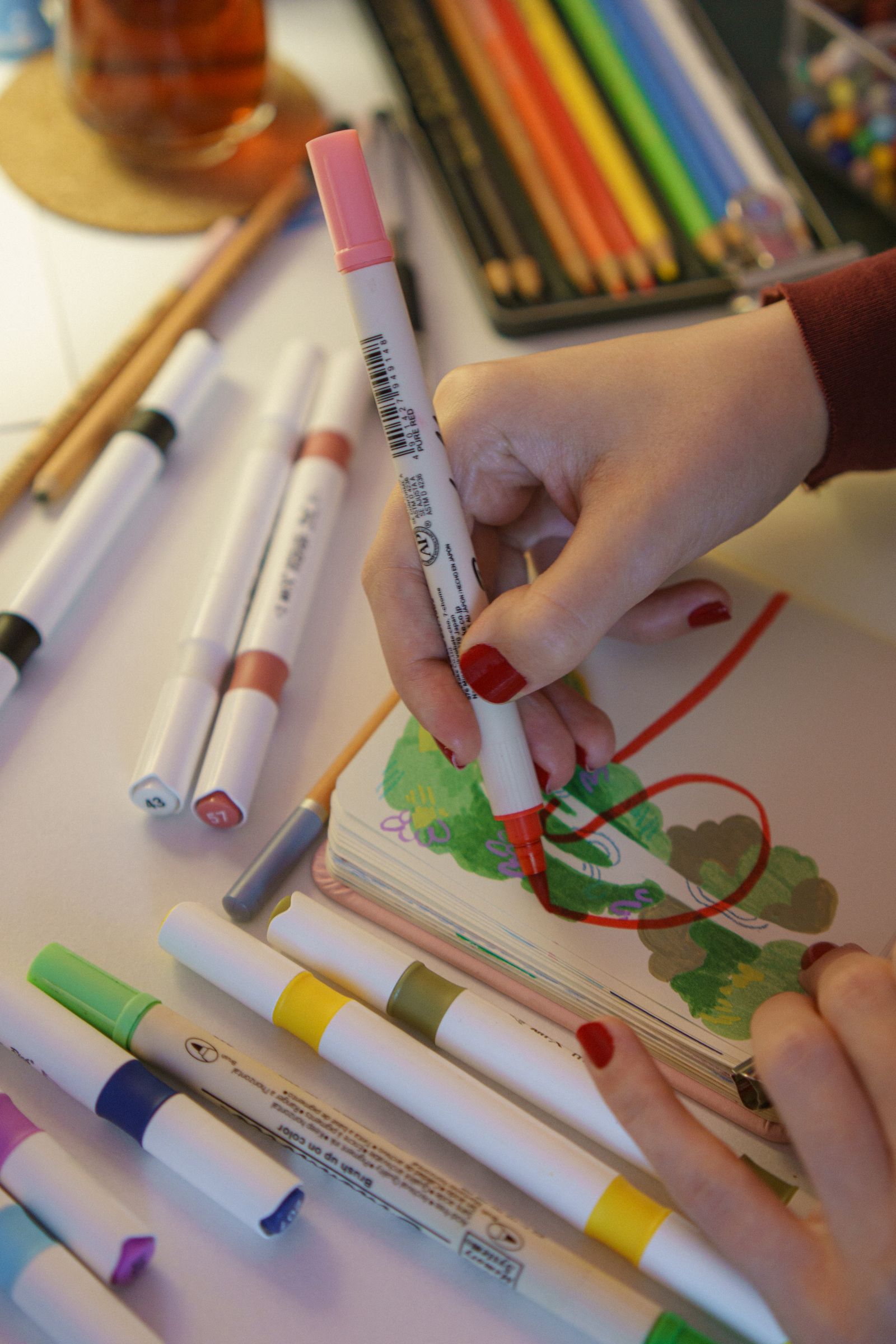
I built this protocol after two winters of testing what actually works mid-spike. Here’s the exact 15-minute version.
The 15-Minute Protocol
Minute 0–2: pick big-line pages only. Grab a bold, simple design — the thicker the lines, the better. This is the critical rule: fine-detail pages invite perfectionism, and perfectionism is anxiety wearing a beret. Big lines mean no fine-motor failure, no “ruined” page, no wrong answers.
Minute 2–3: three colors, not thirty-six. Pull exactly three pencils you like together. Choice paralysis is the enemy mid-spike; three options is a decision you can make while flooded.
Minute 3–13: fill regions, don’t shade. Flat fills only — no blending, no burnishing, no technique to grade yourself on. The repetitive fill motion is the whole mechanism: hands busy, eyes tracking lines, mind given exactly one low-stakes task.
Minute 13–15: stop mid-page, on purpose. This is the trick that makes it repeatable: finish with the page visibly unfinished. A finished page is a completed chore; a half-colored page is an open loop your brain wants to return to tomorrow — which is how a one-time experiment becomes a habit.
The one rule: if the thoughts crash back in mid-fill, don’t fight them — notice them, and return to the next region. Returning is the practice. Every return is a rep.
What to Color When You’re Anxious — The Supply Shortlist
Bold and Easy Coloring Book: 50 Simple Designs — the big-line decompression pick. The Bold and Easy Coloring Book: 50 Simple Designs at about $8 is the book this protocol was built around: oversized lines and simple shapes mean no fine-motor failure when your hands are shaky — which is the entire point of a mid-spike page. The con is honest: if you color calm, you’ll outgrow it in a month. It’s not your only book; it’s your anxiety book.
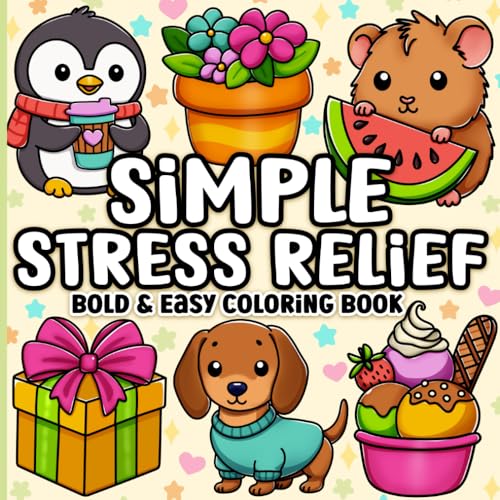
My take: the specific book to keep in the drawer for bad evenings — and at $8, buy two so one lives at the desk.
Large Print Cozy and Calm Coloring Book — the low-effort 50-pager. The Large Print Cozy and Calm Coloring Book at about $8 trades complexity for gentleness — warm, forgiving scenes that suit a wandering mind that can’t hold a 40-region mandala right now. The paper is thin, so shadows come through: keep a blotter page underneath and this con disappears.
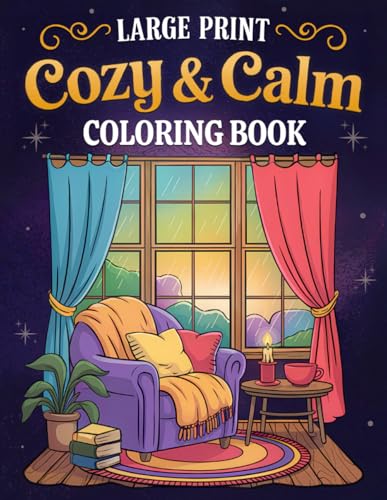
My take: the right second book — cozy scenes for evenings when even the Bold & Easy patterns feel like a task.
Calming Coloring Book for Seniors: Nature — the 50-image gentle reset. The Calming Coloring Book for Seniors: Nature has large-print nature scenes that stay simple page after page — no sudden difficulty spikes mid-book, which matters when you’re paging through in a fragile state. Honest limits: “large print” covers the outlines, not the paper weight — markers will shadow through; stick to pencils.
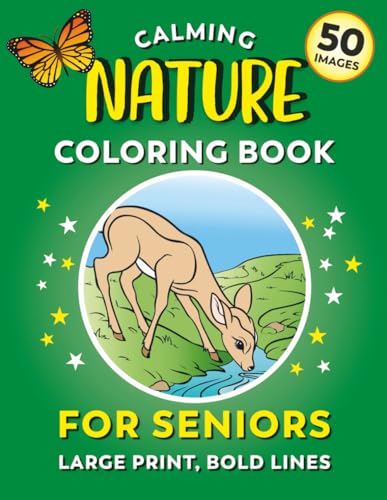
My take: the steadiest book on this list — buy it for the older colorists in your life and quietly keep one for yourself.
The Mandala Coloring Book (Jim Gogarty) — the classic focus anchor. The Mandala Coloring Book by Jim Gogarty at about $10 is the structured option: mandalas force enough repeating geometry to genuinely crowd out rumination — the pattern does half the focusing for you. The honest con is the flip side: on a bad day, the detail level reads as pressure, not calm. This is your recovery-day book, not your mid-spike book.
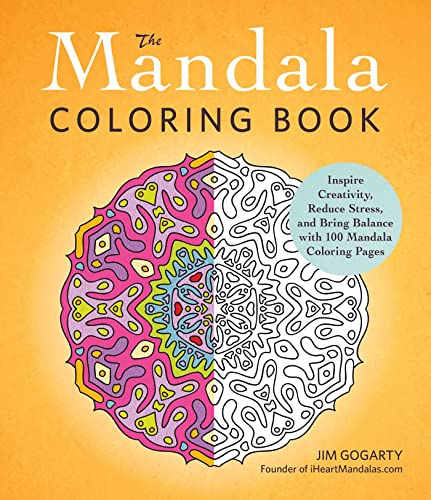
My take: the best second-stage book — start here once the 15-minute habit sticks and your baseline settles.
Faber-Castell Black Edition Colored Pencils, 36 — the soft-lead low-pressure set. The Faber-Castell Black Edition colored pencils, 36-count are the pencil this protocol assumes: fat soft cores that lay saturated color with almost no pressure, which shaky, tired, or arthritic hands notice immediately — pressing hard is one more demand, and these let you drop it. The con: soft leads need a gentle sharpener or the cores crack, so sharpen with a light hand, not the school-room crank.
My take: the one genuine upgrade in this whole protocol — if your hands hurt or shake, these are worth every cent over a hard student set.
Build the kit once, under $35: one Bold & Easy book (~$8) + the Black Edition pencils (~$20) + a drawer that’s not your phone. Start a free 30-day Prime trial here and the whole kit lands before the weekend.
Common Mistakes (And Why They Break the Protocol)
Choosing detailed pages mid-spike. Intricate designs engage the perfectionist inner critic — the exact voice you’re trying to quiet. Big lines, always, mid-spike; detail is for calm days.
Treating it as a productivity window. Podcasts on 2x, phone propped up, “learning while coloring” — that splits the attention the protocol is trying to consolidate. Silence or quiet music only.
Finishing the page. Completion turns a nervous-system exercise into an assignment with a due date. Stop mid-page and leave the loop open.
Buying 72-pencil sets first. The 36-pencil soft-lead set covers every region you’ll fill. Big sets add choice paralysis, which is the anxiety you started with.
The Budget Note
Cheapest setup that still works: any bold-line book (~$8) plus the softest pencils you can afford. The Faber-Castell Black Editions are the honest recommendation at ~$20; a basic Crayola set gets a functional start for a quarter of that if that’s this week’s math. Total floor: under $15 for a repeatable, zero-side-effect anxiety interrupt.
Keep reading: the beginner pencil kit that covers every page and the coloring books under $15 worth buying cover the rest of the shelf this protocol draws from.
Deep-focus coloring hits different with an audiobook — Audible’s free trial is here (I earn a commission if you sign up).
ColoredCalm is reader-supported. As an Amazon Associate, I earn from qualifying purchases. That means if you buy through one of the links above, I get a small commission at no extra cost to you. I only recommend supplies I actually color with.
🎨 Get Your Free Stress Relief Coloring Guide
Join our newsletter and get this free printable plus weekly tips.
Frequently Asked Questions
Can coloring actually help with anxiety?
Yes, for most people. Coloring occupies the visual and fine-motor channels that anxious rumination needs, which is why fifteen minutes of filling simple regions can carry you past a spike. It's not a treatment for an anxiety disorder — it's a working interrupt for the bad half-hours.
What should I color when I feel anxious?
Big-line, simple designs — the bolder the outlines, the better. Bold-and-easy style books mean no fine-motor failure when your hands are shaky, while detailed pages invite perfectionism, which is the opposite of what you need mid-spike.
How long before coloring starts to calm you down?
Most people feel the shift somewhere between minutes five and ten of steady filling — roughly how long the physiological wave of an anxiety spike takes to crest. That's why the protocol asks for fifteen minutes, not five.
What pencils are easiest on tired or shaky hands?
Soft-lead pencils like the Faber-Castell Black Edition lay color with almost no pressure, so your hands aren't fighting the tool. Sharpen them gently — soft cores crack under a heavy hand in a crank sharpener.
Liked this guide? Get the next one in your inbox — the coloring starter checklist is free too.
✓ You're in — check your inbox.
No spam. Unsubscribe anytime. We never share your email.
Price Check
Prices verified via our product tracker. Updated Nov 12.
| Large Print Cozy & Calm Coloring Book: 50+ Simple, Easy, a | $9.99 | 4.5★ |
| Faber-Castell Black Edition Colored Pencils, 36 Count, Cla | $13.99 | 4.5★ (10,497) |
As an Amazon Associate we earn from qualifying purchases.