
This article contains affiliate links. We may earn a commission from qualifying purchases.
Some content on this site is AI-assisted and reviewed by our editorial team.
Coloring for Better Sleep: How a Pre-Bed Coloring Routine Helps You Fall Asleep Faster

If you have trouble falling asleep, you have probably tried every sleep recommendation going: magnesium, screen-free hours, cold rooms, white noise, meditation apps. But there is one technique that is genuinely effective, backed by emerging sleep research, completely free, and almost never mentioned in sleep guides: coloring before bed.
Coloring in the hour before sleep is one of the most effective wind-down activities you can do. It is calming, screen-free, and requires just enough focus to quiet your racing mind without being so demanding that it keeps you alert. And unlike meditation, which can feel frustrating when you are already anxious about not sleeping, coloring is easy and pleasant, you do not have to try to clear your mind. The activity does it for you.
Why Coloring Works as a Sleep Aid
It Replaces Screen Time With Something Calming
The single most important thing you can do for your sleep is to stop looking at screens in the hour before bed. Phone screens, tablets, and laptops emit blue light that suppresses melatonin production, and the content on them, news, social media, work emails, keeps your brain in a state of alertness that is the exact opposite of what you need for sleep.
The problem is that giving up your phone for an hour before bed leaves a gap. Most people reach for their phone because they need something to do, not because they particularly want to scroll. Coloring fills that gap perfectly. It gives you something to do with your hands and eyes that is engaging enough to not feel boring, but calming enough to prepare your brain for sleep. And unlike reading, which can be too stimulating if you get absorbed in a page-turner, coloring has a natural ceiling on how interesting it can be.
It Activates the Relaxation Response
Research on coloring and stress has shown that coloring reduces cortisol levels and activates the parasympathetic nervous system, the rest-and-digest mode that is the biological opposite of fight-or-flight. This is exactly the state your body needs to be in to transition from wakefulness to sleep. By coloring for twenty to thirty minutes before bed, you are physically priming your body for sleep in a way that is more effective than simply lying in the dark hoping you feel sleepy.
It Interrupts Anxious Thought Loops
One of the most common causes of insomnia is the racing mind, lying in bed going over tomorrow’s tasks, replaying today’s conversations, worrying about things you cannot control. This is particularly difficult to deal with because the harder you try to stop thinking, the more you think.
Coloring breaks this loop. The focused but gentle attention required to color, choosing colors, filling in shapes, watching the page come to life, occupies the parts of your brain that would otherwise be generating anxious thoughts. You are not trying to suppress the thoughts. You are simply giving your mind something else to do that is incompatible with worry. Twenty minutes of coloring can quiet a mind that would otherwise race for hours.
How to Build a Pre-Bed Coloring Routine
Timing: Start 45 Minutes Before Your Target Sleep Time
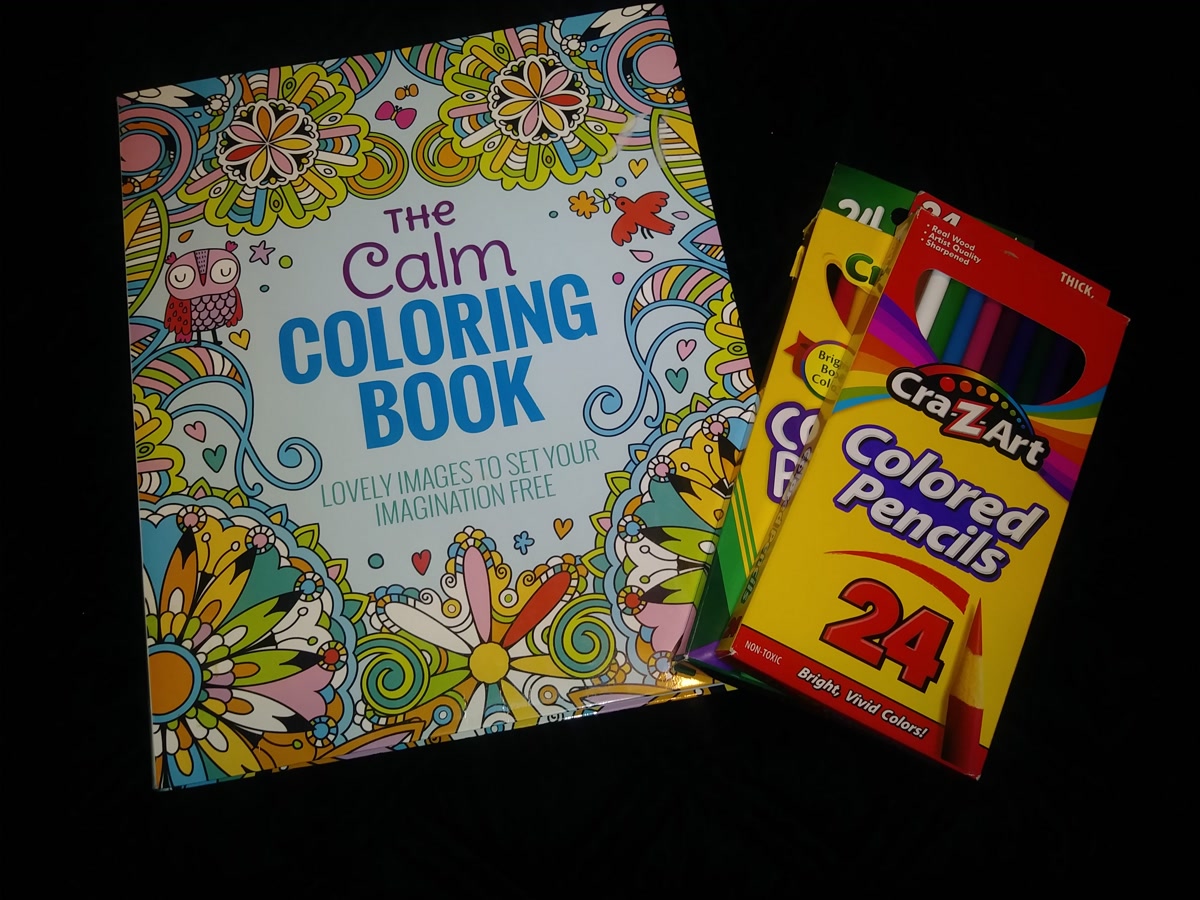
If you want to be asleep by 10:30, start coloring by 9:45. This gives you thirty minutes of coloring followed by fifteen minutes for bathroom routine and getting into bed. The timing matters, you want to finish coloring while you are still relaxed but before you get a second wind from staying up too late.
Lighting: Warm, Dim, and Screen-Free
Use a warm-toned bedside lamp, not an overhead light, and absolutely not a screen. Warm amber or soft white light (2700K to 3000K color temperature) signals to your brain that the day is ending. If your bedside lamp is too bright, use a lower-wattage bulb or a dimmer. The goal is enough light to see your coloring clearly without the brightness that signals daytime to your brain.
Position: Comfortable, Not Hunched
If you are coloring in bed, use a firm lap desk or a large book as a backing surface so you are not hunching over your pages. If you are at a desk or table, make sure your chair is comfortable and your posture is relaxed. Physical tension is the enemy of sleep, if your body is uncomfortable, the relaxation benefits of coloring will be undermined.
Duration: 20 to 30 Minutes
You do not need to finish a page. In fact, it is better if you do not, having an unfinished page to return to tomorrow night gives you a reason to pick up your pencils again. Color for twenty to thirty minutes, put your supplies aside, and go to sleep. The routine is more important than the output.
Choosing the Right Coloring Books for Sleep
Not all coloring books work well before bed. The wrong choice can actually keep you awake. Here is what to look for:
Simple, Repeating Patterns
Mandala and geometric pattern books are ideal for pre-bed coloring because the repeating shapes create a meditative rhythm. You do not have to think about what color to use, you can fall into a simple pattern of alternating colors and let your mind quiet down. The 100 Mandalas Coloring Book is perfect for this, the designs are complex enough to hold your attention but repetitive enough to be deeply calming.
Calming Nature Themes
If mandalas feel too geometric, look for nature-themed books with simple designs. The Night Calm Relaxing Coloring Book is specifically designed for evening coloring, with calming night-themed scenes that are simple and soothing. The sleep-focused Relaxing Adult Coloring Book to Help Sleep takes this further with designs specifically chosen for their sleep-inducing qualities.
Avoid: Intricate, Detailed, or Exciting Designs
Save your fantasy dragon books and intricate stained glass designs for daytime. The goal before bed is not to create impressive art, it is to quiet your mind. Books with tiny sections, complex scenes, or designs that require color planning will keep you mentally engaged when you want to be mentally winding down.
The Best Colors for Sleep Coloring
Color psychology is not pseudoscience, there is solid evidence that certain colors promote relaxation while others stimulate. For pre-bed coloring, choose colors that are calming:
| Choose | Avoid | Why |
|---|---|---|
| Blue, lavender, soft purple | Red, orange, bright pink | Cool colors lower heart rate and blood pressure |
| Sage green, soft teal | Neon green, lime | Green is associated with calm and nature |
| Warm gray, soft brown | Bright yellow, gold | Neutral tones are mentally undemanding |
| Soft pink, dusty rose | Hot pink, magenta | Muted warm tones are soothing without stimulating |
You do not have to be strict about this, if coloring with red relaxes you, use red. But as a general guideline, cool and muted colors are physiologically calming, while warm and bright colors are physiologically stimulating. If you are coloring to sleep, lean into the calming end of the spectrum.
What to Do With Your Hands After Coloring
When you finish your coloring session, put your supplies away immediately. Do not leave them on the bedside table where you will see them when you wake up, that creates a subtle mental association between your bed and activity. Put the book and pencils in a drawer or on a shelf, turn off the lamp, and get into bed. The transition from coloring to sleeping should be clean and unhurried.
If your mind is still slightly active after coloring, try a simple body scan: starting from your feet, consciously relax each muscle group moving upward. The combination of thirty minutes of coloring followed by a two-minute body scan is, for many people, more effective than any sleep medication they have tried.
A Sleep Coloring Starter Kit
- 100 Mandalas Coloring Book, repetitive, meditative patterns ideal for evening
- Night Calm Relaxing Coloring Book, specifically designed for evening coloring
- Crayola 100-Count Colored Pencils, focus on the blues, purples, greens, and soft pinks
Under 30 dollars for a natural sleep aid that is more effective than most supplements and has zero side effects.
Want to listen to books on the go? Try Audible Premium Plus FREE for 30 days and get 1 free audiobook on mindfulness, creativity, or anything else. Start your free trial
Bottom Line
Coloring before bed works because it does three things at once: it replaces stimulating screen time with a calming activity, it activates your body’s relaxation response, and it quiets the anxious thought loops that keep you awake. It is not a cure for serious insomnia, if you have chronic sleep problems, see a doctor. But for the common, garden-variety difficulty falling asleep that most adults experience at least sometimes, a coloring book and a bedside lamp might be the best sleep aid you have never tried.
Tonight, try it. Pick a simple mandala, choose your calmest colors, and color for twenty minutes before your target sleep time. Notice how your body feels when you close the book and close your eyes. That drowsy, settled feeling is your brain saying thank you.
Disclosure: As an Amazon Associate, ColoredCalm earns from qualifying purchases. This post contains affiliate links, which means we may earn a commission if you click through and make a purchase, at no additional cost to you.
🎨 Get Your Free Stress Relief Coloring Guide
Join our newsletter and get this free printable plus weekly tips.
Price Check
Prices verified via our product tracker. Updated Sep 27.
| Amazon.com: Coloring Book For Adults: 100 Mandalas: Stress | $9.99 | 4.7★ (9,703) |
| Amazon.com: Creative Haven Midnight Garden Coloring Book: | $8.99 | 4.4★ (1,132) |
| Amazon.com: Nocturne : A Forest At Rest: A Nocturnal Woodl | $14.99 | 3.0★ |
| Amazon.com: Crayola Adult Colored Pencil Set (100ct), Prem | $24.08 | 4.7★ (55,736) |
As an Amazon Associate we earn from qualifying purchases.