You bought the pencils. You bought the books. You bought the sharpener and the eraser and the blender pen. And now they’re scattered across your desk, your nightstand, and that one drawer where everything gets lost.
Sound familiar? You’re not alone. The #1 reason people stop coloring isn’t boredom — it’s friction. When your supplies are disorganized, starting a session feels like a chore. When everything has a place, you can go from “I have 20 minutes” to “I’m coloring” in under 30 seconds.
Here’s how to set up a coloring system that actually works.
The Problem with “I’ll Just Grab What I Need”
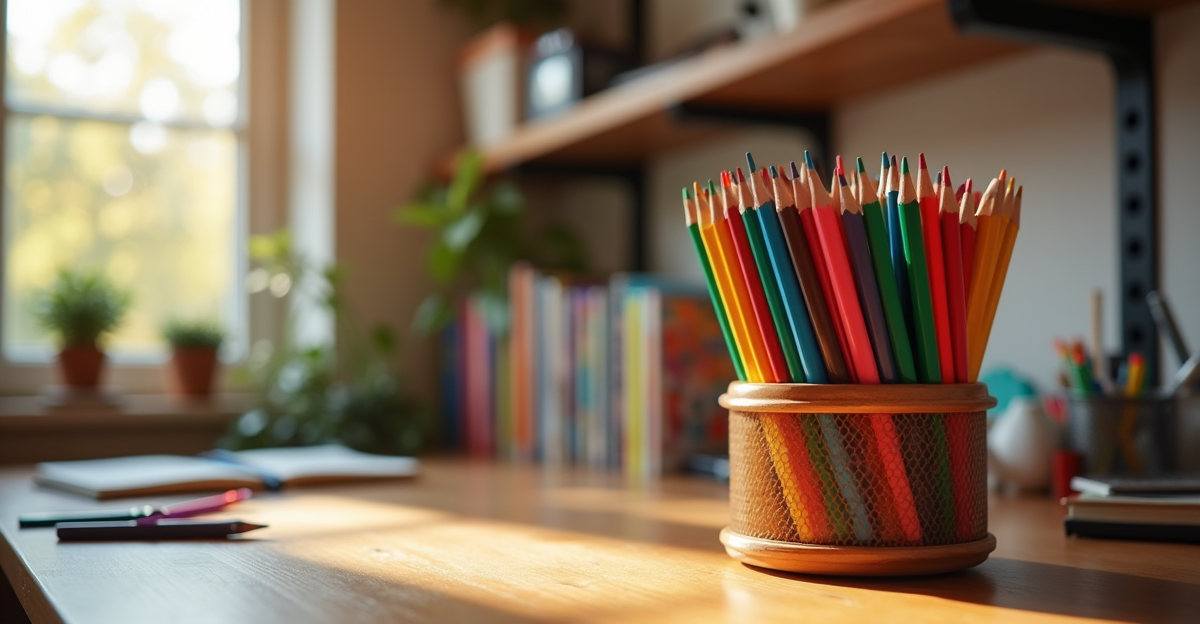
Most coloring setups fail because they’re built for storage, not for use. You toss your pencils in a tin, stack your books on a shelf, and call it organized. But when it’s time to color, you spend 10 minutes finding the right book, another 5 digging for the sharpener, and by then your window of motivation is gone.
The goal isn’t to make your supplies look pretty on Instagram (though that’s a nice bonus). It’s to remove every possible barrier between you and 20 minutes of coloring.
The 3-Zone Setup
Think of your coloring space in three zones:
Zone 1: Within Arm’s Reach — This is what you need for a typical session: your current book, your go-to pencil set, and your sharpener. If you can’t start coloring in under 30 seconds, Zone 1 isn’t set up right.
Zone 2: Nearby but Stored — Your backup supplies, extra books, specialty pencils, and gel pens. You use these weekly, not daily, so they should be easy to find but don’t need to be on your desk.
Zone 3: Long-Term Storage — Completed books, seasonal supplies, and things you’re saving. This can be in another room entirely.
Most people keep everything in Zone 3 and nothing in Zone 1. Flip that.
Pencil Storage That Actually Works
Option 1: The Desktop Caddy (Best for Daily Use)
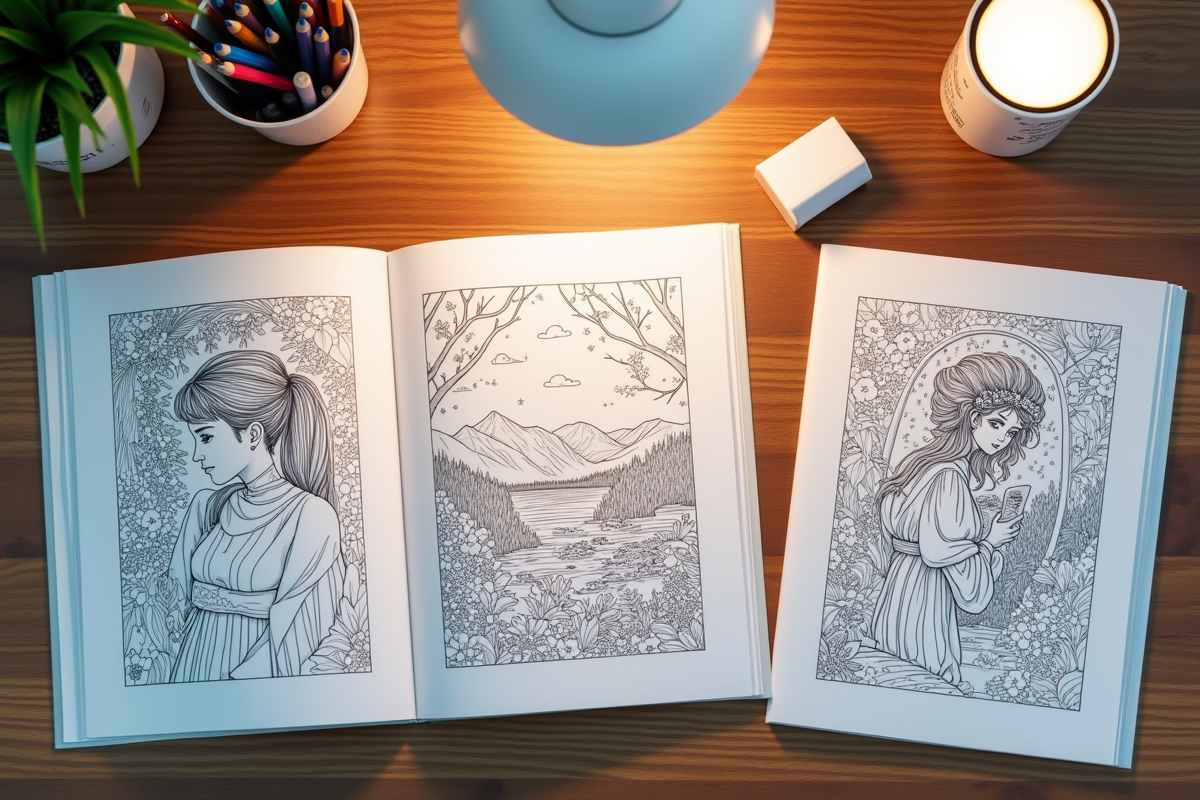
A rotating pencil caddy keeps every color visible and accessible. You don’t have to dig through a tin or unroll a wrap — just spin and grab. Look for one with 48+ slots so each pencil has its own spot.
Best for: People who color at the same desk or table most days.
What to get: A wooden or metal rotating caddy with individual holes. The ZOTOP 360-Degree Rotating Pencil Holder holds 72 pencils and takes up less desk space than you’d think.
Option 2: The Pencil Wrap (Best for Portability)
If you color in different spots — the couch, the porch, a cafe — a canvas pencil wrap is your best friend. Roll it out, and every pencil is visible. Roll it up, and it fits in a bag.
Best for: People who color in multiple locations.
What to get: A canvas wrap with individual loops. The BTSKY Canvas Pencil Roll Wrap holds 72 pencils, has a snap closure, and rolls flat for storage.
Option 3: The Drawer Organizer (Best for Minimalists)
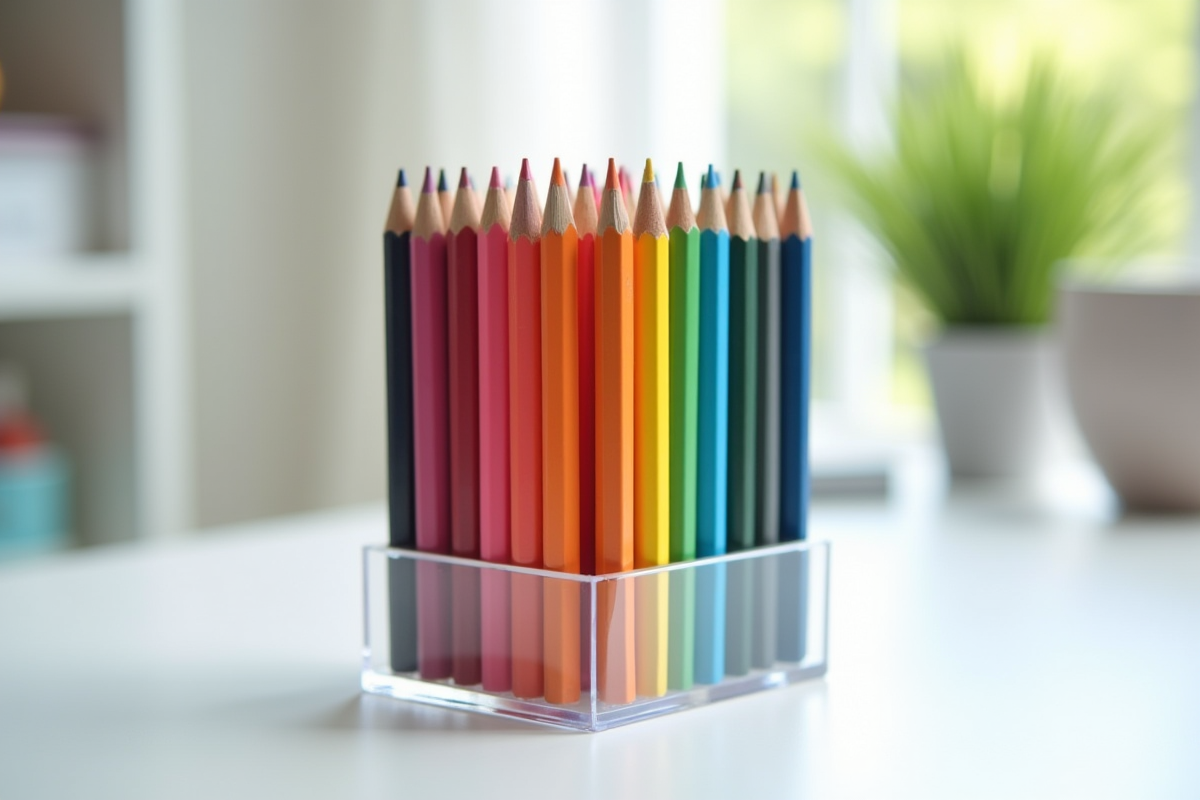
If you prefer a clean desk, store your pencils in a drawer organizer with angled slots. You can see every color at a glance, and your desk stays clear for other things.
Best for: People with small spaces or who share a desk with other work.
The One Thing NOT to Do
Don’t store pencils point-down in a jar. The weight compresses the cores, which leads to broken tips and inconsistent color laydown. Store them flat or point-up.
Book Storage: The Stack That Works
Coloring books are the hardest thing to store because they’re bulky, they don’t stand up straight, and you always want the one that’s at the bottom of the pile.
The Vertical File (Best for Active Use)
Stand your books vertically in a magazine file or bookend set. You can see every spine, and pulling one out doesn’t disturb the rest. Label the spines with washi tape if the covers don’t have enough contrast.
The Open Shelf (Best if You Have Wall Space)
A floating shelf above your coloring spot keeps your current books visible and accessible. Limit it to 5-6 books (your current rotation) and store the rest.
The Basket Method (Best for Couch Colorers)
Keep a basket next to your coloring spot with your current book, your pencil caddy, and your sharpener. When you’re done, everything goes back in the basket. No sorting, no tidying — just drop and go.
Key principle: Store books vertically, not horizontally. Stacked books are hard to pull from and the weight damages the ones on the bottom.
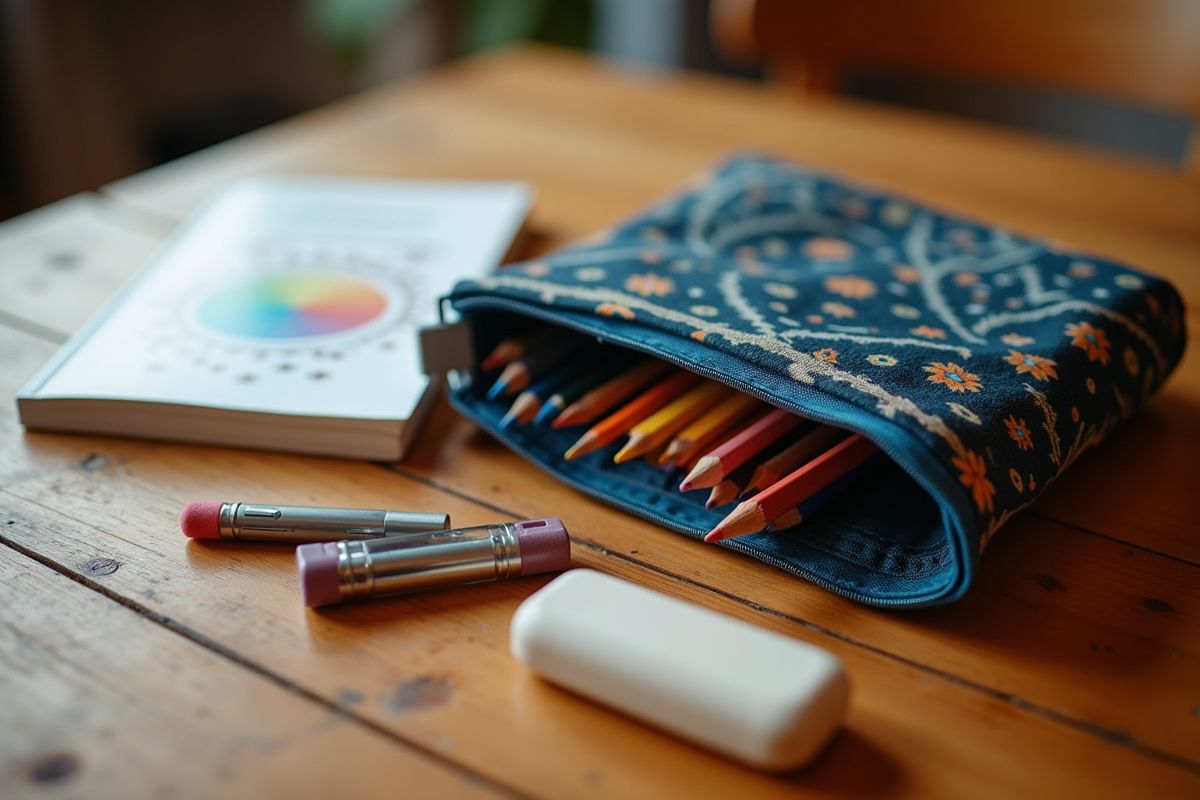
The Sharpener-Eraser-Blender Kit
These three small items are the most likely to get lost because they’re small and you set them down between uses. Here’s the fix:
Keep them in a small dish or cup that stays with your pencil storage. Not in a drawer. Not in a bag. Not “somewhere on the desk.” In a designated spot that you never move.
Our recommended kit:
- Kum Automatic Long Point Sharpener — The only sharpener that doesn’t break soft colored pencil cores. One hole shapes the wood, the other sharpens the core.
- Kneaded Eraser — Lifts graphite and light color without damaging paper. Knead it to clean it.
- Prismacolor Colorless Blender — Burns color into a smooth, painterly finish.
Color Organization: The Rainbow Myth
You’ve seen the Instagram photos — pencils arranged in perfect rainbow order. Looks beautiful. Is it practical? Not really.
Rainbow organization works great if you always know exactly what color you want. But most colorists don’t think “I need a blue that’s between cerulean and cobalt.” They think “I need something cool for the water in this page.”
Here are three organization methods that work better than rainbow:
By Temperature (Best for Mood-Based Colorists)
Sort your pencils into warm (reds, oranges, yellows, browns) and cool (blues, greens, purples, grays) groups. When you’re coloring a sunset, grab the warm section. Forest scene? Cool section. Quick, intuitive, and you’ll make better color choices.
By Intensity (Best for Realistic Colorists)
Group pencils by saturation: vivid/saturated, muted/desaturated, and neutrals. This lets you control the mood of your page — vivid for energy, muted for calm, neutrals for balance.
By Frequency (Best for Minimalists)
Put your 12 most-used pencils in Zone 1 (your caddy). Put the next 24 in Zone 2 (a nearby drawer). Store the rest. Most colorists use the same 12-15 colors for 80% of their pages.
The 5-Minute Reset
At the end of each coloring session, spend 5 minutes resetting your space:
- Sharpen any dull pencils and put them back in their spot
- Close your book and put it in its designated place
- Wipe up any pencil shavings
- Put your sharpener and eraser back in their dish
This tiny habit means you never start a session with a mess from last time. And starting clean is the difference between “I’ll color for 20 minutes” and “I’ll color tomorrow.”
Quick Setup Guide: Start Organizing in 15 Minutes
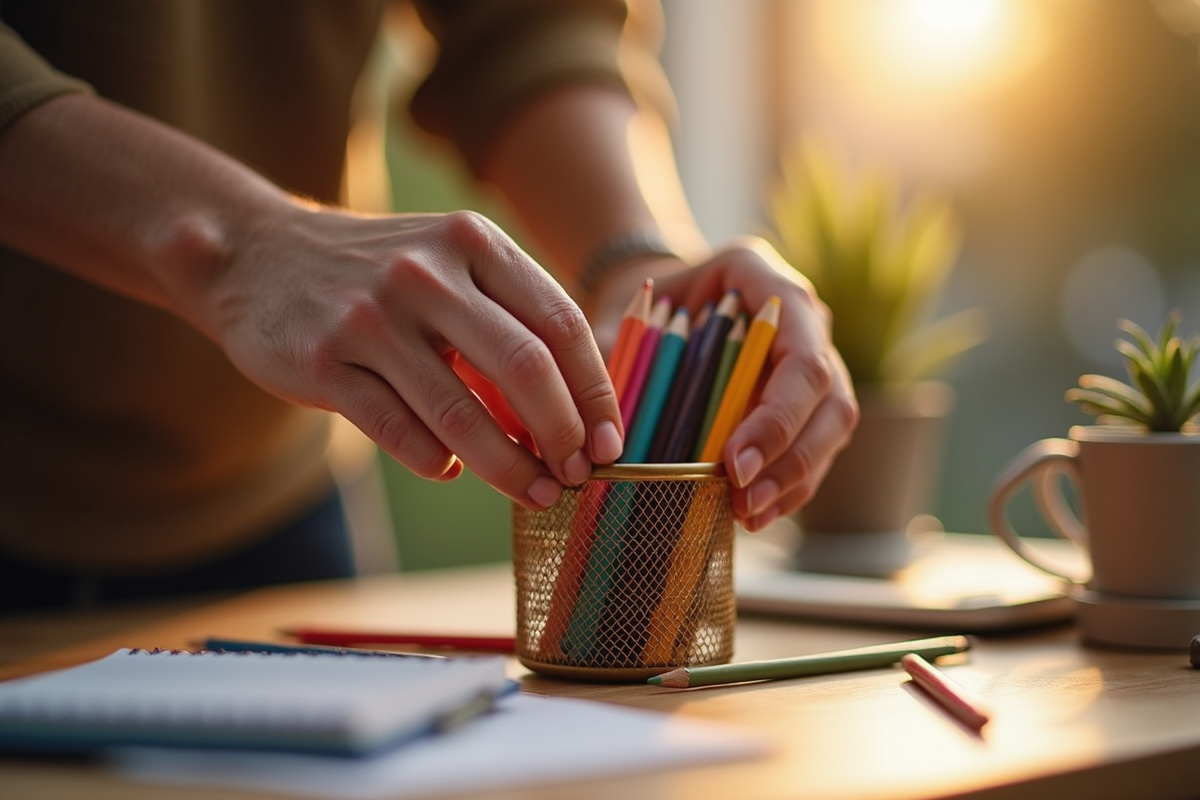
Don’t overthink this. Here’s a minimal setup you can build in 15 minutes with stuff you already have:
- Clear one spot — a desk, a corner of the table, a basket on the couch. This is your coloring spot.
- Put your current book there — just one. The one you’re working on.
- Put your pencil set next to it — in whatever container they came in is fine for now.
- Put your sharpener in a small dish next to the pencils — a teacup, a ramekin, whatever.
- Take a photo — so you remember what “ready to color” looks like.
You can upgrade to caddies and wraps later. The important thing is that your Zone 1 exists and you can start coloring in under 30 seconds.
What to Buy If You’re Starting From Scratch
If you’re building a coloring setup from zero, here’s the minimum viable kit:
- Arteza Professional 72-Color Set — Great color range, smooth laydown, affordable. The best value for beginners.
- Secret Garden by Johanna Basford — The book that started the adult coloring trend. Medium complexity, beautiful designs.
- Kum Automatic Long Point Sharpener — Keeps pencils sharp without breaking.
Total cost: under 40 dollars. That’s all you need to start coloring regularly.
The Bottom Line
Organizing your coloring supplies isn’t about aesthetics — it’s about removing friction. The easier it is to start, the more often you’ll do it. And the more often you do it, the more stress relief, mindfulness, and genuine enjoyment you’ll get from the practice.
Set up your Zone 1. Keep your sharpener in a dish. Store books vertically. Stop sorting by rainbow. That’s 80% of it.
Now go color something.
ColoredCalm is about creativity that calms. If you purchase through our links, we earn a small commission at no extra cost to you.