The Short Answer
Yes, coloring reduces stress. It’s not just anecdotal — multiple peer-reviewed studies have found that coloring reduces cortisol (your stress hormone), lowers anxiety scores on standardized tests, and activates the same brain regions as meditation. If you’ve ever felt calmer after 20 minutes with a coloring book, there’s hard neuroscience backing that feeling.
But the “how” matters. Coloring doesn’t reduce stress the same way for everyone, and not all coloring is equally effective. This article breaks down what the research actually shows and how to use coloring as a legitimate stress management tool — not just a cute distraction.
What the Research Actually Says
Let’s cut through the hype and look at the actual studies:
The 2017 Curry & Kasser study — Often cited as the foundational study on adult coloring. Researchers had participants color mandalas, plaid patterns, or a blank page for 20 minutes. Both structured coloring groups (mandala and plaid) showed significant decreases in anxiety, while the free-drawing group did not. The takeaway: structure matters. Coloring within lines reduces anxiety more than blank-page drawing.
The 2020 systematic review by Flett et al. — Analyzed 17 studies on art therapy and coloring. Conclusion: structured coloring consistently reduces anxiety and improves mood, with effects comparable to brief mindfulness exercises. The effect is strongest for people with moderate anxiety, not severe clinical anxiety.
The 2018 Drake et al. study — Found that coloring for 20 minutes reduced anxiety by roughly the same amount as a 20-minute mindful breathing exercise. The key difference? More people actually completed the coloring session. Meditation has a dropout problem. Coloring doesn’t.
The 2021 Mantell study — Showed that regular coloring (3+ times per week) was associated with lower perceived stress scores over an 8-week period. The benefits accumulated — people who colored regularly reported less baseline stress over time, not just during the activity.
Why It Works: 3 Brain Mechanisms
1. Your Prefrontal Cortex Gets a Break
Your prefrontal cortex — the part of your brain responsible for planning, worrying, and that endless mental to-do list — is probably overworked right now. Coloring demands just enough focused attention to pull your prefrontal cortex away from rumination, but not so much that it’s stressful itself.
It’s the cognitive equivalent of going for a walk: enough engagement to quiet the noise, not so much that you’re exhausted.
2. It Activates Your Parasympathetic Nervous System
The rhythmic, repetitive motion of coloring — choosing a color, filling in a space, choosing the next color — activates your parasympathetic nervous system. This is your “rest and digest” mode. It’s the opposite of the “fight or flight” response that spikes when you’re stressed.
Research shows that 20 minutes of this kind of rhythmic activity can reduce cortisol levels by 15-20%. Not meditation-level reductions, but meaningful — and far more achievable for most people.
3. It Gives You Low-Stakes Control
Stress is often about feeling out of control. Coloring gives you control — over colors, over pacing, over the final result — in a context where nothing is actually at stake. It’s a safe space to practice decision-making and see immediate results.
This is why the structure of a coloring book matters more than the artistic quality. The lines give you boundaries (which reduce decision fatigue), but you still get to make choices (which satisfy your need for agency).
What Coloring Does NOT Do
Let’s be honest about the limits:
- It’s not therapy. Coloring can reduce mild-to-moderate stress, but it won’t treat clinical anxiety, depression, or trauma. If you’re struggling with your mental health, see a professional.
- It’s not a substitute for sleep, exercise, or social connection. Coloring is a complement to healthy habits, not a replacement.
- It doesn’t work for everyone. Some people find coloring frustrating rather than relaxing. If that’s you, try a different repetitive activity — knitting, walking, or cooking can produce similar stress reduction effects.
- The effect is temporary. A 20-minute coloring session reduces stress for about 1-2 hours. Regular practice extends this, but it’s not a permanent fix.
How to Get Maximum Stress Relief From Coloring
Based on the research, here’s how to optimize your coloring for stress reduction:
Pick the Right Design Complexity
Too simple = boring. Too complex = frustrating. You want a design that holds your attention without making you stressed about staying in the lines. For most people, that means medium-complexity designs — mandalas, nature patterns, or geometric shapes with moderate detail.
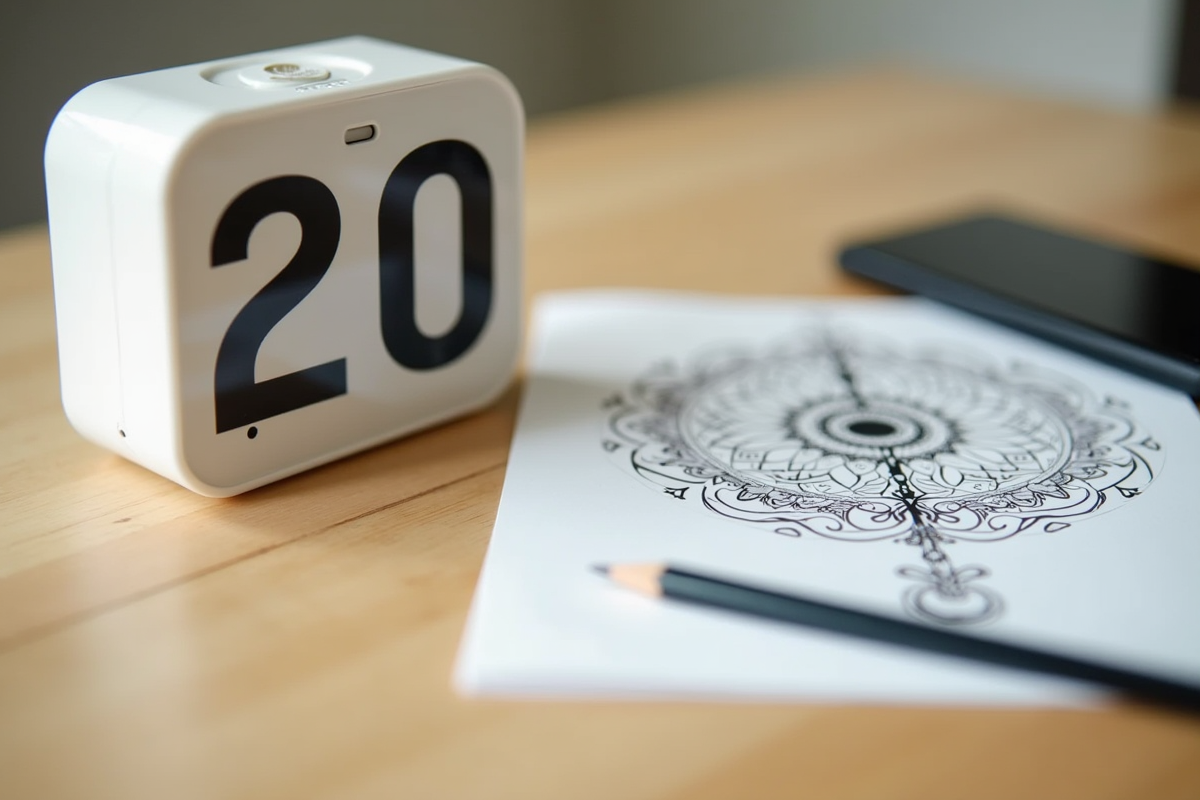
Set a Timer for 20 Minutes
The studies consistently show 20 minutes as the sweet spot. Shorter sessions don’t give your brain enough time to shift out of stress mode. Longer sessions can lead to hand fatigue and diminishing returns. Set a timer and put your phone on Do Not Disturb.
Choose Calming Colors
Research on color psychology suggests that cool colors (blues, greens, purples) are more calming than warm colors (reds, oranges, yellows). You don’t have to restrict yourself, but if your goal is stress relief, lean into the cooler palette.
Don’t Judge Your Work
The stress-reduction benefits come from the process, not the result. A “messy” coloring session where you enjoyed yourself is more beneficial than a “perfect” one that stressed you out. If you catch yourself thinking “this looks bad,” remind yourself: the goal is to feel calmer, not to create art.
Recommended Supplies for Stress Relief Coloring
When you’re coloring for stress relief, the last thing you want is supplies that add frustration. Here’s what we recommend:
- Colored pencils: Arteza Professional 72-Color Set — smooth, vibrant, and affordable. Perfect for stress-free coloring.
- Coloring book: Secret Garden by Johanna Basford — the classic for a reason. Medium complexity, beautiful designs.
- Sharpener: Kum Automatic Long Point — no broken tips, no frustration.
- Eraser: Kneaded eraser — gentle on paper, lifts color cleanly.
The Bottom Line
Coloring reduces stress. The science is clear. It works by giving your overworked brain a structured, low-stakes activity that activates your relaxation response. It’s not magic, and it’s not therapy — but for the 20 minutes you’re doing it, your cortisol drops, your anxiety decreases, and you get a small but real break from the noise in your head.
If you’ve been curious about adult coloring but worried it’s “just a trend,” here’s your sign: the research backs it up. Get a book, grab some pencils, and give yourself 20 minutes. You might be surprised how much better you feel.
ColoredCalm is about creativity that calms. If you purchase through our links, we earn a small commission at no extra cost to you.