You’ve Heard the Claim: “Coloring Is the New Meditation”

It’s not. And pretending it is does both activities a disservice.
Coloring and meditation share some benefits — both reduce stress, both require focus, both can create a flow state. But they work differently, they feel different, and they’re better at different things.
Here’s an honest comparison, no hype, no marketing spin.
What Meditation Actually Does
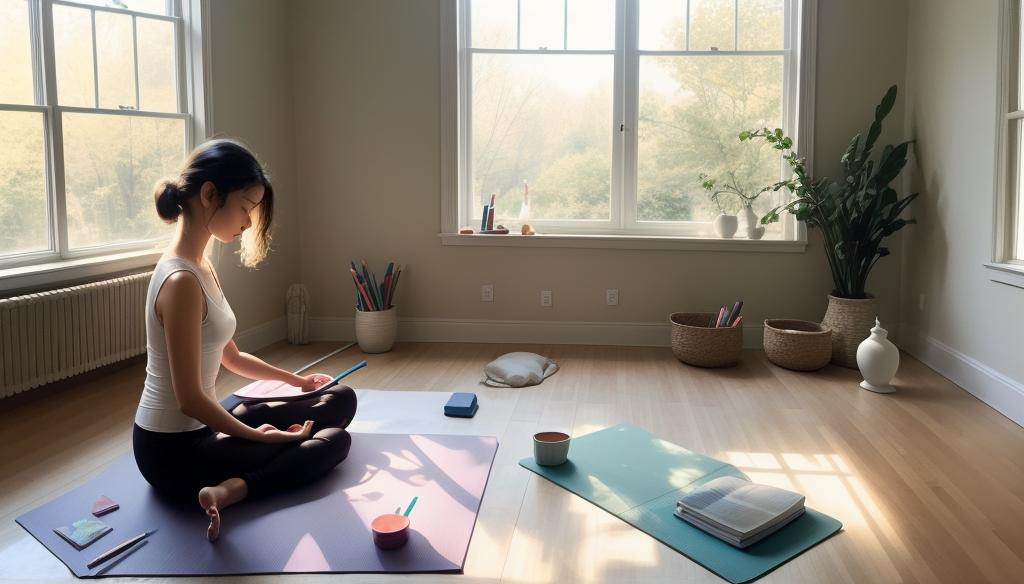
Meditation trains your attention. The core practice is simple: focus on one thing (usually your breath), notice when your mind wanders, and bring it back. That’s it. That’s the whole technique.
The benefits are well-documented:
– Reduces cortisol (the stress hormone)
– Decreases amygdala activity (the brain’s alarm system)
– Improves working memory and attention span
– Reduces symptoms of anxiety and depression
– Increases gray matter in areas related to self-awareness and compassion
But meditation has a problem: it’s hard. Sitting still with your thoughts is uncomfortable. Your mind races. You get bored. You fall asleep. You think you’re doing it wrong. The dropout rate for meditation apps is enormous — most people quit within 2 weeks.
What Coloring Actually Does
Coloring occupies your hands and your visual attention with a structured, repetitive task. It creates a gentle focus that’s easier to sustain than meditation because there’s always something to do. You’re not sitting with your thoughts — you’re actively engaging with a page.
The benefits overlap with meditation but are distinct:
– Reduces cortisol (same as meditation)
– Creates a flow state (losing track of time while focused on a task)
– Reduces anxiety by occupying working memory (your brain can’t ruminate while it’s choosing colors)
– Provides a sense of accomplishment (you finish a page, you see progress)
– Activates the parasympathetic nervous system (through repetitive motion)
The key difference: coloring gives you something to do. Meditation asks you to stop doing. For people who can’t sit still — and that’s a lot of stressed people — coloring is an easier entry point.
The Honest Comparison
| Factor | Meditation | Coloring |
|---|---|---|
| Stress reduction | Strong evidence | Growing evidence, similar effect size |
| Anxiety relief | Proven for clinical anxiety | Proven for mild-moderate anxiety |
| Ease of starting | Hard — requires training | Easy — just pick up a pencil |
| Learning curve | Weeks to feel comfortable | Minutes to feel comfortable |
| Dropout rate | Very high (~70% quit within 2 weeks) | Lower — completion rates are higher |
| Tangible result | None — it’s internal | A finished coloring page |
| Skill development | Attention regulation, emotional awareness | Fine motor skills, color theory, patience |
| Social component | Usually solitary | Can be social (coloring groups) |
| Equipment needed | None | Book and pencils ($20-50) |
| Time to benefit | 10-20 minutes per session | 15-30 minutes per session |
| Best for | Building long-term attention and emotional regulation | Acute stress relief, creative expression, flow state |
When Coloring Is Better Than Meditation
The Mindfulness Coloring Book is designed for exactly this — short, simple sessions that give you the calm without the pressure.
When you can’t sit still. If your anxiety manifests as physical restlessness, sitting with your eyes closed feels impossible. Coloring gives your hands something to do while your mind settles.
When you need immediate relief. Meditation takes practice to feel effective. Coloring works on day one — there’s no “getting the hang of it” phase.
When you need a tangible outcome. Some people (especially in high-achievement cultures) struggle with meditation because there’s nothing to “show” for it. A finished coloring page provides visible evidence that you did something with your time.
When you’re avoiding meditation. If the idea of meditation makes you more anxious, coloring is a legitimate alternative. The stress-reduction mechanisms overlap significantly. Our guide to coloring for anxiety covers this in depth.
When you want creative expression. Meditation asks you to let go of output. Coloring asks you to create something. If self-expression is important to your mental health, coloring feeds that n#eed
When Meditation Is Better Than Coloring
When you need to build attention regulation. Meditation literally trains your ability to focus and redirect attention. Coloring provides a focus activity but doesn’t train the skill of reorienting your attention.
When you want to understand your thoughts. Meditation creates space between you and your thoughts. You observe them without engaging. Coloring distracts you from your thoughts — which is great for acute relief but doesn’t build the skill of observing your mental patterns.
When you have no supplies. Meditation requires nothing. You can do it anywhere, anytime. Coloring requires a book and pencils.
When you want long-term cognitive changes. The structural brain changes associated with meditation (increased cortical thickness, reduced amygdala reactivity) come from sustained practice over months. Coloring hasn’t been shown to produce the same structural changes.
Why You Should Do Both
Ready to start? The Mindfulness Coloring Book by Emma Farrarons is perfect for combining coloring with meditation — small format, simple designs, short sessions.
Here’s the thing nobody wants to hear: they’re not either/or. They’re complementary.
Coloring as a gateway to meditation: If you’ve tried meditation and couldn’t stick with it, start with coloring. It builds the same focus muscles in a less demanding way. After a few weeks of regular coloring, try a short meditation (5 minutes). You’ll find it easier than before because your brain has already been practicing sustained attention.
Meditation as a foundation for coloring: A 5-minute meditation before coloring helps you arrive at the page calmer and more present. You’ll choose colors more intentionally and enjoy the process more.
Alternating by mood: Some days you need to sit with your breath. Some days you need to move your hands and make something. Listen to what your nervous system is asking for.
How to Combine Them
Prismacolor Premier colored pencils are ideal for combined mindfulness/coloring sessions — smooth, quiet, and meditative.
The 5+15 method:
1. Sit quietly for 5 minutes. Focus on your breath. When your mind wanders, bring it back.
2. Open your coloring book and color for 15 minutes. Let the focus from meditation carry into your coloring.
3. When you’re done, notice how you feel.
This combination gets you the attention-training benefits of meditation and the creative, tangible benefits of coloring. It’s more effective than either alone.
For a structured coloring practice, our mindfulness coloring guide has a 7-day program you can follow.
Recommended Supplies for Stress Relief Coloring
If you’re using coloring specifically for stress reduction, keep it simple:
- The Mindfulness Coloring Book by Farrarons — Designed for stress relief. Simple pages, small format, 10-15 minutes per page. (Amazon)
- Tropical World by Marotta — Bold, forgiving designs that don’t require precision. Perfect for when your hands need to move but your brain is too tired for decisions. (Amazon)
- Crayola 50-Count Colored Pencils — Keep it simple. 50 colors is enough for stress relief without decision paralysis. (Amazon)
For more on choosing books based on how you’re feeling, our mood-based book guide breaks it down.
Final Thoughts
Coloring isn’t meditation. It’s something different — and in some ways, something more accessible. It meets you where you are, gives you something to do with your restless hands, and produces something beautiful at the end.
Meditation builds a deeper foundation. Coloring provides immediate relief. Together, they’re more effective than either one alone.
Don’t choose one. Choose both. And if you can only start with one, start with whatever feels doable right now.