
The Frustration Is Real
You buy a beautiful coloring book. You spend 45 minutes on a page. You flip it over — and the design on the next page shows through like a ghost. Or worse, your markers bled right through and ruined the page underneath.
Paper quality is the single most underrated factor in adult coloring. It affects everything: how your colors look, whether your pencils blend, whether you can use both sides of the page, and whether your finished work survives more than a week.
Here’s what you need to know before you buy your next coloring book.
The Three Things That Matter
1. Weight (Thickness)
Paper weight is measured in GSM (grams per square meter) or pounds. Higher = thicker = better.
- Under 80 GSM / 50 lb: Thin, see-through, bleeds with anything. Common in cheap drugstore books. Avoid.
- 80-120 GSM / 50-70 lb: Standard quality. Works for colored pencils. Markers will bleed through. Most coloring books fall here.
- 120-150 GSM / 70-90 lb: Good quality. Handles pencils beautifully, light markers may work. Premium coloring books use this.
- 150+ GSM / 90+ lb: Excellent. Cardstock territory. Handles markers, pencils, even light watercolor. Rare in coloring books unless specified.
The sweet spot for colored pencils: 100-150 GSM. Thick enough that pencil pressure doesn’t indent the back, but not so thick that the book becomes unwieldy.
The sweet spot for markers: 150+ GSM, or single-sided printing (more on that below).
2. Texture (Tooth)
“Tooth” is how rough or smooth the paper surface is. More tooth = more grip = better for pencils.
- Smooth paper (calendered): Feels like photocopy paper. Markers love it (even ink application). Pencils struggle — they slide instead of grip, making blending harder and layering nearly impossible.
- Medium tooth: The most common in coloring books. Good balance — pencils grip enough to layer, markers don’t feather too badly.
- Heavy tooth (cold-pressed watercolor style): Rough, textured sur#face Pencils grip beautifully but need more layers for even coverage. Markers look splotchy. This is overkill for coloring books.
For colored pencils: You want medium tooth. Enough texture to grip, not so much that it eats your pencil cores.
For markers: Smooth to medium tooth. Heavy tooth creates uneven ink application.
3. Printing (Single vs Double-Sided)
This is the most important practical decision:
Single-sided: Each design prints on the right-hand page only. The left page is blank (or has a decorative border). This means:
– Markers can bleed through and it doesn’t matter
– You can cut out and frame your finished work
– You get half as many coloring pages per book
– Usually costs more per page
Double-sided: Designs print on both sides of each page. This means:
– Markers will ruin the page on the back
– Pencil indentations show on the reverse
– You get twice as many designs per book
– You can only use one side effectively
The compromise: Put a sheet of scrap paper or cardboard behind the page you’re coloring. It won’t stop bleed-through, but it’ll protect the next page. For pencils, it prevents indentations.
How to Spot Good Paper Before You Buy
You can’t always test paper quality before purchasing, but you can look for these clues:
Look for in product descriptions:
– “Printed on acid-free paper” — good for longevity
– “Single-sided printing” — essential if you use markers
– “120 GSM” or higher — decent quality
– “Perforated pages” — easy removal means you can frame or rearrange
– “Artist-quality paper” — usually means thicker stock
Red flags in reviews:
– “Markers bleed through” — paper is too thin
– “Pencils don’t blend” — paper is too smooth
– “Colors look dull” — paper absorbs pigment instead of holding it on the surface
– “Pages show through” — double-sided printing on thin paper
Books known for good paper:
– Johanna Basford books (Secret Garden, Enchanted Forest, World of Flowers) — Medium-weight, cream-tinted paper with good tooth. Single-si#ded Excellent for pencils. (Secret Garden, Enchanted Forest, World of Flowers)
– Creative Haven series — Consistently good paper, single-sided, perforated. Great for markers. (Creative Cats)
– Mindfulness Coloring Book by Farrarons — Decent paper, simple designs, portable size. (Amazon)
What to Do When Your Book Has Bad Paper
Already stuck with a book on thin paper? Don’t throw it away. Try these:
1. Use a backing sheet. Slide a piece of cardstock behind the page you’re coloring. It won’t prevent bleed-through, but it’ll protect the next page from both ink and pencil pressure.
2. Switch to colored pencils. If you were planning to use markers, switch to pencils. Even cheap pencils won’t bleed through thin paper.
3. Color lightly. Heavy pressure on thin paper creates indentations and can actually tear the page. Light layers build better color anyway. (More on this in our blending and shading guide.)
4. Scan and reprint. If you love the designs but hate the paper, scan the pages and print them on better paper. Most coloring books allow this for personal use. Use 140 GSM watercolor paper or bristol board for the best results.
5. Embrace the bl#eed If markers are your thing and the paper is thin, put a blank sheet behind the page and let the markers bleed through. The design on the other side is a loss — but at least you get to color the way you want.
The Paper-Medium Matchmaker
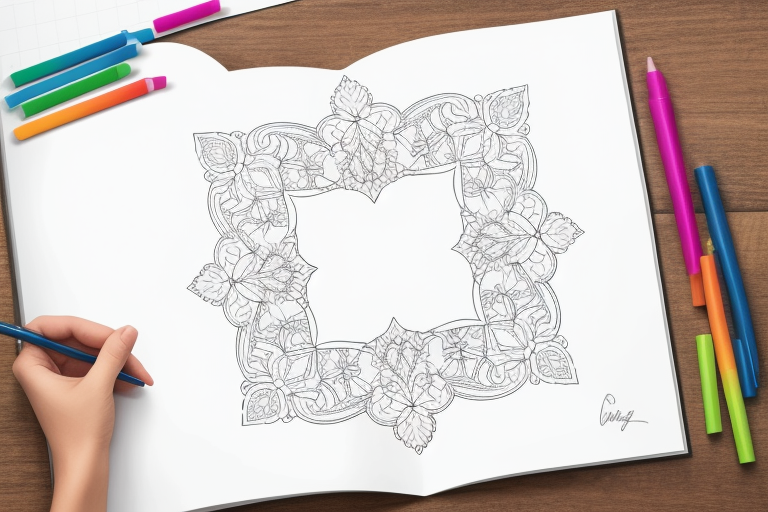
| Paper Type | Best Medium | Worst Medium | Works With |
|---|---|---|---|
| Thin (< 80 GSM), double-sided | Colored pencils (light pressure) | Markers, watercolor | Light pencil work, gel pens |
| Medium (80-120 GSM), double-sided | Colored pencils | Markers | Pencils, fine-tip pens |
| Medium (80-120 GSM), single-sided | Pencils, gel pens, fine markers | Alcohol markers | Most dry media |
| Heavy (120-150 GSM), single-sided | All colored pencils, light markers | Heavy marker layers | Pencils, gel pens, light markers |
| Cardstock (150+ GSM) | Everything including markers | Watercolor (still too thin) | All dry media, most markers |
Why This Matters for Your Coloring Experience
Bad paper doesn’t just ruin your finished pages. It changes how you color. When you’re worried about bleed-through, you color more carefully and less freely. When pencils don’t grip, you press harder and get frustrated. When the paper is too smooth, your layers don’t build and your colors look flat.
Good paper removes these barriers. You color more confidently, more expressively, and more enjoyably. The quality of your paper determines the quality of your experience far more than the quality of your pencils.
A $30 coloring book with great paper will give you better results than a $10 book with cheap paper and $80 pencils.
Quick Buying Checklist
Before you buy a coloring book, check:
- [ ] Is it single-sided or double-sided? (Single-sided if you use markers)
- [ ] Does it list the paper weight? (Look for 100+ GSM)
- [ ] Is it perforated? (Nice to have for framing)
- [ ] Is the paper white or cream? (Cream is warmer and easier on the eyes)
- [ ] Do reviews mention bleed-through? (Run if they do)
- [ ] Is it spiral-bound or glue-bound? (Spiral lays flat — huge quality of life upgrade)