Paper Quality Is the Silent Dealbreaker
You bought the pencils. You picked the book. You sat down, pressed color to page, and watched it bleed through to the next illustration. Or the paper pilled under your eraser. Or your markers turned the back of the page into a smeary ghost of the front.
That is not your technique. That is your paper.
Paper quality affects everything — how your colors look, how your tools perform, whether you can use both sides of the page, and whether your finished work is frame-worthy or landfill-bound. Yet most colorists spend all their research time on pencils and markers, treating paper as an afterthought.
This guide covers what paper weight actually means, which weights work with which tools, and how to spot the books that will give you the best experience — before you buy them.
Paper Weight: What the Numbers Actually Mean
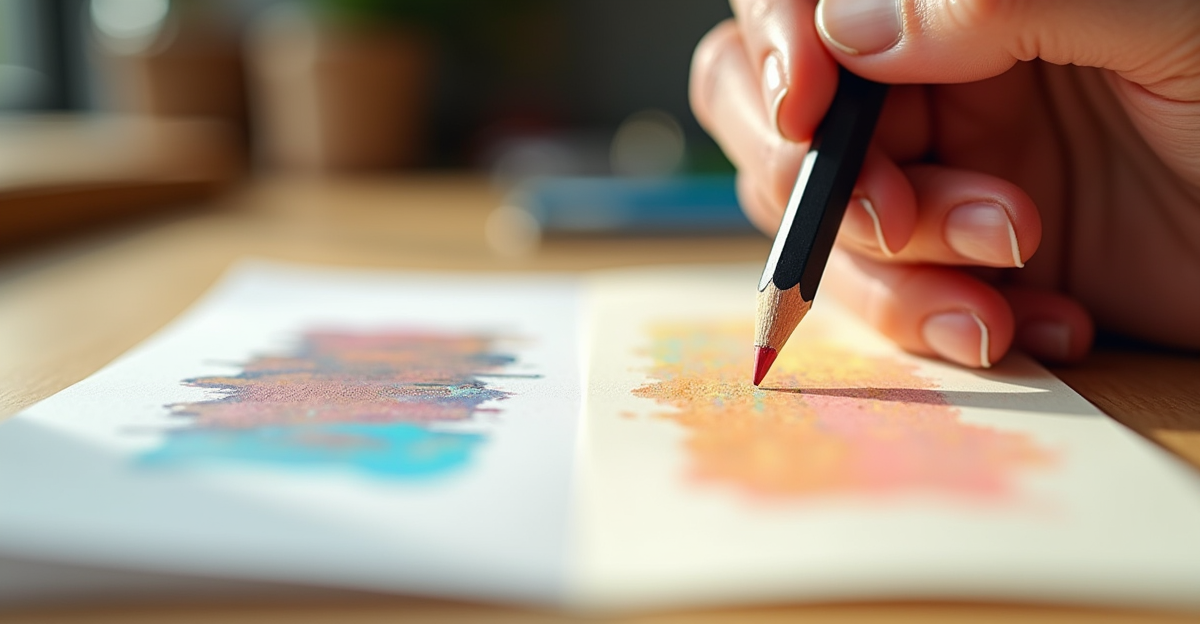
Coloring book paper is measured in GSM (grams per square meter). Higher GSM means thicker, more durable paper. Here is what the numbers translate to in real-world use:
The GSM Breakdown
- 80-100 GSM: Standard copy paper. Found in budget coloring books. Pencils work okay, but any marker or pen will bleed through. Pages feel flimsy and tear easily.
- 100-120 GSM: Mid-range. Handles colored pencils well, light marker use with some show-through. Most mainstream coloring books (Basford, Marotta) fall in this range.
- 120-150 GSM: Good quality. Handles pencils beautifully, most markers without bleed-through. Some premium coloring books and Dover Creative Haven books land here.
- 150-200 GSM: Heavyweight. Marker-friendly, can handle light watercolor pencil washes. This is art paper territory — you will not find it in most standard coloring books.
- 200+ GSM: Card stock. Used for postcards, prints, and standalone pages. Overkill for standard coloring but excellent for work you want to frame.
The Short Version
If you use colored pencils, 100 GSM is your minimum. If you use markers, 120 GSM minimum with single-sided printing. If you use watercolor pencils, 150 GSM minimum or use a separate watercolor sheet.
Single-Sided vs Double-Sided Printing
This is the single most important feature to check before buying a coloring book, and it determines your entire supply strategy.
Single-Sided Printing (Recommended for Most People)
Each illustration gets its own page. The back is blank or has a faint pattern to prevent bleed-through. Benefits:
- Use any tool without worry — markers, gel pens, watercolor pencils, all fair game
- No choosing between two designs — you can color every page
- Easier to remove and frame finished work
- No bleed-through anxiety whatsoever
Books with single-sided printing include most Dover Creative Haven titles and many independent coloring book publishers on Amazon.
Double-Sided Printing (Common in Premium Books)
Both sides of each page have an illustration. This is common in higher-end books like Johanna Basford’s titles and most Millie Marotta books. The trade-off:
- You get more illustrations per book (better value per design)
- You cannot use markers or wet media without destroying the opposite page
- You must choose between the front and back illustrations when using anything beyond light pencil
- The paper is usually higher quality to partially compensate
If a book is double-sided, the paper needs to be at least 120 GSM and ideally 150 GSM for it to work well with colored pencils. Even then, heavy pencil pressure will create indentations on the reverse side.
Paper Texture: Smooth vs Toothy
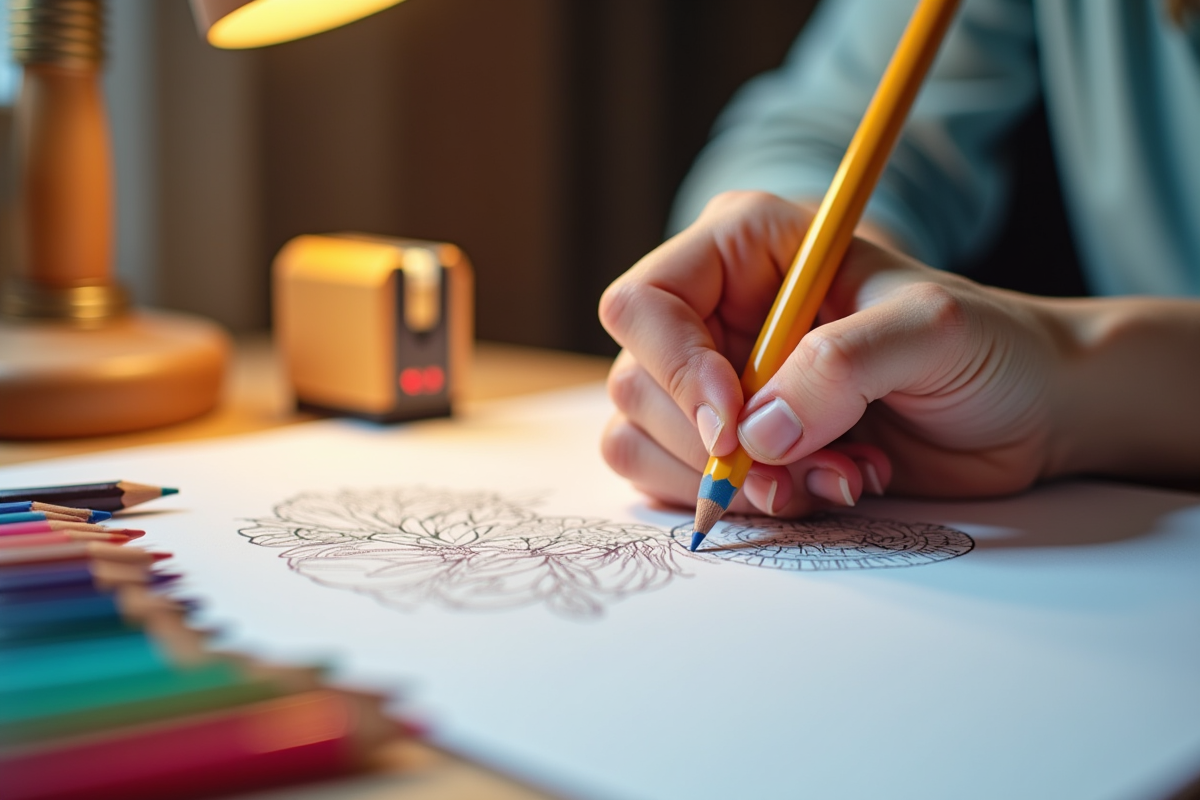
Paper “tooth” refers to the surface texture. This is less commonly discussed than weight, but it matters enormously for how your coloring tools perform.
Smooth Paper
Minimal texture. Feels almost like photo paper or premium cardstock.
- Best for: Markers, gel pens, fine-line pens
- Challenging for: Colored pencils — the wax slides around instead of gripping, making it harder to build layers
- Common in: Dover Creative Haven books, some budget books
Toothy Paper
Visible texture with tiny grooves that grip pigment. Feels slightly rough when you run your finger across it.
- Best for: Colored pencils — the tooth gives the wax something to grab, making layering and blending much easier
- Challenging for: Fine-line pens (the tip catches on the texture), gel pens (skip on rough spots)
- Common in: Johanna Basford books, many UK-published coloring books, higher-end art paper
The Middle Ground
Most coloring books fall somewhere between smooth and toothy. If you use both pencils and pens regularly, a medium tooth is your best compromise — enough texture for pencil layering, smooth enough for pen work.
Paper Color: White vs Cream vs Ivory
This detail catches people off guard. Most coloring books use one of three paper tones:
- Bright white: Maximizes color vibrancy. Every color pops at its full intensity. Common in Dover and many Amazon-published books. Best for bold, saturated coloring styles.
- Cream/Off-white: Warmer, softer look. Colors appear slightly muted and blended, which can actually look more natural for nature and botanical designs. Common in Basford books and many UK publishers.
- Ivory/Tan: Rare in coloring books but found in some specialty editions. Gives a vintage, aged appearance to finished work.
Paper color does not affect which supplies you can use, but it does change how your finished pages look. A bright red on white paper looks different from the same red on cream. Neither is better — it depends on the aesthetic you prefer.
How to Test Paper Quality Before You Commit
You cannot always feel the paper before buying, but here are reliable ways to assess quality:
1. Check the GSM in the Product Description
Good publishers list their paper weight. If a book does not mention GSM, it is almost certainly under 120 GSM — which means markers and heavy pencil work will struggle.
2. Read Reviews for Bleed-Through Mentions
Search reviews for “bleed” and “show-through.” If multiple reviewers mention bleed-through with pencils (not just markers), the paper is too thin.
3. Look for “Single-Sided” in the Description
This tells you the publisher has designed the book for mixed media use. Double-sided books force you into pencil-only territory.
4. Check for Perforated Pages
Perforations are a sign the publisher expects you to remove and display pages — which means they likely invested in decent paper stock.
What If Your Book Has Thin Paper?
If you already own a coloring book with thin or double-sided pages, you do not need to abandon it. Here are workarounds that let you use any tool:
The Blotter Sheet Method
Place a blank sheet of cardstock or thicker paper behind the page you are coloring. This prevents bleed-through to the next illustration and provides a slightly firmer surface for pressing. It is the simplest fix and costs almost nothing.
Transfer to Better Paper
Use a lightbox (or a window on a sunny day) to trace the illustration onto heavier paper. This takes more time but gives you complete freedom with supplies. Use 160 GSM mixed media paper or 200 GSM watercolor paper for best results.
Colored Pencils Only
If you limit yourself to colored pencils with light-to-medium pressure, even 80 GSM paper will survive. Avoid pressing hard or using burnishing techniques on thin paper — the wax buildup and pressure will show through on the reverse side.
Use a Backing Sheet for Markers
For marker users who refuse to give up on a double-sided book: color one page, accept that the reverse page is damaged, and use a thick cardstock backing sheet to protect pages further back. It is not ideal, but it lets you use your preferred medium.
The Best Coloring Books for Paper Quality
Based on paper weight, printing format, and overall coloring experience, here are the books that get paper right:
Best for Markers and Mixed Media
- Creative Haven Creative Cats — single-sided, bright white paper, perforated pages. The gold standard for marker-friendly books.
- The Mindfulness Coloring Book — single-sided, smooth paper that handles pens and pencils well.
Best for Colored Pencils
- Enchanted Forest by Johanna Basford — creamy toothy paper that grips pencil pigment beautifully. Double-sided, so pencils only.
- World of Flowers by Johanna Basford — same excellent paper quality as Enchanted Forest with the best Basford floral designs.
- Tropical World by Millie Marotta — quality paper with a pleasant tooth for pencil layering.
Best Overall Paper Quality
The Dover Creative Haven line consistently offers the best paper for the price — thick, bright white, single-sided, and perforated. If paper quality is your top concern, any Creative Haven title is a safe bet.
Supplies That Pair Well With Good Paper
Better paper unlocks better results from your tools. Here are the pairings that work best:
- Thick smooth paper + markers: Arteza Professional 72-Color Set pencils (for their marker-like opacity on smooth surfaces)
- Toothy cream paper + soft wax pencils: Prismacolor Premier 72-Color Set (the wax cores blend beautifully on textured paper)
- Heavyweight paper + oil-based pencils: Faber-Castell Polychromos 60-Color Set (oil cores hold sharp points for detailed work on firm paper)
- Any decent paper + a good sharpener: Kum Automatic Long Point Sharpener (because dull pencils destroy good paper with excessive pressure)
Quick Reference: Paper Weight Cheat Sheet
Save this for your next coloring book purchase:
- 80-100 GSM: Pencils only, light pressure. Budget books.
- 100-120 GSM: Pencils work great. Markers will show through. Most standard books.
- 120-150 GSM: Pencils are perfect. Markers work if single-sided. Good books.
- 150-200 GSM: Any tool works. Marker and watercolor pencil friendly. Premium books and separate paper.
- 200+ GSM: Card stock territory. Frame-worthy results but rarely found in standard books.
The Bottom Line
Paper quality is not a luxury — it is the foundation of your coloring experience. A 12-dollar set of Prismacolor pencils on 80 GSM paper will look worse than a 5-dollar set of Crayolas on 150 GSM paper. The paper determines what tools you can use, how your colors look, and whether you can share or frame your finished work.
Before buying your next coloring book, check the GSM, confirm single or double-sided printing, and match it to the supplies you actually use. That 30-second check saves you from the most common coloring disappointment: the right tools on the wrong paper.